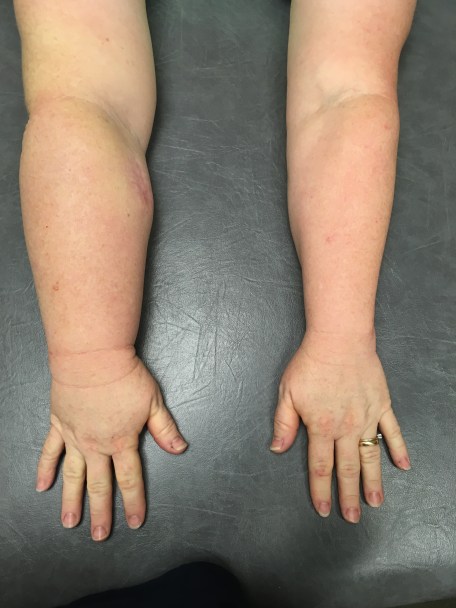
Lymphedema is an abnormal accumulation of protein and water that causes swelling, occurring most frequently in an arm or leg. Cancer interventions often damage portions of the lymphatic system and are the leading cause of lymphedema in the United States. The lymphatic system is a complex system made up of lymphatic fluid, lymph nodes, vessels, collectors, the spleen, and thymus. Its main functions are to drain substances that cannot be absorbed by the vascular system and also plays a role in your immune response.
Surgical procedures such a mastectomy, lumpectomy, or lymph node resection remove or damage lymph nodes in the affected region, decreasing your body’s ability to filter out this lymph fluid. Radiation treatment also poses a threat for lymphatic system damage. Since lymphatic vessels are mere millimeters beneath the surface of the skin, scar tissue formation along radiation treatment areas can impair lymphatic flow through these vessels. These cancer interventions compromise the lymphatic system which significantly increases the risk of developing lymphedema.
According to the Academy of Lymphatic Studies’, 50-75% of patients that have undergone a mastectomy secondary to breast cancer acquire lymphedema within 5 years. Any cancer that requires surgical intervention and/or radiation on or near the neck, armpit, or groin are also at an increased risk of developing lymphedema. Examples include the following: Breast, prostate, uterus, bladder, lymphoma, and melanoma. Although the majority of lymphedema diagnoses are secondary to cancer, lymphedema may also occur secondary a congenital malformation of the lymphatic system (primary lymphedema) or secondary to trauma, infection, malignant tumors, or chronic venous insufficiencies.
Early detection and management of lymphedema is key! Recognizing these early symptoms and talking with your doctor can ensure you receive proper lymphedema treatment and obtain adequate education and tools needed to manage your diagnosis.
Early signs and symptoms of lymphedema include the following and may come and go at first:
-
- Swelling in all or part of the affected region – pressing on the skin with your finger may leave an indentation, which is called pitting edema
- Abnormal feeling in the extremity, such as tingling, numbness, tight feeling, heavy felling, or just that something doesn’t feel right
- Rings or clothing fitting differently
- Veins or tendons harder to distinguish
Regardless of whether lymphedema was caused by cancer interventions or by another source, it is important to know that there are trained therapists nearby that can assist you in understanding your diagnosis. The current gold standard for lymphedema treatment is Complete Decongestive Therapy (CDT) which consists of manual lymphatic drainage (MLD), compression bandage application, decongestive exercises and skin care. CDT is available locally at the Neuroscience Center in Ocean Springs and at the Medical Park in Pascagoula.
For additional information, please come to one of our free educational meetings held on the 3rd Wednesday of each month on the 2nd floor of the Neuroscience Center in Ocean Springs (building right next door to the Cancer Center).
This article was written by Jaime Garrett, MS, OTR/L for Encore Rehabilitation in Ocean Springs, Mississippi.




 Encore Rehabilitation, Inc.