“Stretching is an essential component of both exercise and health, as it helps to maintain flexibility and range of motion in your joints. It is easy to forget to stretch before a workout, perhaps because we do not know exactly why it is that stretching is so important. Well, stretching improves muscle development, increases range of motion, reduces your chances of an injury and provides a warm-up for your muscles. When your muscles are more flexible, the body can perform activities and exercise with the correct form; therefore, stretching also helps to improve posture.”
5.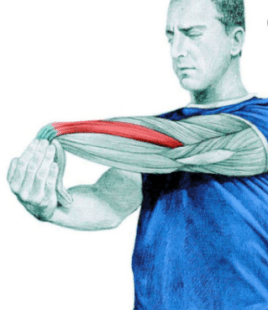 6.
6.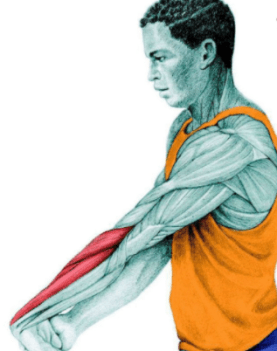
5. Forearm Extensor Stretch: To stretch your forearm extensor, start by pushing your shoulder down and back, then externally rotate your shoulder. Once in position, apply pressure to your opposite hand and begin to stretch.
6. Forearm Extensor Stretch: Stretch the forearm extensor by pushing your shoulder down and back, and externally rotating the shoulder. Apply pressure with your opposite hand to begin the stretch

7. Lateral Side Flexion of the Neck: This stretch highlights your sternocleidomastoid or SCM. Keep your neck as long as possible while slowly dropping your ear to your shoulder. You can progress this stretch by being seated on a chair and grabbing the bottom of the seat.
8. Neck Rotation Stretch: To stretch the SCM, slowly rotate your neck while keeping your chin elevated. For a deeper stretch, apply pressure with the hand opposite from the direction you are rotating.

9. Neck Extension Stretch: To work the SCM, place your hands on your hips while keeping your spine long and tilt your head back.
10. Lateral Side Flexion of the Neck with Hand Assistance: Stretch the SCM and upper trapezius by keeping your neck long and slowly dropping your ear to your shoulder.
11 12.
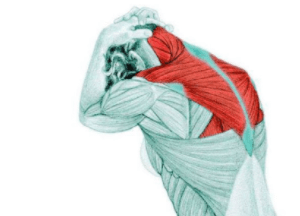
12.
11. Lateral Shoulder Stretch: To stretch your side deltoid, bring your arm across your body and lightly apply pressure to increase the stretch on your shoulder.
12. Standing Assisted Neck Flexion Stretch: This stretch will work your Trapezius muscle. Start by standing with your feet together. Keep your spine long, slowly sit your hips back and round your upper back while tucking your chin into your chest.

15. Lat Stretch With Spinal Traction: To stretch the latissimus dorsi, take a firm grip on a bar while slowly lifting your feet off the ground. Avoid this stretch if you have recently injured your shoulder.
16. Lat Stretch At The Wall: Also for the latissimus dorsi, place both hands on the corner of a wall or post. Keep your spine long while slowly pushing your hips out to the side. Avoid this stretch if you have lower back problems.

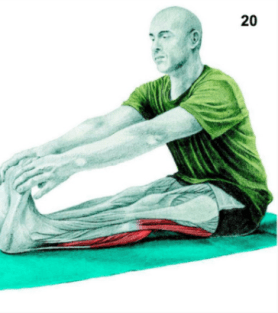
18. Standing Calf Stretch: To work the soleus and gastrocnemius, perform this stretch on the edge of a stair step. Lightly rotate your ankles to stretch the calf muscles actively.
20. Seated Forward Fold / Seated Toe Touch: To stretch the hamstrings and calves, sit and bend the knees as needed.
27. 
27. Down Dog Variation At The Wall: To stretch your pectoralis and latissimus dorsi, position yourself far enough from a wall so that when you touch the wall your body becomes parallel to the ground. Hinge at the hips and keep your spine straight. Push your chest forward creating a slight arch in your upper back; stretch your lats and chest muscles.
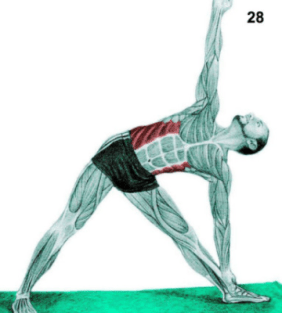
28. Triangle Pose: This will work your external obliques. Start with a wide stance, your front foot straight ahead and your back foot at 90 degrees. Place your hand on your front leg or the floor as you sit back into your front hip, keeping your back straight.
30.
30. Supine Twist: This will stretch your glutes and external obliques. Lie flat on your back and bring one leg across your body. Slowly rotate your upper body in the opposite direction.
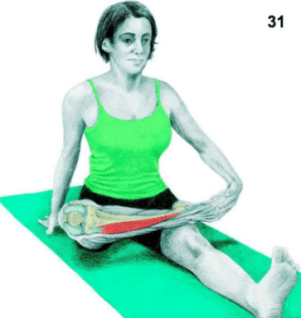
31. Seated Half Pigeon Variation: To work your anterior tibialis, sit with your feet in front of you and bring one hand behind you as you rotate your hip and bring one foot above your knee.


 Encore Rehabilitation, Inc.