Encore Rehabilitation.

Elbow pain: Lateral Epicondylitis (aka, Tennis elbow)

The technology boom of the past decade has not only made our lives easier (debateable), but also caused a surge in overuse injuries. Smart phones, i-pads, and laptops (to name a few) have become as common TV’s and cars to every household in America. The age of instant access to information and social media has made keeping up with news, family and friends much easier but has come at a price. Elbow pain, specifically Lateral Epicondylitis, and Carpal Tunnel syndrome (a topic for another day) have become more common and can become extremely debilitating if not treated in a timely manner. Keep in mind that it can take as little as 3 weeks for an injury to become chronic and therefore seeking early intervention can literally be the difference in a successful outcome and months of pain and discomfort. Unlike most injuries, Lateral Epicondylitis is a problem that almost anyone can diagnose, as long as you know what signs to look for.

First, What is Lateral Epicondylitis? Simply stated, lateral epicondylitis is overuse tendonitis of the wrist and finger extensors. Pain and discomfort are felt on the outside of the elbow and can run down the forearm into the various muscles (muscles that make up the back of the hand). The muscles on the back of the wrist are very small and they all come together and insert just above the elbow.

Second, What are the symptoms? 1. Tender to touch, just above the elbow on the back of the forearm. The area will definitely be sore due to the inflammation. 2. Pain with picking up weighted objects such as a jug of milk, coffee cup, etc., and even something as simple as typing on your laptop. The pain noted in this area can run the entire gammit from sharp pain to a dull, achy feeling. The pain generally subsides when the affected hand is at rest. 3. Noted weakness. Noticeable weakness with gripping activities along with pain in the above mentioned area is a sure fire indicator that you may have lateral epicondylitis. It is not uncommon for me to have patients tell me that they have problems with dropping objects (usually making a mess). 4. Pain with resistance. Make a fist on the hurt arm. Push down on the back of the affected hand with the uninjured hand and that can elicit pain in the elbow. If all these symptoms are present, BAM, you have just acturately diagnosed yourself with Lateral Epicondylitis.

Now I know you are extremely proud of yourself and you should be but ultimately I’m sure you really just want to stop hurting. Let’s talk about the important stuff, the steps to recovery. What to do: 1. Ice. But you say, I hate ice. Believe me, early on, ice is your friend. Putting an ice pack on the painful area for 15 minutes 4-5 times a day greatly enhances your chances of saving a copay. 2. Medication. My medication of choice is Aleve. 2 in the morning and 2 at bedtime for a week is where I generally start. Ibuprofen or Motrin is an acceptable substitute. These medications are called NSAIDS and can be affective at fighting muscular inflammation. If you are unable to take NSAIDS, consult your physician for alternative medications. 3. Rest. It’s simple but true. Making a conscious effort to limit the use of the affected hand greatly improves your chance of success. Trust me, I get it. This is easier said than done, but if you don’t use the affected arm, it won’t hurt. Continuing to use the injured arm increases the inflammation in the tendons and delays healing. 4. Bracing. I struggled with whether or not to mention tennis elbow braces but I do feel they can help manage your pain but here is my disclaimer. Make sure you use them correctly. Proper application is key. If you are unsure of how to properly apply the brace, seek assistance from a qualified health care provider.
In conclusion, Lateral Epicondylitis is not something that you have to run to the doctor with. We mentioned that time is important and it is but give yourself 1 week of managing your symptoms with these simple steps and if the pain improves, then give yourself another week, if it doesn’t, seek the advice and counsel of your family physician. Remember, early intervention and treatment is important to kicking that unwanted uncle out of the house before he wears out his welcome.

This article was written by one of our PT, ATC, Matt Moorer. 

How do you know exactly what muscles you are stretching?

“Stretching is an essential component of both exercise and health, as it helps to maintain flexibility and range of motion in your joints. It is easy to forget to stretch before a workout, perhaps because we do not know exactly why it is that stretching is so important. Well, stretching improves muscle development, increases range of motion, reduces your chances of an injury and provides a warm-up for your muscles. When your muscles are more flexible, the body can perform activities and exercise with the correct form; therefore, stretching also helps to improve posture.”

5.Screen Shot 2016-03-21 at 9.48.07 AM.png   6.Screen Shot 2016-03-21 at 9.58.00 AM.png

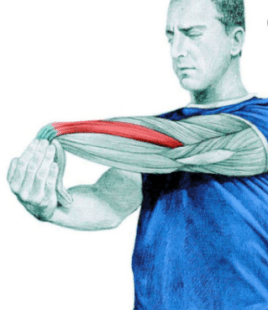
5. Forearm Extensor Stretch: To stretch your forearm extensor, start by pushing your shoulder down and back, then externally rotate your shoulder. Once in position, apply pressure to your opposite hand and begin to stretch.

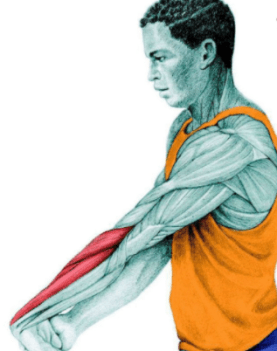
6. Forearm Extensor Stretch: Stretch the forearm extensor by pushing your shoulder down and back, and externally rotating the shoulder. Apply pressure with your opposite hand to begin the stretch

7 and 8

7. Lateral Side Flexion of the Neck: This stretch highlights your sternocleidomastoid or SCM. Keep your neck as long as possible while slowly dropping your ear to your shoulder. You can progress this stretch by being seated on a chair and grabbing the bottom of the seat.

8. Neck Rotation Stretch: To stretch the SCM, slowly rotate your neck while keeping your chin elevated. For a deeper stretch, apply pressure with the hand opposite from the direction you are rotating.


9 and 10

9. Neck Extension Stretch: To work the SCM, place your hands on your hips while keeping your spine long and tilt your head back.

10. Lateral Side Flexion of the Neck with Hand Assistance: Stretch the SCM and upper trapezius by keeping your neck long and slowly dropping your ear to your shoulder.


11Screen Shot 2016-03-21 at 9.58.06 AM.png  12.Screen Shot 2016-03-21 at 9.58.13 AM.png

11. Lateral Shoulder Stretch: To stretch your side deltoid, bring your arm across your body and lightly apply pressure to increase the stretch on your shoulder.

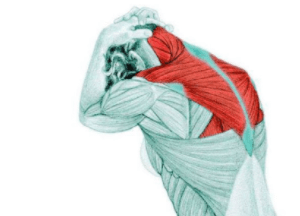
12. Standing Assisted Neck Flexion Stretch: This stretch will work your Trapezius muscle. Start by standing with your feet together. Keep your spine long, slowly sit your hips back and round your upper back while tucking your chin into your chest.

Screen Shot 2016-03-21 at 10.01.49 AM.png

15. Lat Stretch With Spinal Traction: To stretch the latissimus dorsi, take a firm grip on a bar while slowly lifting your feet off the ground. Avoid this stretch if you have recently injured your shoulder.

16. Lat Stretch At The Wall: Also for the latissimus dorsi, place both hands on the corner of a wall or post. Keep your spine long while slowly pushing your hips out to the side. Avoid this stretch if you have lower back problems.

Screen Shot 2016-03-21 at 10.02.50 AM.png     Screen Shot 2016-03-21 at 10.02.57 AM.png

18. Standing Calf Stretch: To work the soleus and gastrocnemius, perform this stretch on the edge of a stair step. Lightly rotate your ankles to stretch the calf muscles actively.

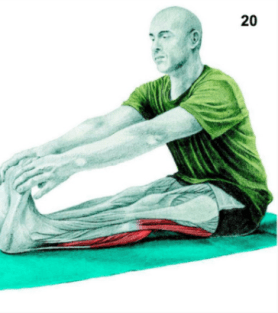
20. Seated Forward Fold / Seated Toe Touch: To stretch the hamstrings and calves, sit and bend the knees as needed.

27. Screen Shot 2016-03-21 at 10.05.38 AM.png   Screen Shot 2016-03-21 at 10.06.31 AM.png

27. Down Dog Variation At The Wall: To stretch your pectoralis and latissimus dorsi, position yourself far enough from a wall so that when you touch the wall your body becomes parallel to the ground. Hinge at the hips and keep your spine straight. Push your chest forward creating a slight arch in your upper back; stretch your lats and chest muscles.

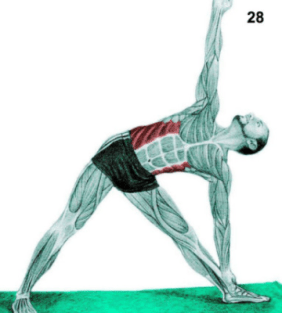
28. Triangle Pose: This will work your external obliques. Start with a wide stance, your front foot straight ahead and your back foot at 90 degrees. Place your hand on your front leg or the floor as you sit back into your front hip, keeping your back straight.

30.Screen Shot 2016-03-21 at 10.04.37 AM.png   Screen Shot 2016-03-21 at 10.05.21 AM.png

30. Supine Twist: This will stretch your glutes and external obliques. Lie flat on your back and bring one leg across your body. Slowly rotate your upper body in the opposite direction.

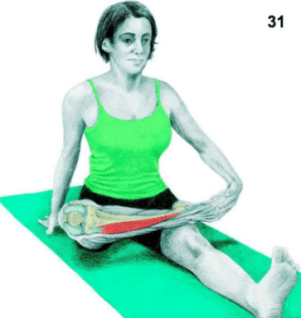
31. Seated Half Pigeon Variation: To work your anterior tibialis, sit with your feet in front of you and bring one hand behind you as you rotate your hip and bring one foot above your knee.

The full article of stretches can be found here: http://www.davidwolfe.com/34-pictures-muscles-stretching/
  **These stretches can not take the place of therapy treatments and are not prescribed by a therapist. 

Hayden Encore Athletes of the Month, Sydney Watson and Jackson Tavel.

Congratulations to the Hayden Encore Athletes of the Month, Sydney Watson and Jackson Tavel. Sydney and Jackson are athletes at Corner high school in Dora, Alabama.

Sydney Watson.JPG

Sydney is a Senior on the Lady Yellow Jackets softball team and has played on varsity for 3 years. She was named the CHS 2015 Pitcher of the Year and you can find her on the diamond wearing jersey #27. Sydney has a 4.25 GPA and has signed to play softball with Martin Methodist College while majoring in Physical Therapy. She is the daughter of Doug and Meredith Watson.

Jackson Travel.JPG

Jackson is also a Senior and plays on the Yellow Jackets Baseball team. He has been on the varsity team for 4 years and wears jersey #7. During his baseball season, he was awarded the 5A State Pitcher of the Year for CHS. Jackson has a 3.5 GPA and has signed an NLI with Ole Miss for a baseball scholarship. He is the son of Janna and Scott Travel.


Tillman’s Corner Athlete of the Month, Jesse Lyons.

Jesse Lyons.png

Congratulations to the Tillman’s Corner Athlete of the Month, Jesse Lyons! Jesse is a Senior, athlete at Alma Bryant high school. He is on the Hurricanes football team and wears jersey number 72. Jesse has been nominated for the All-County Offensive Lineman award and wants to play football in college. He has chosen to major in Social Work. Jesse is the son of Samantha and George Lyons.

Alabama Elite Preview Invitations

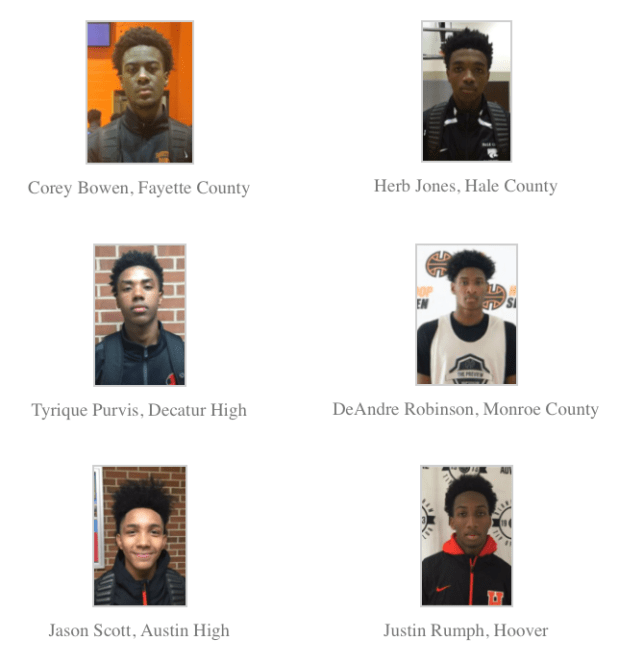
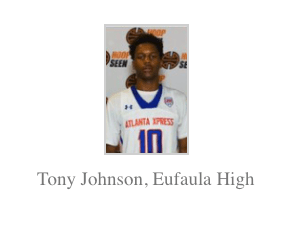
Congratulations to all of the athletes that received Alabama Elite Preview Invitations these past couple of weeks. The “AEP” will begin on March 5, 2016. It is a preview of 80 of the best high school basketball (2017, 2018, 2019) players in Alabama.

Here are the athletes who were invited that are affiliated with Encore Rehabilitation (through our Sports Medicine program in their school).

Screen Shot 2016-01-28 at 2.20.13 PMScreen Shot 2016-01-28 at 2.20.22 PMScreen Shot 2016-01-28 at 2.20.32 PMScreen Shot 2016-01-28 at 2.20.41 PM


You can find out more at the website: http://hoopseen.com/index.php/2013-03-19-19-24-39/elite-preview

Long Beach Encore Athlete of the Month, Gerald Jones, Jr.

Congratulations to the Long Beach Encore Athlete of the Month, Gerald Jones, Jr! Gerald is a multi-sport, sophomore, athlete at Pass Christian High School in Mississippi.  He has been a member of the Varsity Pirates Football and Basketball teams for 2 years and wears jersey #1. Gerald’s sports awards consist of the Basketball Defensive Player, Football Most Valuable Offensive Player, and Most Valuable Player.  He currently has a 3.6 GPA and plans to attend college to major in Sports Medicine and then go on to play in the NFL. Gerald is the son of Gerald Jones Sr. and Tiffany Spencer.

Good Luck during basketball season, Gerald! Keep up the good work!

West Point Encore Athlete of the Month, Chamiya Brownlee.

Screen Shot 2015-11-17 at 1.19.06 PM

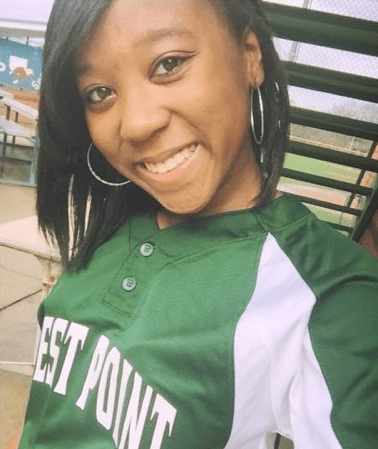
Congratulations to the West Point Encore Athlete of the Month, Chamiya Brownlee!  Chamiya is a sophomore athlete at West Point High School in Mississippi.  She has been a member of the Green Wave softball team for 3 years now and wears the jersey number 16.  Her awards consist of MVP, Golden Glove award, and 2 year letterman.  Chamiya has a 4.0 GPA and plans to attend Mississippi State University or Ole Miss to major in Physical Therapy, Athletic training, or Pediatrics.  She is the daughter of William and Latoria Brownlee.  Keep up the good work, Chamiya!

PT Tip of the Week

“Does your child get back pain from wearing a backpack? The backpack should not weigh any more than 15% of the child’s body weight. Other things that will help: wear the backpack over both shoulders, and make sure the straps are tight enough so the pack doesn’t ride below the hips.”

Clanton Patient of the Month, Brandon Craig.

Screen Shot 2015-02-24 at 11.02.53 AM

Congratulations to Brandon Craig who was chosen as the Clanton Encore Patient of the Month! Brandon is junior at Verbena High School and an active member of the Verbena Be There: Anti-Bullying club. He is also enrolled and taking classes at Lecroy Technical School. Outside of his busy school life, Brandon works at Clanton’s local radio station, 98.3 WSMX, and is a volunteer with The Pentecost Fire Department. After high school, he wants to attend college for nursing and work his way up to being a doctor or study in sports medicine. Keep up the good work, Brandon!