Uncategorized

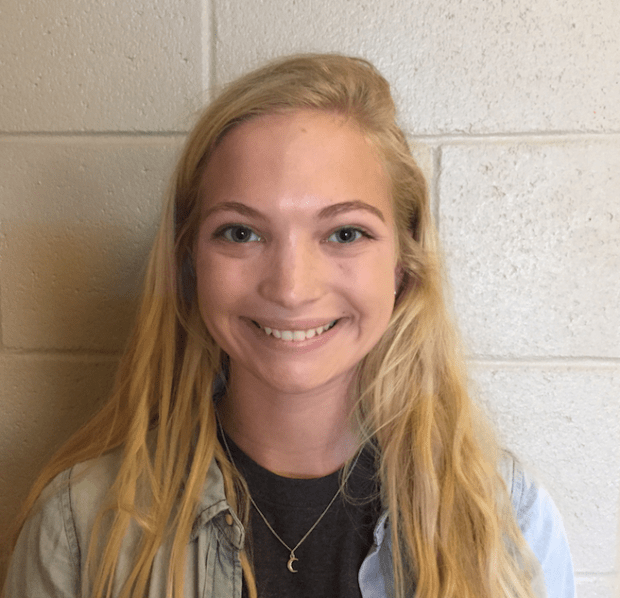
Foley Encore Athlete of the Month, Anna Langston.

Screen Shot 2016-12-08 at 12.39.18 PM.png

Congratulations to the Foley Encore Athlete of the Month, Anna Langston! Anna is a freshman multi-sport athlete at Foley High School. She has been a member of the Swimming and Soccer teams for a year now and will graduate in 2020. She is the daughter of Adam and Diesje Langston.

Alabama Squad Adds 2 Players to the All-Star Team via the AHSAA


MONTGOMERY – Alabama and Mississippi all-star teams reported Monday afternoon for Saturday’s 30th annual Alabama-Mississippi All-Star Football Game at Montgomery’s Cramton Bowl. Alabama’s squad added two players Monday with one replacement reporting Tuesday.
Kickoff is set for noon Saturday with Raycom Media televising the game live over its Raycom affiliate stations in both states as well as in Memphis and Columbus (GA). The AHSAA Radio Network will also broadcast the game live over its radio network Saturday.
Spain Park 6-foot-2, 275-pound defensive end Douglas Henze replaced LaBryan Ray of James Clemens. Henze reported Monday. Jaylond Adams of Minor, who was added last week, dropped off the team due Monday and was replaced by Opelika’s Craig Lawrence. The 6-foot-2, 240-pound Florence played fullback for the Class 6A state runner-up Bulldogs but will be likely used some at tight end as well.
St. Paul’s Episcopal defensive lineman Ryan Johnson is also expected to play some tight and for the Alabama squad this week.
UMS-Wright Coach Terry Curtis is serving as the Alabama head coach. Quarterbacking the squad will  Daulton Hyatt of Etowah and Bubba Thompson of McGill-Toolen Catholic with Blount’s multi-talented Kadarius Toney listed on the team as “athlete.” Toney, a Florida commit, combined for almost 4,000 total yards as the Leopards’ quarterback in 2016. Hyatt, heading to Arkansas, finished the 2016 121-of-184 passing for 2,240 yards and 25 touchdowns with only five interceptions.   Thompson led McGill-Toolen (13-1) to the 7A state finals – completing 26-of-39 passes for 280 yards in the 17-7 loss to Hoover. He finished 2016 with 211-of-387 passes completed for 2,984 yards and 38 touchdowns.
Head coach for Mississippi is Todd Mangum of Wayne County. 
Mississippi snapped a seven-game Alabama winning streak in the series last year with a 28-21 win at Hattiesburg (MS). Alabama holds a 21-8 edged in the series, however, dating back to 1988. The game was played in Mobile from 1988-2011 before moving to Cramton Bowl from 2011-15. The game was played at Southern Miss last year – the first time the game has been hosted in that state. Honorary captains include Kenny King for Alabama and Marcus DuPree for Mississippi.
   MISSISSIPPI SUPER RECRUIT: Among the top players on the Mississippi squad is 6-foot, 215-pound Clinton quarterback Cam Akers, who did not report with the team Monday but was expected to join the squad Monday night. He led Clinton to the MHSAA Class 6A state championship last weekend – finishing the season 173-of-280 passing for 3,128 yards and 31 touchdowns.
Clinton beat Pearl 49-35 to finish the season 14-1.  Also on the Mississippi squad from Clinton are running back Darius Maberry, a Southern Miss commitment, and defensive back Kam White, who has Iowa State at the top of his list.
West Point’s Everitt Cunningham, a 6-3, 240-pound defensive end, helped his team beat Laurel 29-8 to win the MHSAA Class 5A state crown.
TEAMS VISIT HYUNDAI PLANT: Both squads visited the Montgomery Hyundai automotive plant Monday night before settling in. The teams will conduct two practices Tuesday with the morning practice from 9 to 11 a.m., and the afternoon practice from 2 to 4 p.m.

Diamondhead Athlete of the Month, Brooke Fagan.

12037.jpeg

Congratulations to the Diamondhead Athlete of the Month, Brooke Fagan! Brooke is a junior multi-sport athlete at Hancock High School in Kiln, MS. She has been a member of the Lady Hawks Softball and Volleyball teams for 5 years now and wears jersey #9 and #10 respectively. Brooke has quite a few impressive awards from her 5 year sports career- the 2015 South State MVP in volleyball and was a member of the 2015 All-State Volleyball team. She also has a 3.5 GPA and plans to play softball in college and major in sports medicine. She is the daughter of John and Jennifer Fagan.

The ultimate guide to keeping your diet during the holidays.

We know what you’re all thinking, keeping your diet during the most wonderful time of the year is not as easy as eating pumpkin pie. But we’ve done our research! The CDC and American Heart Association have come out with two awesome guidelines to help you keep up your diet through the holidays– And they are more simple than you think.

Let us start with a few pointers from the CDC shall we…

1. Holiday-Proof Your Plan by Planning Ahead

  • If your meal is served later than normal, eat a small snack at your usual mealtime and eat a little less when dinner is served.
  • Invited to a party? Bring a healthy dish along. Plenty of people will bring the sweets. (Be the change).
  • Don’t skip meals to save up for a feast. You’ll be really hungry and more likely to overeat (we’ve all done it, but you’ll be sorry about it later).

2. Outsmart the Buffet

When you face a spread of delicious holiday food, make healthy choices easier:

  • Make a small plate of the foods you like best. Portion control is everything.
  • Start with vegetables to take the edge off your appetite.
  • Eat slowly. It takes at least 20 minutes for your brain to realize you’re full.
  • Avoid or limit alcohol. If you do have an alcoholic drink, have it with food.

3. Fit in Favorites

Choose the dishes you really love and can’t get any other time of year, like Aunt Edna’s pumpkin pie (which has a lot less calories than pecan pie). Slow down and savor a small serving, and make sure to count it in your meal plan.

4. Gotta Keep Moving

You’ve got a lot on your plate this time of year (literally), and physical activity can get crowded out. But being active is your secret holiday weapon; it can help make up for eating more than usual and reduce stress during this most stressful time of year. Get moving with friends and family, such as taking a walk after a holiday meal. 

5. Get Your Zzz’s In

Going out more and staying out later often means cutting back on sleep. Sleep loss can make it harder to control your blood sugar, and when you’re sleep deprived you’ll tend to eat more and prefer high-fat, high-sugar food.  Aim for 7 hours per night to guard against mindless eating.

“Most of all, remember what the season is about—celebrating and connecting with the people you care about. When you focus more on the fun, it’s easier to focus less on the food.” 

See that wasn’t so bad! Now lets move along to what the American Heart Association has to say…

“This guide includes great tips and recipes to help you navigate the holiday season in a healthy way. Here are some simple ways you and your family can eat healthy. Visit heart.org/healthyeating to learn more.”

Include

• Fruits and vegetables • Whole grains • Beans and legumes • Nuts and seeds • Fish & skinless poultry, or plant-based alternatives • Fat-free and low-fat dairy products • Healthier fats and nontropical oils.

Limit

• Sodium and salt • Saturated fat • Sweets and added sugars, including sugar-sweetened beverages • Red meats — if you choose to eat red meat, select the leanest cuts.

Avoid

• Trans fat and partially hydrogenated oils

Tips

  • Choose wisely, even with healthier foods. Ingredients and nutrient content can vary by brand and preparation.
  • Compare nutrition information on package labels and select products with the lowest amounts of sodium, added sugars, saturated fat and trans fat, and no partially hydrogenated oils.
  • Watch your calorie intake. To maintain weight, consume only as many calories as you use up through physical activity. If you want to lose weight, consume fewer calories or burn more calories.
  • Eat reasonable portions. Often this is less than you are served.
  • Eat a wide variety of foods to get all the nutrients your body needs.
  • Prepare and eat healthier meals at home. You’ll have more control over ingredients.
  • Look for the Heart-Check mark to easily identify foods that can be part of an overall healthy diet. Learn more at heartcheck.org 

    **You can find delicious alternative recipes for family meals from the A.H.A. here.


Fayette Encore Athlete of the Month, Nick Holmes.

Nick Holmes.png


Congratulations to the Fayette Encore Athlete of the Month, Nick Holmes! Nick is a sophomore athlete at Fayette County High School. He has played on the Varsity Tigers Football team for a year now and wears jersey #61. Nick was referred to our clinic after he broke his ankle during football season. He has received physical therapy for all little over a month now and has been progressing greatly.

Nick is the son of Amber Holmes. Keep up the good work, Nick!

CLASS 7A CHAMPIONSHIP GAME: Hoover 17, McGill-Toolen Catholic 7.

CykK0cXXUAAFMgf.jpg

    AUBURN – Hoover High School’s last defensive series of the Super 7 Class 7A state championship game Wednesday night  was perhaps the best series of the 2016 season.
Three straight sacks on second, third and fourth down left defending state champion McGill-Toolen Catholic (13-1) some 36 yards shy of a first down and closed the final chapter on the Bucs’ 17-7 victory and the 12th state title in school history.
The Super 7 Championships continue Thursday at Jordan-Hare Stadium with defending state champion Piedmont (14-0) facing Mobile Christian (13-1) in the 3A title game at 11 a.m., followed by defending state champion Maplesville (13-0) vs. Pickens County (11-3) in the 1A finals at 3 p.m. Beauregard (12-1) and Wenonah (11-2) close out Thursday’s schedule with the 5A finals at 7 p.m. All games are being televised live over the Raycom Media Network. Go towww.pathtotheplayoffs.com for more details. Tickets are also available at www.preptix.com.
Led by 2016 7A Championship Game MVP Kholbe Coleman, Hoover (12-2) finished the night with nine sacks and 82 lost yards for the Yellow Jackets’ talented offense.  Coleman finished with eight tackles, one sack for a 15-yard loss and 3.5 tackles resulting in 23 negative McGill-Toolen yards. Coach Caleb Ross’s Jackets finished with minus-43 yards rushing on the night.  Quarterback Bubba Thompson was 26-of-39 passing for 280 yards but finished with a negative 58 yards rushing on 16 carries.
The Hoover offense was solid – building a first-half 10-0 lead on junior place-kicker Barret Pickering’s 42-yard field goal late in the first quarter and C.J. Sturdivant’s 2-yard TD run midway through the second period.  The kick was the 19th field goal of the season for Pickering, a Hoover school record.
Sturdivant, who finished with a game-high 96 yards rushing on 16 carries, dashed 37 yards with 8:50 left in the third quarter for his second touchdown of the night to give Hoover a 17-0 lead.
McGill-Toolen clawed back, however. Thompson connected with Jalen Tolbert with 4:13 remaining for a 30-yard TD pass to cap a 10-play, 80-yard march. Tolbert finished with four catches for 60 yards.  Hoover got the onside kick, and then turned to its defense to seal the win.
Hoover defensive end Christon Taylor added three sacks and six tackles and Ben Abercrombie had nine stops. Jayden Jordan also had a key interception.
McGill-Toolen, which saw its 22-game winning streak come to an end, got a strong defensive effort Carlton Martial. The linebacker had 11 solo tackles and six assists for 17 total stops. Receiver Trey Roberson also had six catches for 78 yards, and Larry Rembert, five catches for 51 yards.
Hoover has won 10 state titles in the last 16 seasons.

“Recovery After Stroke: Coping with Emotions” via National Stroke Association.

Screen Shot 2016-11-30 at 12.57.09 PM.png
*The complete article can be found here.

Dealing with a flood of emotions can be hard for stroke survivors. Some emotions are normal responses to the changes in your life after stroke. Others are common but should not be considered a normal part of stroke recovery. If you suffer from depression, anxiety or emotions that are not in line with the occasion, seek help.

Dealing with Depression

Grieving for what you have lost is good for you. But when sadness turns to depression, it’s time to act. Depression can take hold right after a stroke, during rehabilitation (rehab) or after you go home. It can be – but not always – caused by brain damage from the stroke. Mild or major, it is the most common emotional problem faced by survivors.

Your treatment may include counseling, medicine or both.

Depression symptoms include:

  •  Feeling sad or “empty” most of the time
  •  Loss of interest or pleasure in ordinary activities
  •  Fatigue or feeling “slowed down”
  •  Sudden trouble sleeping or oversleeping
  •  Sudden loss of appetite or weight gain
  •  Being unable to concentrate, remember or make decisions like you used to
  •  Feeling worthless or helpless
  •  Feelings of guilt
  •  Ongoing thoughts of death or suicide, suicide planning or attempts
  • A sudden change in how easily you are annoyed  Crying all the time

    Some useful tips:

     Make the most of rehab; the more you recover, the better you will feel

    Spend time with family and friends

     Maintain your quality of life by staying active and doing things you enjoy

     Seek help soon after you note symptom

Having Extreme Anxiety

Anxiety is an overwhelming sense of worry or fear. It can include increased sweating or heart rate. Among stroke survivors, feelings of anxiety are common. Often, stroke survivors suffer from both depression and anxiety at the same time.

Anxiety can affect rehab progress, daily living, relationships and quality of life. So, be sure to seek help right away.

Anxiety symptoms include:

  •   Ongoing worrying, fear, restlessness and irritability that don’t seem to let up
  •   Low energy
  •   Poor concentration
  •   Muscle tension
  •   Feeling panicky and out of breath
  •   Scary rapid heart beat
  •   Shaking
  •   Headache
  •   Feeling sick to your stomach

    Again, treatment may include counseling, medicine or both.

Uncontrolled Emotions

Do you find yourself laughing or crying at all the wrong times? If so, you may suffer from Pseudobulbar Affect (PBA). Also called emotional incontinence or pathologic lability, PBA is a common medical problem among stroke survivors. It can cause you to laugh at a funeral or cry at a comedy club. It can even make you cry uncontrollably for little or no reason. For this, it is often confused with depression. But, PBA is not depression.

People with PBA are unable to control their emotional expressions the way they used to. When this happens in social settings, they feel embarrassed, frustrated and angry. They also sense that others are uneasy. They may avoid work, public places and family get-togethers. This can lead to feelings of fear, shame and isolation.

There is no treatment approved by the Federal Drug Administration (FDA) for PBA, though antidepressant drugs can help.

These things may help you cope with PBA:

  •  Be open about it. Warn people that you cannot always control your emotions.
  • Explain that the emotions you show on the outside don’t always reflect how you feel on the inside.
  •  Distract yourself. If you feel an outburst coming on, focus on something boring or unrelated. Try counting the number of items on a shelf.
  •   Note the posture you take when crying. When you think you are about to cry, change your posture.
  •   Breathe in and out slowly until you are in control.
  •   Relax your forehead, shoulders and other muscles that tense up when crying.

    What Can Help

  •   Ask your doctor about emotional changes and symptoms early on.
  •   Ask your family to stimulate your interest in people and social activities.
  •   Stay as active as possible and stay involved in your hobbies.
  •   Set goals and measure accomplishment.
  •   Plan daily activities to provide structure and sense of purpose.
  • Stay involved with people, thoughts and activities that you enjoy.

    Get information on stroke recovery from National Stroke Association. Visit http://www.stroke.org or call 1- 800-STROKES (1-800-787- 6537).

    Contact your local stroke association. Join a stroke support group. Other survivors will understand your issues, and offer support and ideas to help you manage your emotions.


    Speak openly and honestly to your caregivers about your emotional changes. They’ll be glad you did, and together you can work out a solution.


    Professionals Help:

     Psychologists, psychiatrists and other mental health professionals experienced with stroke-related emotional disorders.


    Rehabilitation is a lifetime commitment and an important part of recovering from a stroke. Through rehabilitation, you relearn basic skills such as talking, eating, dressing and walking. Rehabilitation can also improve your strength, flexibility and endurance. The goal is to regain as much independence as possible.

    Remember to ask your doctor, “Where am I on my stroke recovery journey?

Alabama All-Star Team Adds 2 players

MONTGOMERY – Jackson-Olin High School senior linebacker T.D. Moultry and Minor receiver Jaylond Adams have been added to the Alabama All-Star Team roster for the 30th annual Alabama-Mississippi All-Star football game.
Alabama and Mississippi will square off Saturday, Dec. 10 at Cramton Bowl. Kickoff is set for noon with the game set to be televised live over the Raycom Network over its network in Alabama and Mississippi.
The 6-foot-3, 225-pound Moultry, an Auburn commitment, led Jackson-Olin to the Class 6A state playoffs in 2016 averaging more than 10 tackles per game. He had 13 stops and two sacks in the final regular season game versus Fairfield.  He has also been selected to play in the U.S. Army All-America Game in San Antonio, Texas, Jan. 7. He replaces Central-Phenix City’s Markail Benton.
Adams was a standout running back, wide receiver and kick returner while leading Minor (11-2) to the Class 6A, Region 6 championship and its best season since 2000.  The Tigers scored a school record 631 points.
Adams had over 1,500 yards rushing and went over 2,000 yards including receiving and kick returns.  He replaced Zech Byrd of Stanhope Elmore.
UMS-Wright Coach Terry Curtis is serving as head coach for this year’s game. Alabama holds a 21-8 edge in the series. Mississippi won last year 28-21 at Hattiesburg, MS. It was the first time the game had been played outside Alabama and snapped a seven-game winning streak for the Alabama All-Stars.

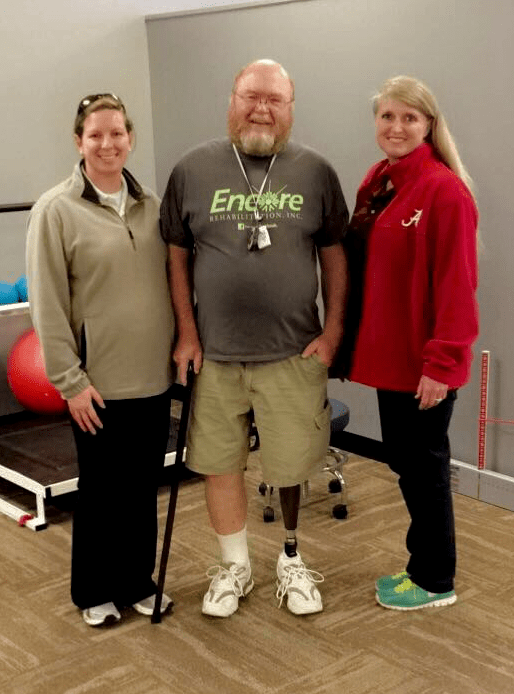
Fayette Encore Patient of the Month, Sherman Lee.

Screen Shot 2016-11-29 at 2.28.44 PM.png

We would like to recognize our Fayette Encore Patient of the Month, Sherman Lee. Sherman is a native of Fayette, AL and has been coming to our clinic to receive physical therapy after his total knee replacement. He has been receiving therapy treatment for 2 months now and has been improving greatly! Keep up the good work Mr. Lee!

“I have been to Encore before at the Winfield location. This is a great bunch of professionals and I love the way they treat their patients. I want to stay with Encore.”

-Mr. Lee.

“The Link Between Nutrition and Pain Is too Strong to Ignore” via APTA.

By Joe Tatta, PT, DPT, via APTA

Here’s a situation I bet you see all too often in your practice: a patient or client comes to you to overcome pain and increase mobility, and you see almost immediately that working on the mechanics of motion won’t be enough—they could really benefit from some lifestyle changes as well. Frequently, one of those changes involves thinking more carefully about the food they’re putting into their bodies.

Despite Hippocrates’ oft-quoted “Let food be thy medicine,” most physicians receive only a few hours of instruction about nutrition and coaching to help patients change their eating habits. Yet studies like this one from the National Institutes of Health show nutritional education becomes an incredibly useful tool to improve overall health outcomes for patients and specifically reduce inflammation.

As PTs, we are presented with a real opportunity here. Research shows that PTs can play an active role in lifestyle-related interventions such as nutrition. Providing information on nutrition will put you ahead of the curve with your peers while improving your patients’ results.

Early in my practice, I saw how obesity often contributed to my patients’ pain. Once I began providing information on some simple diet and lifestyle strategies with my patients, many lost weight, felt better, and dramatically reduced their pain. Nutrition became the missing link to help my patients manage and relieve pain.

Over time, I’ve found that nutritional screening and informational strategies can make a difference in 5 conditions associated with pain that we often see in our practices:

  1. Inflammation. Copious inflammatory foods, including vegetable oils, populate the Western diet. Most observational and interventional studies show a traditional Mediterranean diet, rich in healthy fatty acids, fruits, vegetables and fiber, provides anti-inflammatory benefits. Among specific conditions, studies show a Mediterranean diet rich in polyunsaturated fatty acids and antioxidants provide anti-inflammatory effects that benefit individuals with rheumatoid arthritis. Epidemiologic and clinical evidence likewise shows an optimal diet can reduce inflammation that, among other things, contributes to metabolic syndrome.
  2. Obesity. As we all know, a vicious cycle ensues as obesity contributes to numerous chronic pain conditions, and the pain in turn can lead to sedentary behavior that increases obesity. Studies prove what I’ve seen countless times in my own practice: weight loss must become a crucial aspect of overall pain rehabilitation.
  3. Osteoarthritis (OA). Studies have shown a relationship between pain and food intake among overweight and obese patients with OA. Fortunately, obesity is the most modifiable risk factor for knee OA. Of course, pain management is crucial to reducing OA symptoms. But even that may have a nutrition connection: one systematic review found scientific evidence to support some specific nutritional interventions–including omega 3 fatty acids–to relieve symptoms among patients with OA. Studies also show various nutrient deficiencies, including vitamins C and D as well as selenium, contribute to OA.
  4. Autoimmune disease. NIH estimates that 23.5 million Americans have an autoimmune disease (compare that with cancer, which affects 13 million Americans). Over 80 autoimmune disorders exist, including Crohn’s disease, rheumatoid arthritis, multiple sclerosis, and type 1 diabetes. Of course, genetic predisposition, environmental factors (including infections), and gut dysbiosis play major roles in autoimmune disease development. But increasingly, researchers believe adverse dietary changes over the past 50 years–including gluten intolerances, altered gut bacteria, and vitamin D deficiencies–also contribute to that increased rate of autoimmune diseases. Chief among those changes is our prevalent high-sugar, high-salt, processed-food heavy diet that paves the pathway for autoimmune diseases. Nutrient-poor diets only exacerbate that problem: evidence shows vitamin D, vitamin A, selenium, zinc, omega-3 fatty acids, probiotics, and flavanol deficiencies contribute to autoimmune diseases.
  5. Prediabetes and type 2 diabetes. Type 2 diabetes affects 29.1 million Americans (that’s over 9% of the population) and paves the way for serious complications such as heart disease, blindness, kidney failure, and lower-extremity amputations. Diabetic neuropathic pain, a common diabetes complication and the most common form of neuropathic pain, affects over 90% of people with diabetes. Studies show increased musculoskeletal pain in patients with type 2 diabetes adversely impacts body mass index, quality of life, physical function, and physical activity abilities. The link between diabetes and nutrition is a fundamental one that should never be set aside.

Working with patients suffering these and other conditions, I’m often impressed how optimal nutrition becomes the needle-mover to alleviate pain and help people heal. So how can a PT incorporate these considerations into practice? Here are a few simple tactics you can use right now:

  1. Ask nutrition-related questions during your initial consultation. Simple things like “do you take a multivitamin” or “about how many vegetable servings do you eat a week” can help lead to gradual dietary tweaks that yield impressive results.
  2. Have your patients keep a 24-hour food diary. Beyond establishing adherence and accountability, asking patients to write down everything they eat for 24 hours provides insight to their daily eating habits. Once you have that insight, you can help them gradually improve those habits.
  3. Offer some simple information. Rather than impose a major dietary overhaul, ask patients to do things that don’t seem so overwhelming; for example, to increase their water intake, or eliminate processed foods and sugar.
  4. Create simple, attainable goals. Begin by allowing your patients to experience success in some way. You might ask a patient to lose 5 pounds over 3 weeks, or provide information about incorporating more omega-3 fats into their diet combined with their exercise program. These goals are doable, and they can provide your patient with the confidence to take on more challenging targets.
  5. Offer your patients other ways to access information on better nutrition. Providing your patients with collateral sources of information—a helpful blog post, or an engaging book on nutrition—helps to reinforce the idea that the benefits of what they’re doing are well-established, and that they’re not alone in their journey toward healthier living. During a subsequent visit, ask patients if they got anything out of what you shared. The more reliable, readable information they receive, the better the chances that they’ll begin to become genuinely interested in the topic themselves, and for the long run. Over time, I’ve even had a few patients recommend books and blogs to me. Refer patients to nutrition and dietary professionals when their needs exceed the professional scope and your personal scope of practice.

If you’ve incorporated nutritional screening and information into your practice, what did you find was the most challenging aspect? Did you see results when patients made those changes? Share your thoughts below.

Joe Tatta, PT, DPT, is a board-certified nutrition specialist and functional medicine practitioner who specializes in treating lifestyle-related musculoskeletal, metabolic, and autoimmune health issues. He is the creator of the Healing Pain Online Summit and The Healing Pain Podcast, and is the author of Heal Your Pain Now: A revolutionary program to reset your brain and body for a pain-free life by Da Capo Press. Learn more by visiting www.drjoetatta.com/apta.