Speech Therapy

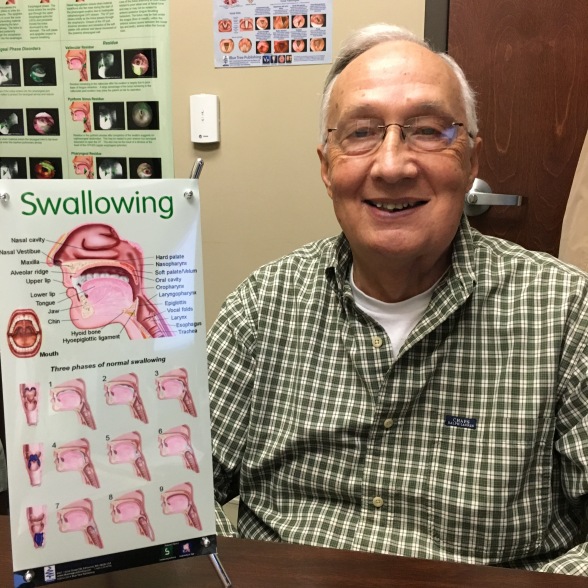
From Feeding Tube to Eating by Mouth: Mr. Lee’s Amazing Success Story

Mr. Lee.jpeg

Speech Therapy at Ocean Springs Neuroscience Center for Dysphagia Treatment

Therapist: Stephanie Stensland MS, CCC-SLP

From Feeding Tube to Eating by Mouth

Mr. Lee’s Success Story:

After jaw reconstruction in July of 2015, Mr. Lee experienced a paralyzed vocal fold and an immobile epiglottis, causing him to aspirate and need a PEG feeding tube for 100% of his nutrition. He was no longer able to eat or drink anything by mouth. He started outpatient therapy October 1, 2015, at the Neuroscience Center to regain his swallow. Mr. Lee went in for another swallow study soon after beginning outpatient therapy and although his epiglottis had begun to partially move, he was still at high risk for aspiration. He was given home swallowing exercises that he did several times a day and began small trials of water using the Frazier Free Water Protocol. As his swallow reflex became faster and he began to demonstrate better hyolaryngeal excursion, we advanced his intake to purees such as pudding with strict swallowing strategies.

Mr. Lee utilized a multi-step strategy to reduce his risk of aspiration which involved using 1) a left head turn to close off the paralyzed vocal fold, 2) a breath hold to help adduct his working vocal fold, 3) a very small bite of a pureed consistency, 4) use a quick and effortful swallow followed by an immediate cough and 5) another swallow and cough. It was a lot of steps, but it allowed him to eat something by mouth. Over the next several weeks Mr. Lee regained strength and his swallow function through continuous exercises, use of neuromuscular electrical stimulation, manual therapy and therapeutic trials of purees and soft solids. Mr. Lee eventually began eating soft whole food and thin liquids with fewer swallowing strategies as he gained strength and function. Around mid-November, we eliminated swallowing strategies and allowed soft solids and thin liquids at home with use of aspiration precautions. Towards the end of November, he was able to meet nearly all nutritional needs by mouth. Once he was able to demonstrate a nutritive swallow without reports of pharyngeal residue, we began addressing his trismus (incomplete jaw opening) with the use of an OraStretch device.

His hours of home exercises and therapy paid off when he returned to Ochsner on January 18, 2016 to have his PEG tube removed! We are proud to report that Mr. Lee is now discharged from speech therapy and is enjoying meals with his family and friends at home and in restaurants.

Mr. Lee’s perspective:

What was eye opening to you about your experience with head and neck cancer and swallowing disorders?

“I was surprised at how long it took to get it all back. I thought I would be swallowing normally a month after my surgery in July of 2015 and that was not the case.”

What do you think helped you the most throughout your journey from being NPO to eating again?

“A combination of sound instruction and recommendations from great doctors, home health therapy, outpatient therapy and family encouragement.”

What would you consider your turning point?

“When I was able to eat Thanksgiving food with my family…in fact I ate three quarters of a pecan pie the week of Thanksgiving. Also, when I took my first bite of a steak. It was great!”

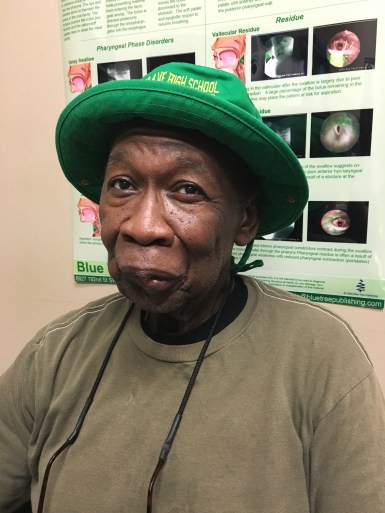
Mr. Gates’ Success Story: Speech Therapy

Mr. Gate.jpg

Mr. Gates’ Success Story

Ocean Springs Neurosciences Therapist: Stephanie Stensland MS, CCC-SLP

Mr. Gates’ responses to questions:

(Stephanie): Can you tell us about what helped you get to this point?

(Mr. Gates): “My exercises had a whole lot to do with it, my Therabite machine and then tasting food got me ambitious to try hard. I was frightened to eat food and scared that I would choke. But I’m now building confidence and eating more. I thank God for helping me out and sending me to the right people.”

(Stephanie): What’s your advice for others going through swallowing problems associated with head and neck cancer?

(Mr. Gates): When you’re feeling your lowest, stick to your exercises and remember your goals. It makes a difference. You’ve got to invest in yourself and know you can do this thing. I still have my times where I have to clean out my mouth and start over, but I always remember my goals.”

Stephanie’s perspective:

Mr. Gates is the perfect example of a patient who has been consistent to come to therapy, comply with swallowing strategies and complete his home exercises. In July 2013, Mr. Gates was diagnosed with head and neck cancer, requiring chemo, radiation, jaw reconstruction and a feeding tube. He was given doctor’s orders to go “NPO” (nothing by mouth) since he was silently aspirating and at risk for aspiration pneumonia. Since then, Mr. Gates has had an ongoing journey of dysphagia therapy. This November, Mr. Gates’ hard work paid off when he was able to pass his swallow study. He has used a combination of approaches to acquire his success: Choosing appropriate consistencies of food, using the supraglottic swallow strategy, following aspiration precautions and gradually increasing the amount of food he consumes on a week to week basis. Treatment involved several types of oral and pharyngeal strengthening exercises, range of motion exercises, manual therapy to help manage stiff scar tissue, use of the Therabite tool, diet changes (starting with purees and honey thick liquids and working up to mechanical soft and thin liquids) and use of the supraglottic swallow strategy. Mr. Gates continues to use his PEG tube for optimal nutrition, but has been able to safely sample all of his home cooking. We are so excited that Mr. Gates is able to eat just in time for the holidays!

Physical Therapy FAQ’s Answered

Can I choose what physical therapist I go to?

Absolutely! The decision of where you receive treatment is yours. If you have a specific therapist or practice you would like to go to, you should let your doctor or insurance company know this. Not all physical therapists or practices are the same and the choice of your provider is yours. Sometimes your physician will recommend a specific therapist or practice to you; sometimes your insurance company will require you to go to specific therapists or practices. You always have the right to ask for a specific provider. If we are not “in network” with your specific insurance company, many have out of network options that still provide coverage.

What should I expect during my physical therapy treatments?

Your first visit will include the initial evaluation and then a treatment. You will be instructed on therapeutic exercises, learn how to manage and care for your symptoms, receive manual therapy if necessary, and may be treated with some type of therapeutic modalities. (As well as given a specific home program, ice, ultrasound, electrical stimulation, traction, etc.)

What type of treatment will I receive?

Treatment is based on the initial evaluation findings along with ongoing reassessment and evaluation. Treatment may consist of a variety of hands-on joint and soft tissue treatment techniques, exercise techniques and pain reducing modalities. Treatments are designed to increase motion and strength, reduce pain, and most importantly, restore function. Patients are typically involved in an active exercise program at home and are educated in ways to speed recovery and prevent recurrence of the problem.

What should I wear?

It is best to wear clothing and shoes that are appropriate for exercise. The clothing should either expose the area (i.e. wear shorts if you are being seen for a knee problem) or be loose fitting to easily expose the area that is being treated. You may be asked to put on a gown depending on where your pain or problem is located.

How many treatments will I need?

Our average number of treatments is 6, but this can vary depending on the extent and type of injury that is being treated.

What is Physical Therapy? Is it like Massage Therapy or Chiropractic Care?

In reference to massage therapy, a PT can and will often administer massage-like techniques called soft tissue mobilization, but massage therapists cannot administer PT. The PT you receive therefore may include soft tissue mobilization but will include much more education, exercise and the use of other modalities.

Chiropractic care differs quite a bit in the sense that a Chiropractor relies heavily on performing joint manipulations. Chiropractors typically will see a patient for much longer than a physical therapist for continued joint manipulations or “adjustments” whereas a physical therapist will rehab the injury or painful area and then instruct the patient in a Home Exercise Program for continued care. A physical therapist with specialized training can effectively perform many of the physical adjustments that a Chiropractor utilizes.

How can Physical Therapy help back pain?

Physical Therapy helps control back pain by reducing pain, controlling swelling and through therapeutic exercises. Patient education such as home exercises and lifting techniques also play a large role is assisting the patient in controlling low back pain.

I just had orthopedic surgery; will physical therapy help me heal faster?

Of Course! Physical Therapy can help reduce swelling, increase active and passive range of motion and increase strength and endurance after orthopedic surgery. Most importantly, attending physical therapy increases the functioning of the involved muscles, bones and other soft tissues much more quickly and effectively than just “staying at home” after surgery.

How do I know that physical therapy can help me?

Physical therapy can help anyone who is suffering from musculoskeletal injuries, recovering from surgeries or other difficulties such as balance/walking problems, or neurological problems such as stroke and acquired brain injuries. Even people recovering from non-orthopedic surgeries (internal problems, cancer) can benefit from PT by regaining strength and endurance. The realm of physical therapy is huge and encompasses the whole body and its functioning. To learn how PT can specifically help your condition, make an appointment with any of our locations for a Free Assessment.

Do I need a referral to come to physical therapy?

In the state of Iowa, a referral from a physician is not required to receive a physical therapy evaluation or treatment. Some exceptions do occur. Medicare always requires a referral to obtain physical therapy services. This referral may come from a physician, a physician assistant, a nurse practitioner, a dentist or a podiatrist. In addition, some insurance companies require a referral to provide insurance coverage. You should call your insurance company to determine whether or not you are required to have a referral for coverage.

What does a physical therapist do?

Physical therapists are experts trained in the evaluation and treatment of musculoskeletal dysfunction. They are trained specifically to improve movement and function, relieve pain, and expand movement potential. Physical therapy is often the treatment of choice in situations where pain impairs function, in recovering from an injury or surgery, and in recovering from a disease process or illness. Physical therapists also teach adaptive and physical coping skills in dealing with impaired function from a disease, injury or illness.

Will my insurance cover physical therapy?

Most insurance companies do cover physical therapy services. The amount and type of coverage varies. It is always best to check with your insurance company regarding specific coverage guidelines. The staff at each location will also verify your specific coverage guidelines at your first visit. If you do not wish to utilize your insurance, you may choose our private pay plan. We accept checks, VISA and MasterCard.

As a patient, what can I do to assure the best possible outcome?

First, recognize that you play the most important role in your own recovery. We encourage patients to act as full partners with their therapist in the treatment process. Comply with your in-clinic therapy schedule; follow through on your home exercise programs; and communicate often and completely with your therapist regarding any problems or concerns you may experience. Physical therapy is an active process that requires your full commitment and interaction with your therapist. Ask questions and be receptive to suggestions regarding exercise, lifestyle changes and adjustments or modifications of your daily activities.

Why should I go to physical therapy, can’t I get better on my own?

1. Physical therapists are trained to identify the movement dysfunction and compensation changes related to your diagnosis.
2. We rehabilitate an injury with the correct movement patterns in place of faulty habits.
3. We educate you about what your injury does to your body and how to correct it
4. We teach you how to prevent further injuries


Source: 

21 Century Rehab. (2014, March 18). Faq’s – what is physical therapy?                                                                                       Retrieved from http://21stcenturyrehab.com/faq/.

What is Encore about?


Encore Rehabilitation, Inc. is one of America’s most diversified rehabilitation providers. It began with two University of South Alabama classmates in the physical therapy program who visualized a rehabilitation company that would provide exceptional physical therapy services and expand their roles as healthcare providers to a national level.

Under the partnership of Paul G. Henderson, PT and Paige B. Plash, PT, Encore Rehab was founded in 1981 and delivers the best rehabilitation services to thousands of patients daily in locations throughout Alabama and Mississippi. Encore Rehab is an employee-focused company with a tremendous team of dedicated and experienced employees who understand the many environments in which a therapist can provide treatment. Through the company’s specialized divisions, Encore Rehab provides rehabilitation services of unsurpassed quality that help patients return to a healthier lifestyle.

  • Encore Rehab focuses on providing services in outpatient clinics, but also offers contract services for healthcare facilities, nursing facilities, schools, businesses, and many other settings.

OPERATIONS INCLUDE