Author: Encore Rehabilitation, Inc.

As the largest privately-owned rehabilitation company in the Southeast, Encore Rehabilitation, Inc. helps people get back to their lives through physical therapy, occupational therapy, speech therapy, aquatic therapy, vestibular rehab, pediatric rehab, industrial rehab, sports medicine, and other orthopedic rehabilitation programs. Rehabilitation services are provided at Encore Rehabilitation Centers in Alabama, Mississippi, Florida, and Tennessee, as well as on-site at healthcare facilities, schools, companies, sporting events, and other locations.

Arab Encore Athlete of the Month, Anna Leigh Hunt.

Anna Leigh Hunt April.2016.jpg

Congratulations to the Arab Encore Athlete of the Month, Anna Leigh Hunt! Anna Leigh is a Senior at Brindlee Mountain High School. She has played basketball for the Varsity Lady Lions team for three years now and wears jersey number 13. She currently has a 3.6 GPA and plans to major in education and become an elementary teacher. She is the daughter of Wendi and Matt Hunt.


Elbow pain: Lateral Epicondylitis (aka, Tennis elbow)

The technology boom of the past decade has not only made our lives easier (debateable), but also caused a surge in overuse injuries. Smart phones, i-pads, and laptops (to name a few) have become as common TV’s and cars to every household in America. The age of instant access to information and social media has made keeping up with news, family and friends much easier but has come at a price. Elbow pain, specifically Lateral Epicondylitis, and Carpal Tunnel syndrome (a topic for another day) have become more common and can become extremely debilitating if not treated in a timely manner. Keep in mind that it can take as little as 3 weeks for an injury to become chronic and therefore seeking early intervention can literally be the difference in a successful outcome and months of pain and discomfort. Unlike most injuries, Lateral Epicondylitis is a problem that almost anyone can diagnose, as long as you know what signs to look for.

First, What is Lateral Epicondylitis? Simply stated, lateral epicondylitis is overuse tendonitis of the wrist and finger extensors. Pain and discomfort are felt on the outside of the elbow and can run down the forearm into the various muscles (muscles that make up the back of the hand). The muscles on the back of the wrist are very small and they all come together and insert just above the elbow.

Second, What are the symptoms? 1. Tender to touch, just above the elbow on the back of the forearm. The area will definitely be sore due to the inflammation. 2. Pain with picking up weighted objects such as a jug of milk, coffee cup, etc., and even something as simple as typing on your laptop. The pain noted in this area can run the entire gammit from sharp pain to a dull, achy feeling. The pain generally subsides when the affected hand is at rest. 3. Noted weakness. Noticeable weakness with gripping activities along with pain in the above mentioned area is a sure fire indicator that you may have lateral epicondylitis. It is not uncommon for me to have patients tell me that they have problems with dropping objects (usually making a mess). 4. Pain with resistance. Make a fist on the hurt arm. Push down on the back of the affected hand with the uninjured hand and that can elicit pain in the elbow. If all these symptoms are present, BAM, you have just acturately diagnosed yourself with Lateral Epicondylitis.

Now I know you are extremely proud of yourself and you should be but ultimately I’m sure you really just want to stop hurting. Let’s talk about the important stuff, the steps to recovery. What to do: 1. Ice. But you say, I hate ice. Believe me, early on, ice is your friend. Putting an ice pack on the painful area for 15 minutes 4-5 times a day greatly enhances your chances of saving a copay. 2. Medication. My medication of choice is Aleve. 2 in the morning and 2 at bedtime for a week is where I generally start. Ibuprofen or Motrin is an acceptable substitute. These medications are called NSAIDS and can be affective at fighting muscular inflammation. If you are unable to take NSAIDS, consult your physician for alternative medications. 3. Rest. It’s simple but true. Making a conscious effort to limit the use of the affected hand greatly improves your chance of success. Trust me, I get it. This is easier said than done, but if you don’t use the affected arm, it won’t hurt. Continuing to use the injured arm increases the inflammation in the tendons and delays healing. 4. Bracing. I struggled with whether or not to mention tennis elbow braces but I do feel they can help manage your pain but here is my disclaimer. Make sure you use them correctly. Proper application is key. If you are unsure of how to properly apply the brace, seek assistance from a qualified health care provider.
In conclusion, Lateral Epicondylitis is not something that you have to run to the doctor with. We mentioned that time is important and it is but give yourself 1 week of managing your symptoms with these simple steps and if the pain improves, then give yourself another week, if it doesn’t, seek the advice and counsel of your family physician. Remember, early intervention and treatment is important to kicking that unwanted uncle out of the house before he wears out his welcome.

This article was written by one of our PT, ATC, Matt Moorer. 

Decatur Encore Athlete of the Month, Brianna Thorne.

Bre POY.jpg

Congratulations to the Decatur Encore Athlete of the Month, Brianna Thorne! Bre is a senior at West Morgan high school and is member of the Lady Rebels Soccer team. You can find her on the field wearing jersey number 21 this year. She has wracked up a few awards during her high school career – the AL.com Super All-State 1st Team award, the 2015  1-3A  All-State award, the 2015 Decatur Daily Player of the Year, and was chosen to be on the AHSAA North All Star Team. Bre currently has a 4.03 GPA and plans to attend UAH to play soccer this fall. She is the daughter of Brian and Jennifer Thorne. Keep up the good work, Bre!

Gordo Encore Athlete of the Month, Charcarya Brown.

Charcarya Brown .JPG

Congratulations to the Gordo Encore Athlete of the Month, Charcarya Brown! Charcarya is a Senior at Pickens County high school. She has been a member of the Varsity basketball team for 6 years now and wears jersey #1. Her awards consist of All-Tournament Team and Varsity Letter award. After graduation in May, she plans to attend the University of West Alabama to become a physical therapist. Charcarya is the daughter of Shunta Brown and Jerry Wilder.

How do you know exactly what muscles you are stretching?

“Stretching is an essential component of both exercise and health, as it helps to maintain flexibility and range of motion in your joints. It is easy to forget to stretch before a workout, perhaps because we do not know exactly why it is that stretching is so important. Well, stretching improves muscle development, increases range of motion, reduces your chances of an injury and provides a warm-up for your muscles. When your muscles are more flexible, the body can perform activities and exercise with the correct form; therefore, stretching also helps to improve posture.”

5.Screen Shot 2016-03-21 at 9.48.07 AM.png   6.Screen Shot 2016-03-21 at 9.58.00 AM.png

5. Forearm Extensor Stretch: To stretch your forearm extensor, start by pushing your shoulder down and back, then externally rotate your shoulder. Once in position, apply pressure to your opposite hand and begin to stretch.

6. Forearm Extensor Stretch: Stretch the forearm extensor by pushing your shoulder down and back, and externally rotating the shoulder. Apply pressure with your opposite hand to begin the stretch

7 and 8

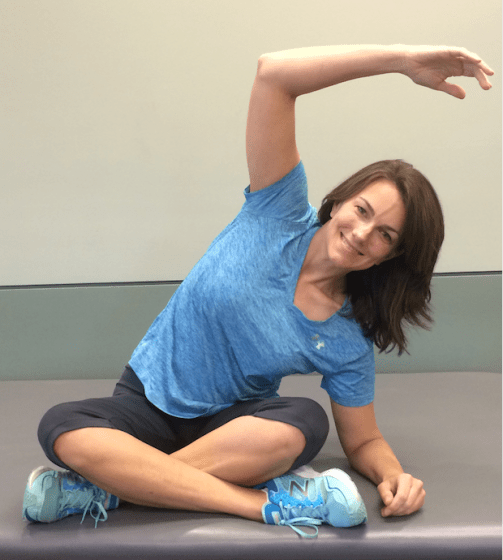
7. Lateral Side Flexion of the Neck: This stretch highlights your sternocleidomastoid or SCM. Keep your neck as long as possible while slowly dropping your ear to your shoulder. You can progress this stretch by being seated on a chair and grabbing the bottom of the seat.

8. Neck Rotation Stretch: To stretch the SCM, slowly rotate your neck while keeping your chin elevated. For a deeper stretch, apply pressure with the hand opposite from the direction you are rotating.


9 and 10

9. Neck Extension Stretch: To work the SCM, place your hands on your hips while keeping your spine long and tilt your head back.

10. Lateral Side Flexion of the Neck with Hand Assistance: Stretch the SCM and upper trapezius by keeping your neck long and slowly dropping your ear to your shoulder.


11Screen Shot 2016-03-21 at 9.58.06 AM.png  12.Screen Shot 2016-03-21 at 9.58.13 AM.png

11. Lateral Shoulder Stretch: To stretch your side deltoid, bring your arm across your body and lightly apply pressure to increase the stretch on your shoulder.

12. Standing Assisted Neck Flexion Stretch: This stretch will work your Trapezius muscle. Start by standing with your feet together. Keep your spine long, slowly sit your hips back and round your upper back while tucking your chin into your chest.

Screen Shot 2016-03-21 at 10.01.49 AM.png

15. Lat Stretch With Spinal Traction: To stretch the latissimus dorsi, take a firm grip on a bar while slowly lifting your feet off the ground. Avoid this stretch if you have recently injured your shoulder.

16. Lat Stretch At The Wall: Also for the latissimus dorsi, place both hands on the corner of a wall or post. Keep your spine long while slowly pushing your hips out to the side. Avoid this stretch if you have lower back problems.

Screen Shot 2016-03-21 at 10.02.50 AM.png     Screen Shot 2016-03-21 at 10.02.57 AM.png

18. Standing Calf Stretch: To work the soleus and gastrocnemius, perform this stretch on the edge of a stair step. Lightly rotate your ankles to stretch the calf muscles actively.

20. Seated Forward Fold / Seated Toe Touch: To stretch the hamstrings and calves, sit and bend the knees as needed.

27. Screen Shot 2016-03-21 at 10.05.38 AM.png   Screen Shot 2016-03-21 at 10.06.31 AM.png

27. Down Dog Variation At The Wall: To stretch your pectoralis and latissimus dorsi, position yourself far enough from a wall so that when you touch the wall your body becomes parallel to the ground. Hinge at the hips and keep your spine straight. Push your chest forward creating a slight arch in your upper back; stretch your lats and chest muscles.

28. Triangle Pose: This will work your external obliques. Start with a wide stance, your front foot straight ahead and your back foot at 90 degrees. Place your hand on your front leg or the floor as you sit back into your front hip, keeping your back straight.

30.Screen Shot 2016-03-21 at 10.04.37 AM.png   Screen Shot 2016-03-21 at 10.05.21 AM.png

30. Supine Twist: This will stretch your glutes and external obliques. Lie flat on your back and bring one leg across your body. Slowly rotate your upper body in the opposite direction.

31. Seated Half Pigeon Variation: To work your anterior tibialis, sit with your feet in front of you and bring one hand behind you as you rotate your hip and bring one foot above your knee.

The full article of stretches can be found here: http://www.davidwolfe.com/34-pictures-muscles-stretching/
  **These stretches can not take the place of therapy treatments and are not prescribed by a therapist. 

Vernon Encore Athlete of the Month, Isaac Whittle.

Isaac Whittle.png

Congratulations to the Vernon Encore Athlete of the Month, Isaac Whittle!

Isaac is a freshman, multi-sport athlete from Lamar County High School. He has been a member of the football, basketball, baseball and track teams for 3 years now and wears jersey number 22. His sports awards consist of All-County Football, WAC- Football Offensive player of the Week, and Bulldog Athlete of the Week. After he graduates in 2019, he plans to attend UNA for 2 years and then transfer to University of Alabama to major in Physical Therapy. Isaac is the son of Tony and Janet Allen.

Keep up the good work, Isaac!

Winfield Encore Athlete of the Month, Katie Wilson.

Katie Wilson.png

Congratulations to the Winfield Encore Athlete of the Month, Katie Wilson! Katie is a Junior at Winfield City high school. She is a member of the Pirata Vitae Winterguard and Danceline teams for 3 years now. Katie has a 4.0 GPA and plans to attend the University of North Alabama and major in nursing. She is the daughter of Joseph and Melinda Wilson.

Common Knee Injuries- by Samuel R Goldstein M.D.

By: Samuel R. Goldstein, M.D. with Andrews Sports Medicine and Orthopaedic Center 

With spring upon on us, many of us are becoming more active, spending considerable time outside enjoying the warmer weather.

Unfortunately, when it comes to physical activity, many of us “Weekend Warriors” jump right into “too much, too fast, too far” mode.

As an orthopaedic surgeon, I see a lot of serious Weekend Warrior injuries to the knee. The knee is at high risk for injury because of its complexity and the enormous amount of force it absorbs and stress it takes. Knee injuries often result from a blow to the knee, twisting or turning or an improper landing.

COMMON KNEE INJURIES 

The most common knee injuries I treat are intra-articular (inside the knee), including meniscal tears and ligament tears.

Meniscal Tears

The meniscus is a “C” shaped cartilage cushion, which is like a wedge within the knee. There are two in each knee which cushion, support, and aid movement. Injury to the meniscus is very common and is one of the most frequently occurring cartilage injuries of the knee. Menicus tears can occur from wear and tear over time or from a sudden twist, turn, or even slowing down when running. As we age, our meniscus gets worn. This can make it tear more easily. Like a lot of knee injuries, a meniscus tear can be painful and debilitating.

Common Symptoms

• Pain in knee

• Swelling and stiffness

• Fluid build-up inside on top of knee

• Sensation that knee is getting stuck or locking

Ligament Tears

The majority of stabilization in the knee comes from the ligaments. The cruciate ligaments are made up of the anterior cruciate ligament (ACL) and posterior cruciate ligament (PCL), which cross to form an “x” shape inside the knee. The collateral ligaments provide additional stability on the inside of the knee through the medial collateral ligament (MCL) and outside the knee through the lateral collateral ligament (LCL).

Ligament injuries in the knee – such as an anterior cruciate ligament (ACL) — are dreaded by pro and amateur athletes alike. They can be painful and debilitating. They can even permanently change our lifestyles. But there’s good news. While an ACL injury or other ligament damage once ended the career of many an athlete, treatment has become much more successful for all of us.

Common Symptoms

• Pain, often sudden and severe

• A loud pop or snap during the injury

• Swelling

• A feeling of looseness in the joint

• Inability to put weight on the point without pain

TREATMENT

The form of treatment used for both meniscal & ligament tears will be dependent on the severity of the injury.

Conservative Treatment

1. Physical Therapy – We work closely with physical therapists to create an individualized program to maximize healing and restore function, strength and mobility.

2. Supports – A variety of supports such as a brace, crutches or other advanced support can help restrict movement and allow the cartilage to begin the healing process.

Surgery

Meniscus – When conservative treatment fails, and the knee continues to be painful and locks in place, arthroscopic surgery may be recommended to repair, trim or remove the damaged meniscal cartilage.

Ligament – Depending on the severity and type of ligament injury, surgery may be recommended.

• For ACL injuries, arthroscopic or open surgery is done using a graft to replace the damaged ligament.

• For certain PCL cases where the ligament is no longer attached properly to the shinbone, surgery is considered.

• For MCL injuries when the ligament is completely torn, surgery can help to repair it.

STAYING HEALTHY

The risk of injury does not mean we shouldn’t be active, but avoiding these injuries requires some common-sense prevention.

• Exercise

1. If we don’t exercise on a regular basis and are not conditioned for a particular sport or activity, we put yourselves at greater risk for injury.

2. Regular exercise helps maintain our muscle strength to help prevent arthritis and keep our joints flexible and better protect them from damage.

• Warm-up and stretch.

• Gradually increase our activity level – and intensity level – on a week-to-week basis.

• Use proper technique.

• Use proper gear and safety equipment.

• Listen to our bodies. The “no pain, no gain” theory is not a good mantra.

Samuel R. Goldstein, M.D. is an orthopaedic surgeon and sports medicine specialist at Andrews Sports Medicine and Orthopaedic Center. Dr. Goldstein specializes in sports medicine, arthroscopy of the knee and shoulder, knee joint replacement and general orthopedic surgery. He has been practicing medicine in Birmingham since 1989 and provides sports medicine coverage to various high school athletic programs in the Greater Birmingham area.

For more information, contact Andrews Sports Medicine and Orthopaedic Center at 205.939.3699 or visit www.AndrewsSportsMedicine.com


Article found at: http://birminghammedicalnews.blogspot.com/2016/03/weekend-warriors-common-knee-injuries.html


Help us raise money for MDA!!

Daniel (LPTA) and Alicia (DPT), from our Winfield clinic, need your help to break free! They are doing time in “jail” for the Muscular Dystrophy Association who is fighting for a cure for kids and adults to break free from the harmful effects of muscle debilitating diseases!

Please join us by making a donation to the MDA to help free them! You can donate to their MDA LOCK-UP “bail funds” below:

Alicia’s website: https://lnkd.in/eSfXyuq

Daniel’s website: https://lnkd.in/ekCFTQp