Athletes

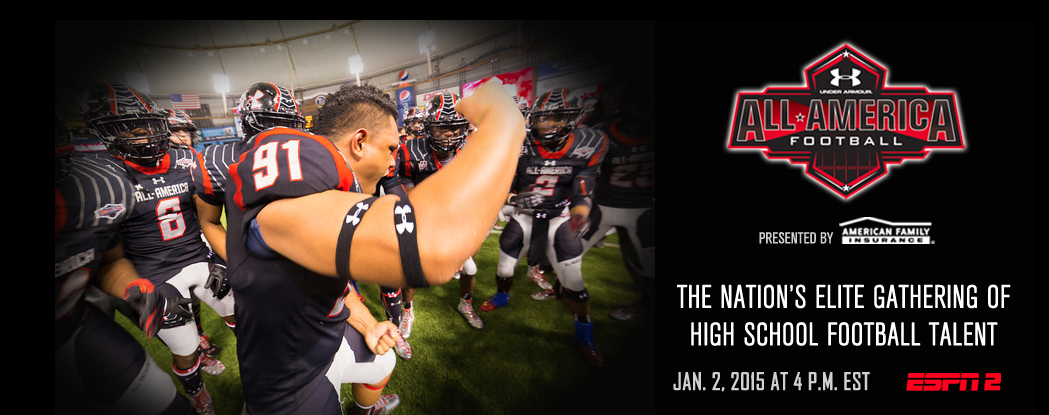
Two Encore Athletes in the 2015 Under Armour All-America High School Football Game.

Screen shot 2015-01-02 at 12.23.35 PM

Encore Rehabilitation is the largest, privately owned, rehabilitation company in Alabama and Mississippi; as well as, one of the leading sports medicine providers in Alabama high schools. We would like to recognize two of our school’s athletes who will be competing in the the 2015 All-America High School Football Game today starting at 4:00 PM eastern time.

Darrell Williams, a 6’3″, senior OLB (#12), from Hoover High School, will be playing in the UA All American game today. Williams has had multiple offers to 4-year schools and chose to commit to Auburn University last May. Williams, along with the Hoover Buccaneers football team, recently won the first AHSAA 7A State Championship this past December. You can view his recruiting profile here.

Kerryon Johnson, a 6’0, 4 star, senior athlete (#3) from Madison Academy High School will also be playing in the UA All American game today. He is ranked #3 on the ESPN 300 football recruiting website and has had offers to multiple 4-year schools. Johnson also chose to commit to Auburn University last April. You can view his recruiting profile here.

You can find out more about the UA All America High School game, players, and game time at .

Follow us on twitter for the latest in AL high school sports at https://twitter.com/Encore_Rehab.

“What should I eat for pre-game fuel?” We’ve got the solution.

Screen Shot 2014-10-30 at 9.25.34 AMScreen Shot 2014-10-30 at 9.23.03 AM

“So you’ve practiced hard all week.  You’ve hydrated and ate your pre-game meal 3-4 hours before kickoff.  But right before you go out for pregame warm-ups, your stomach is telling you it needs more fuel.  Keep it small and light.  1 hour prior to kickoff, eat 1-2 granola bars or a sports bar along with 1-2 cups of water or sports drink.  Find a bar high in carbohydrates (at least 20-30 grams) and light to moderate in protein (2-10 grams).  The carbs will give you the energy you need while the protein will satisfy your hunger but without giving you that full feeling.”

– Eric Oehms, Encore ATC

PT Tip of the Week: Stretching myths. “Do I stretch before, or after I workout?”

“Research shows that stretching is best done AFTER you workout. You should actually jog, walk, or bike for about 10-20 minutes before you workout to warm your body up & better prevent injury. You get more results out of stretching/flexibility exercises post workout when your muscles are fatigued.”
– Josh Davis, PT at the Encore Rehabilitation-Hayden Clinic.


“What’s in my bag” Encore ATC edition.

Almost everyone has heard about the Us Weekly “Whats in my bag” survey they give to the celebs every month. We thought it would be fun to ask a few of our ATCs what all they carried in their bags. Knowing we would get a few funny answers, we decided to share them with you, and here are a few of our favorites answers!

Do you carry a bag or fanny pack? 

We got anything from sling pack, to messenger bags, to rolling (splint) kits.

What brand is your bag/fp? 

Muller, Cramer, MedPac, Medco, Alert Service, and our favorite… The Bushwalker.

Do you ever carry food/drinks with you?

Gum and mints (we all need them sometimes), BBQ Sunflower seeds (exclusively said from the softball/baseball ATCs), peppermint, 20oz Diet Coke, peanut butter crackers (more protein), and Mt. Dew.

Ever found anything you forgot you had in your bag?

Candy that students give out, earrings, tampons, and Fungo athletes foot spray.

Name one, or a few things, others wouldn’t expect you to carry with you. 

Battery powered drill, 6 foot water hose, Benchmade rescue hook cutter, “female products” (very smart), tiger tail, helmet face-mask removal, scalpel, hemorrhoid cream, razor, chapstick, hairspray, sewing kit, and the news paper (why not?).

After reading all of the answers that were submitted, we have decided that ATCs are like the Marry Poppins of the sport’s world, and we don’t know what we would do without them!

encore rehab

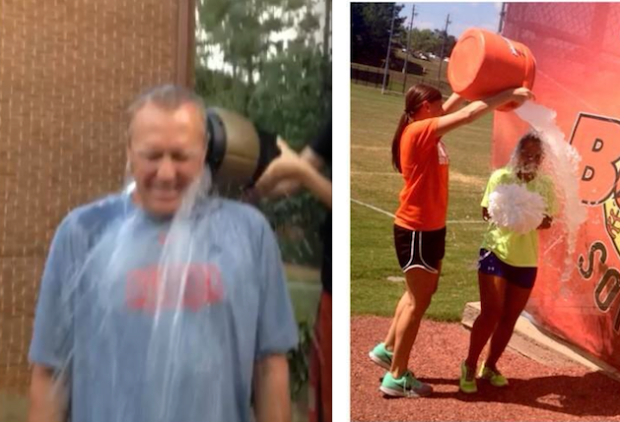
The Encore #IceBucketChallenge was accepted!

We have seen many people, colleges, organizations, and sports teams participate in the #IceBucketChallenge over the last couple of months. The reason behind it is to raise awareness for #ALS. ALS is described on http://www.alsa.org/ as, 

“Amyotrophic lateral sclerosis (ALS), often referred to as “Lou Gehrig’s Disease,” is a progressive neurodegenerative disease that affects nerve cells in the brain and the spinal cord.”

We challenged some of the staff and athletes from Hoover High School last Friday to the #IceBucketChallenge and wanted to share a few pictures proving they did it! 

“How do I know if I have a Concussion?” – Signs and Symptoms of concussions in adults and children.

At the ATC conventions many of the topics are around concussions; “how do you properly diagnose an athlete with a concussion?” “What are the signs and symptoms?” We wanted to help inform athletes, parents, and coaches on what exactly a concussion entails and what to do if you think you have one. Below are two lists, one for adults and one for children, that will help you be able to recognize the signs of a concussion.  If you have signs of a concussion, please see a doctor immediately for further instruction and proper procedures. 

*These two lists can be found at WebMD.com and MayoClinic.org.

“It is not always easy to know if someone has a concussion. You don’t have to pass out (lose consciousness) to have a concussion. Symptoms of a concussion range from mild to severe and can last for hours, days, weeks, or even months. If you notice any symptoms of a concussion, contact your doctor.” – WebMD

Symptoms of a concussion fit into four main categories:

  • Thinking and remembering
    • Not thinking clearly
    • Temporary loss of consciousness
    • Feeling slowed down
    • Not being able to concentrate
    • Not being able to remember new information
    • Delayed response to questions*
    • Slurred speech*
  • Physical
    • Headache or feeling of pressure of the head
    • Fuzzy or blurry vision
    • Nausea and vomiting
    • Dizziness
    • Ringing in the ears
    • Sensitivity to light or noise
    • Balance problems
    • Feeling tired or having no energy
  • Emotional and mood
    • Easily upset or angered
    • Sad
    • Nervous or anxious
    • More emotional
  • Sleep
    • Sleeping more than usual
    • Sleeping less than usual
    • Having a hard time falling asleep

Symptoms in Young children:

  • Crying more than usual.
  • Headache that does not go away.
  • Changes in the way they play or act.
  • Changes in the way they nurse, eat, or sleep.
  • Being upset easily or having more temper tantrums.
  • A sad mood.
  • Appearing dazed
  • Lack of interest in their usual activities or favorite toys.
  • Loss of new skills, such as toilet training.
  • Loss of balance and trouble walking.
  • Not being able to pay attention.

Sources:

 “Concussion – Overview.” . Healthwise, Incorporated, 29 Nov. 2011. Web. 25 June 2014. <http://www.webmd.com/brain/tc/traumatic-brain-injury-concussion-overview&gt;.

Mayo Clinic Staff. “Concussion Symptoms.” . N.p., 2 Apr. 2014. Web. 25 June 2014. <http://www.mayoclinic.org/diseases-conditions/concussion/basics/symptoms/con-20019272&gt;.

It’s Athletic Trainer Tip Tuesday!

This tip is from Eric Oehms, ATC.

“One tip that I tell my athletes when needing to elevate a lower extremity during sleep to decrease swelling.  Instead of using pillows that get matted down or end up on the floor, elevate the mattress at the foot of the bed.  My suggestion is to use a dresser drawer and place it between the mattress and box spring at the foot of the bed.  Your leg will stay elevated the entire night.”

“Overtraining and Injury in Youth Athletics”

By Marc Bernier, MPT CSCS

 The environment of youth athletics has undergone a major transformation over the past several years, most notably in the manner in which kids train for their respective sports.  Unfortunately, the changes that have occurred are not always necessarily for the better, as the injury rates in youth athletics are increasing, as are the severity of injuries.

One potential cause for these increasing injury rates that has been identified by medical professionals is overtraining.  There are many factors that can play into overtraining; however, there are 2 components that are particularly concerning:

  1. Specialization” in a single sport during the early childhood years.
  2. Failure to provide adequate recovery from the physical stress of the sport season.

In all actuality, these two factors are actually closely intertwined.  In today’s competitive climate of youth athletics, many kids are pushed towards dedicating themselves exclusively to one sport at a young age, with the thought being that the more training they get in that specific sport, the more they will excel (this thought actually goes against the recommendations of the top sports performance enhancement specialists who promote the idea of youth athletes being encouraged to compete in multiple sports until their freshman or sophomore year in high school, at which time specialization is more appropriate).  As a result, sports such as soccer become a year long endeavor, in which kids are playing the same sport for 10-11 months of the year (it may take slightly different forms, such as outdoor, indoor, etc).  Unfortunately, this is a faulty approach for two reasons:

1. By participating in the same sport throughout the year, the same repetitive physical stresses are placed on the relatively fragile growth plates and soft tissue structures (muscles, tendons, ligaments), resulting in overuse injuries.

2. Participation in a single sport can limit the overall athletic development of kids.  All sports have unique skills and movements that require the development and utilization of different muscle groups, and in vastly different ways.  This is especially true for the core and trunk muscles; participation in “upper extremity” sports such as baseball, tennis and basketball will train the core in a much different manner than “lower extremity” sports such as soccer.  It has been theorized that playing in multiple sports may actually increase kids’ overall athleticism and make them “better” athletes.

Simply put, we do not provide our kids enough time to rest, nor allow their joints enough time to recover from the physical stresses their bodies endure during a season (not to mention the fact that kids today typically train harder and more frequently than current adults did in their childhood).  Recovery time is absolutely essential for athletic growth; without it, the structures of the body are continually broken down, inhibiting strength and endurance potential, and ultimately athletic potential.

In an ideal scenario, children should have a two week period after the season is completed of minimal activity.  After that has passed, participation in a different sport is acceptable, as that sport will not have the same physical stresses, and will be less traumatic to the joints of kids.  If a child does not participate in another sport, some form of cross training can be performed to maintain baseline fitness levels.  Some recommended activities would include: cardio workouts on stationary bikes, stairsteppers or elliptical machines; swimming; pick up basketball; or simple jogging.

Kids should be encouraged to take a break from sports, and having a free weekend every once in a while is a good thing!

  • **Marc Bernier is the Clinical Director of Sports Medicine and Rehabilitation for Encore Rehab at the Inverness Clinic and Spain Park High School.  Marc has served as an international sports medicine consultant specializing in the field of rehabilitation and conditioning for European based professional soccer clubs, and is a national lecturer on the management of youth sports injuries.  He can be contacted for any questions at mbernier@encorerehab.com