information

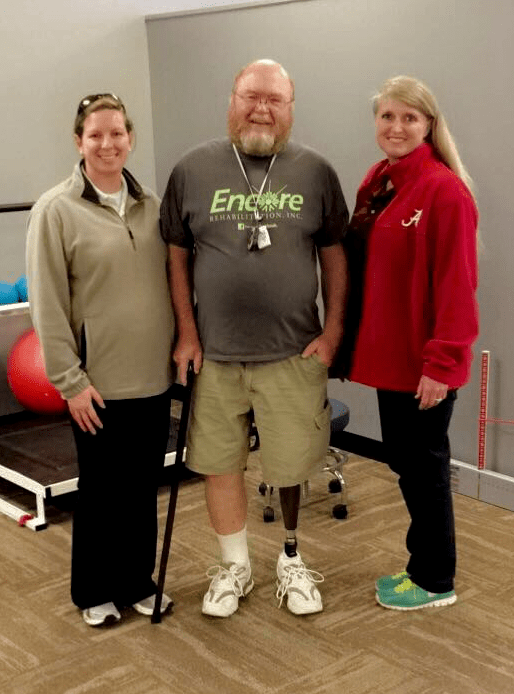
Fayette Encore Patient of the Month, Sherman Lee.

Screen Shot 2016-11-29 at 2.28.44 PM.png

We would like to recognize our Fayette Encore Patient of the Month, Sherman Lee. Sherman is a native of Fayette, AL and has been coming to our clinic to receive physical therapy after his total knee replacement. He has been receiving therapy treatment for 2 months now and has been improving greatly! Keep up the good work Mr. Lee!

“I have been to Encore before at the Winfield location. This is a great bunch of professionals and I love the way they treat their patients. I want to stay with Encore.”

-Mr. Lee.

“The Link Between Nutrition and Pain Is too Strong to Ignore” via APTA.

By Joe Tatta, PT, DPT, via APTA

Here’s a situation I bet you see all too often in your practice: a patient or client comes to you to overcome pain and increase mobility, and you see almost immediately that working on the mechanics of motion won’t be enough—they could really benefit from some lifestyle changes as well. Frequently, one of those changes involves thinking more carefully about the food they’re putting into their bodies.

Despite Hippocrates’ oft-quoted “Let food be thy medicine,” most physicians receive only a few hours of instruction about nutrition and coaching to help patients change their eating habits. Yet studies like this one from the National Institutes of Health show nutritional education becomes an incredibly useful tool to improve overall health outcomes for patients and specifically reduce inflammation.

As PTs, we are presented with a real opportunity here. Research shows that PTs can play an active role in lifestyle-related interventions such as nutrition. Providing information on nutrition will put you ahead of the curve with your peers while improving your patients’ results.

Early in my practice, I saw how obesity often contributed to my patients’ pain. Once I began providing information on some simple diet and lifestyle strategies with my patients, many lost weight, felt better, and dramatically reduced their pain. Nutrition became the missing link to help my patients manage and relieve pain.

Over time, I’ve found that nutritional screening and informational strategies can make a difference in 5 conditions associated with pain that we often see in our practices:

  1. Inflammation. Copious inflammatory foods, including vegetable oils, populate the Western diet. Most observational and interventional studies show a traditional Mediterranean diet, rich in healthy fatty acids, fruits, vegetables and fiber, provides anti-inflammatory benefits. Among specific conditions, studies show a Mediterranean diet rich in polyunsaturated fatty acids and antioxidants provide anti-inflammatory effects that benefit individuals with rheumatoid arthritis. Epidemiologic and clinical evidence likewise shows an optimal diet can reduce inflammation that, among other things, contributes to metabolic syndrome.
  2. Obesity. As we all know, a vicious cycle ensues as obesity contributes to numerous chronic pain conditions, and the pain in turn can lead to sedentary behavior that increases obesity. Studies prove what I’ve seen countless times in my own practice: weight loss must become a crucial aspect of overall pain rehabilitation.
  3. Osteoarthritis (OA). Studies have shown a relationship between pain and food intake among overweight and obese patients with OA. Fortunately, obesity is the most modifiable risk factor for knee OA. Of course, pain management is crucial to reducing OA symptoms. But even that may have a nutrition connection: one systematic review found scientific evidence to support some specific nutritional interventions–including omega 3 fatty acids–to relieve symptoms among patients with OA. Studies also show various nutrient deficiencies, including vitamins C and D as well as selenium, contribute to OA.
  4. Autoimmune disease. NIH estimates that 23.5 million Americans have an autoimmune disease (compare that with cancer, which affects 13 million Americans). Over 80 autoimmune disorders exist, including Crohn’s disease, rheumatoid arthritis, multiple sclerosis, and type 1 diabetes. Of course, genetic predisposition, environmental factors (including infections), and gut dysbiosis play major roles in autoimmune disease development. But increasingly, researchers believe adverse dietary changes over the past 50 years–including gluten intolerances, altered gut bacteria, and vitamin D deficiencies–also contribute to that increased rate of autoimmune diseases. Chief among those changes is our prevalent high-sugar, high-salt, processed-food heavy diet that paves the pathway for autoimmune diseases. Nutrient-poor diets only exacerbate that problem: evidence shows vitamin D, vitamin A, selenium, zinc, omega-3 fatty acids, probiotics, and flavanol deficiencies contribute to autoimmune diseases.
  5. Prediabetes and type 2 diabetes. Type 2 diabetes affects 29.1 million Americans (that’s over 9% of the population) and paves the way for serious complications such as heart disease, blindness, kidney failure, and lower-extremity amputations. Diabetic neuropathic pain, a common diabetes complication and the most common form of neuropathic pain, affects over 90% of people with diabetes. Studies show increased musculoskeletal pain in patients with type 2 diabetes adversely impacts body mass index, quality of life, physical function, and physical activity abilities. The link between diabetes and nutrition is a fundamental one that should never be set aside.

Working with patients suffering these and other conditions, I’m often impressed how optimal nutrition becomes the needle-mover to alleviate pain and help people heal. So how can a PT incorporate these considerations into practice? Here are a few simple tactics you can use right now:

  1. Ask nutrition-related questions during your initial consultation. Simple things like “do you take a multivitamin” or “about how many vegetable servings do you eat a week” can help lead to gradual dietary tweaks that yield impressive results.
  2. Have your patients keep a 24-hour food diary. Beyond establishing adherence and accountability, asking patients to write down everything they eat for 24 hours provides insight to their daily eating habits. Once you have that insight, you can help them gradually improve those habits.
  3. Offer some simple information. Rather than impose a major dietary overhaul, ask patients to do things that don’t seem so overwhelming; for example, to increase their water intake, or eliminate processed foods and sugar.
  4. Create simple, attainable goals. Begin by allowing your patients to experience success in some way. You might ask a patient to lose 5 pounds over 3 weeks, or provide information about incorporating more omega-3 fats into their diet combined with their exercise program. These goals are doable, and they can provide your patient with the confidence to take on more challenging targets.
  5. Offer your patients other ways to access information on better nutrition. Providing your patients with collateral sources of information—a helpful blog post, or an engaging book on nutrition—helps to reinforce the idea that the benefits of what they’re doing are well-established, and that they’re not alone in their journey toward healthier living. During a subsequent visit, ask patients if they got anything out of what you shared. The more reliable, readable information they receive, the better the chances that they’ll begin to become genuinely interested in the topic themselves, and for the long run. Over time, I’ve even had a few patients recommend books and blogs to me. Refer patients to nutrition and dietary professionals when their needs exceed the professional scope and your personal scope of practice.

If you’ve incorporated nutritional screening and information into your practice, what did you find was the most challenging aspect? Did you see results when patients made those changes? Share your thoughts below.

Joe Tatta, PT, DPT, is a board-certified nutrition specialist and functional medicine practitioner who specializes in treating lifestyle-related musculoskeletal, metabolic, and autoimmune health issues. He is the creator of the Healing Pain Online Summit and The Healing Pain Podcast, and is the author of Heal Your Pain Now: A revolutionary program to reset your brain and body for a pain-free life by Da Capo Press. Learn more by visiting www.drjoetatta.com/apta.

AHSAA Prep Spotlight Week 3 of Playoffs

cwedryuweaiayn0

*Wenonah’s Rogers Passes for 341 Yards, 4 TDs for the Dragons to Advance to Semifinals for First Time.*

MONTGOMERY – Wenonah High School junior quarterback Carlos Rogers picked a perfect time to shine.
The 6-foot, 180-pound signal caller led the Dragons of Coach Ronald Cheatham to a 49-21 win over previously unbeaten Scottsboro (12-1) last week to advance to the Class 5A semifinals of the AHSAA’s 61st annual state football playoffs. Rogers was 10-of-17 passing for 341 yards and four touchdowns and rushed for two more scores to grab the AHSAA Prep Playoff Spotlight for the quarterfinals.
Wenonah (10-2) travels to Briarwood Christian (12-1) Friday with the winner securing a spot in the 2016 Super 7 State Finals at Auburn’s Jordan-Hare Stadium Dec. 1.
Hoover (11-2) and defending champion McGill-Toolen Catholic (13-0) clinched Class 7A championship game berths last week and will open the Super 7 Wednesday, Nov. 30, at 7 p.m. in the first of seven state championship clashes.  Lee County and Vestavia Hills will play first at 3:30 p.m. Wednesday in the third annual AHSAA Special Olympics Alabama Unified Game.
Senior wide receiver Demond Brown caught four of Rogers’ completions for 101 yards and three TDs, and senior running back Telvin Miller gained 173 yards on 30 rush attempts while scoring one TD.
“All week Coach said we were playing a good team that hasn’t been beaten,” Rogers told al.com reporter Anton Williams. “So when we got the ball, we just wanted to score on every possession.  Through the week (Coach Cheatham) told us we could (win).”
Wenonah finished with 537 total yards, did not punt and did not commit a turnover. Rogers’ touchdown passes covered 22, 24 and 26 yards to Brown, and 31 yards to Anthony Hudson. Rogers sneaked in from the 1 on both his scores. The Dragons’ defense did the rest limiting Scottsboro’s strong offense to just 29 yards passing. Senior DeKarlos Billingsley led the Wildcats of Coach Pat Nix with 179 yards rushing on 27 carries and scored three TDs on runs of 63, 15 and 4 yards.
The trip to the football semifinals is the first in Wenonah school history. Cheatham, 158-128 in 28 seasons as head coach, led the Dragons to a 6-1 record and second-place finish in Region 5 this season. Briarwood won the region title beating Wenonah 15-14 at Wenonah in the regular season to finish 7-0.
The Lions, coached by Fred Yancey, beat Mortimer Jordan 15-0 last week to advance to the semis for the first time since 2011. Yancey, 255-90 in 27 seasons at Briarwood and 296-110-1 overall, guided his team to state 3A titles in 1998 and 1999 and the 5A crown in 2003. Briarwood has finished runner-up three times (2004, 22007 and most recently (2010).
Rogers’ Spotlight performance edged out two strong efforts by Kadarius Toney of Blount and Garrett Sanders of G.W. Long. Toney, a University of Florida commitment and member of the Alabama All-Stars set to play Mississippi in the 30th meeting of the Classic Dec. 10, passed for 493 yards and five touchdowns and ran for 108 yards and two more scores as Blount fell 54-51 to Park Crossing in the 6A quarterfinals. His 601 total yards ranks second behind AHSAA state record-holder Jack Poundstone’s 614 yards for Trinity Presbyterian against Cordova in the 2008 state playoffs. The 493 yards passing is 10th best in AHSAA history.
Sanders accounted for 338 all-purpose yards and scored six touchdowns – four different ways –as the Rebels (12-0) beat Southern Choctaw 42-14 in the Class 2A state playoffs. He rushed for 190 yards on 30 carries with three rushing touchdowns on runs of 24, 11 and 2 yards, caught a 68-yard touchdown pass fromDylan Register, returned a kickoff 80 yards for a score and raced 52 yards with an interception on defense another TD. He was also a perfect 6-of-6 on point-after kicks to account for all 42 of G.W. Long’s points.

MILESTONE
    McKEEN BREAKS STATE RECORD: Briarwood Christian senior swimmer Sadler McKeen swam a 4:27.05 in the 500-yard style race at the AHSAA Central Sectional meet at Birmingham’s CrossPlex to break the AHSAA state record (4:27.36) set in 2013 by Spain Park’s Will Freeman. Freeman is now a sophomore at Alabama.
The record set by McKeen, the only senior on the Lions’ team, was the first set in the AHSAA Sectional in state history. All previous records were set in the state meet. It was also the first to be set in the 1A-5A divisions. In previous years, all swimmers competed in the same division.
ALABAMA ALL-STAR TEAM WATCH:
BUBBA THOMPSON, McGILL-TOOLEN CATHOLIC: The senior quarterback passed for 366 yards and four TDs and also scored the go-ahead TD as the defending state champion Yellow Jackets (13-0) advanced to the Super 7 Class 7A state finals for the second year in a row with a 35-21 win over Central-Phenix City. Thompson is one of two quarterbacks selected for the 30th annual Alabama-Mississippi All-Star football game at Cramton Bowl, Dec. 10.
MARLON WILLIAMS, McGILL-TOOLEN CATHOLIC: Had seven catches for 141 yards and two scores in McGill’s semifinal win over Central-Phenix City. His 59-yard TD reception sealed the victory late in the fourth quarter. Like Thompson, he is also a member of the Alabama All-Star Team set to play Mississippi’s all-stars Dec. 10.
CHADARIUS TOWNSEND, TANNER: Was 11-of-20 passing for 294 yards and four touchdowns in a 48-42 Class 2A loss to Lanett. Townsend was selected as a defensive back for the Alabama All-Stars.

Other top performances reported included:

RUSHING
LA’DAMIAN WEBB, BEAUREGARD: Rushed for 190 yards on 22 carries and scored six touchdowns as the Hornets (11-1) moved into the Class 5A semifinals with a 56-21 win over previously unbeaten Carroll (12-1). Webb’s scoring runs covered 20, 16, 36, 3, 11 and 29 yards. He heads into Friday’s semifinal battle at Jackson with 2,581 yards rushing on 219 carries with 40 rushing touchdowns. He has 45 TDs overall.
DILAN KILPATRICK, FYFFE: Ran for 310 yards and six touchdowns on 25 carries as the undefeated Red Devils (13-0) downed LaFayette 53-20 in the Class 2A quarterfinals to hand the Bulldogs ( 12-1) their first loss.
DEQUAN CHARLESTON, LINDEN: Scored five touchdowns on just eight touches as unbeaten Linden (13-0) beat previously unbeaten Georgiana (12-1) in the Class 1A quarterfinals 52-12. Charleston rushed for 140 yards and three TDs on six carries, caught a 17-yard TD pass and returned a punt 48 yards for his fifth score. Charleston also intercepted a Panthers pass to set up one of his touchdowns.
DARRIAN MEADS, HOKES BLUFF: Rushed 26 times for 194 yards and caught a 33-yard touchdown pass as the Eagles reached the state semifinals for the first time since 2004 with a 28-21 Class 4A comeback win over Cherokee County.

LEE STANLEY, PIEDMONT: Gained 170 yards on 11 carries, including a 51-yard touchdown in the first half, AS Bulldogs (13-0) beat Weaver 52-28 in the Class 3A quarterfinals.
WELDRIN FORD, OPELIKA: Had 32 carries for 153 yards and two touchdowns as Opelika knocked off defending Class 6A state champion Spanish Fort 21-17.
ANTONIO ROBINSON, AUSTIN: Rushed for 124 yards and two touchdowns in a 27-21 Class 6A third-round win over Muscle Shoals. He also converted two key third downs to help the Black Bears (10-3) run out the clock to seal the win.
TYLER ABSTON, JACKSON: Ran for 108 yards on eight carries as Class 5A, Region 1 third seed Jackson knocked off Region 1 top seed and defending state champion St. Paul’s Episcopal 35-9 in the 5A quarterfinals. He scored on a 51-yard run and had a 40-yard gain to set up the Aggies’ first score.
DEE WILLIAMS, ELBA: Rushed for four touchdowns and 110 yards in the defending state champion Tigers’ 52-44 Class 2A loss to Aliceville.

PASSING
TRE STORY, LANETT: Completed 13-of-18 passes for 287 yards and three touchdowns as the Panthers (11-2) downed Tarrant 48-42 in the Class 2A quarterfinals.
LANDON JOHNSON, HOKES BLUFF: Completed 5-of-8 passes for 91 yards and two touchdowns, including the game-winning 6-yard scoring pass to Braydon Hill early in the fourth quarter and scored a TD in a 28-21 Class 4A victory over Cherokee County. He also and made an interception on defense with 1:17 left to seal the win as the Eagles.
TYREN DUPREE, CHEROKEE COUNTY: Rushed for 98 yards on 13 carries and two touchdowns, including a 54-yard score on just the third play of the game. He also completed 5-of-10 pass attempts for 85 yards before suffering an ankle injury in the third quarter of the Warriors’ 28-21 Class 4A loss to Hokes Bluff.


PASS RECEIVING
C.J. YARBROUGH, TANNER: Had four catches for 132 yards and three scores as the Rattlers lost to Lanett 48-42 in the 2A playoffs.
QUARTEZ HENDERSON, CHEROKEE COUNTY: Caught five passes for 101 yards, including a 49-yard touchdown, in the Warriors’ 28-21 Class 4A loss to Hokes Bluff.

TAYLOR HAYES, PIEDMONT: Fired three touchdown passes to Austin Brazier and ran for two more scores in the Bulldogs’ 52-28 Class 3A playoff victory over Weaver. Hayes finished the game rushing for 160 yards on 16 carries.

DEFENSE
KENDARIAN HANDY-HOLLY, JACKSON: Made two interceptions on defense and scored a rushing TD on offense in the Aggies’ 35-9 Class 5A playoff win over St. Paul’s Episcopal.

JAYSON EVANS, HOOVER: Recovered a Gadsden City fumble in the end zone for a TD right before the half to spark a 35-point rally as Hoover (11-2) downed the Titans 42-14 in the Class 7A semifinals to earn a berth in the Class 7A state finals Nov. 30.
HOLT WATSON, G.W. LONG: Intercepted two passes in the Rebels’ 42-14 Class 2A win over Southern Choctaw.

KAEDON JENKINS, PIEDMONT: Picked off a Weaver pass and returned it 89 yards for a touchdown in the Bulldogs’ 52-28 Class 3A playoff win over their Calhoun County rivals.
TROY YOUNG, MOBILE CHRISTIAN: Intercepted a pass and rushed for two first-quarter TDs as the Leopards (12-1) advanced to the 3A semifinals with a 44-12 win over Oakman.

SPECIAL TEAMS
JAKE LANE, PARK CROSSING: Booted a 41-yard field goal as time expired to lift Park Crossing (13-0) to a 54-51 win over Blount. The win sends the Thunderbirds into the Class 6A semifinals for the first time. Lane, who had four field goals on the night, 41, 24, 26 and his final 41-yard kick. It also marked the second time he has had a game-winning field goal in the last five games for Coach Smitty Grider’s team.
MAURICE GOODMAN, WEAVER: Ran back the opening kickoff 90 yards for a touchdown to put the Bearcats up 7-0 in Weaver’s 52-28 Class 3A loss at Piedmont.

DEVORIAN WILKERSON, ELBA: Returned a kickoff 90 yards for a touchdown during Elba’s 52-44 Class 2A loss to Aliceville.
Pediatric Physical Therapy: Specialized Services and Treatments for Children Under 18.

Screen Shot 2016-11-17 at 10.39.16 AM.png

“Doctors often recommend Pediatric Physical Therapy for children and teens who have been injured or who have movement problems from an illness, disease, or disability. Physical therapists work to decrease pain and help the child return to their daily activities. They also teach children exercises designed to help them regain strength and range of motion, and also show them and families how to prevent future injuries.” (Kids Health,  June 2014).

Doctors will often recommend PT for children with:

    • Cerebral Palsy
    • Spinal Cord Injuries
    • Traumatic Brain Injuries
    • Spina Bifida
    • Brachial Plexopathy
    • Pediatric Cancer
    • Socialization Skills
    • Autism Spectrum Disorder
    • Developmental Delay
    • Down Syndrome
    • Feeding Problems
    • Fetal Alcohol Syndrome
    • Gait Abnormalities
    • Hydrocephalus Muscular Dystrophy
    • Pediatric Medical Syndromes
    • Pediatric Neurologic Disorders
    • Premature Birth
    • Juvenile Rheumatoid Arthritis
    • Seizure Disorders
    • Sensory Processing Difficulty
    • Torticollis/Plagiocephaly
    • Vision/Hearing Deficits
    • Sports Injuries

Advanced Specialization Training

  • Astronaut Training Protocol
  • Beckman Oral Motor Program
  • Contemporary Neurodevelopmental Treatment
  • Sequential-Oral-Sensory Approach to Feeding Program
  • Comprehensive Program in Sensory Integration including Administration of Sensory Integration & Praxis Test (SIPT)
  • VitalStim

What Pediatric Physical Therapists Do

At our two Pediatric Therapy Clinics located in Ocean Springs and Pascagoula MS, our therapists use a variety of treatments to help build strength, improve movement, and strengthen skills needed to complete daily activities.

Physical Therapy

  • Gross Motor Development/ Conditioning Activities
  • Neuromuscular Retraining Aquatic Therapy
  • Movement Skills/ Function
  • Balance/ Gait Training
  • Coordination Skills
  • Standardized Testing of Motor Abilities
  • Assistance with Positioning & Mobility Equipment
  • Orthotic Recommendations
  • Power Wheelchair Assessment & Training

Speech-Language Therapy

  • Language Therapy
  • Articulation Therapy
  • Dysphagia Therapy
  • Oral Motor Therapy
  • Assistive Technology
  • Fluency and Voice Therapy

Occupational Therapy

  • Handwriting & Fine Motor Skill Training
  • Assistance with Activities of Daily Living
  • Sensory Integration Therapy
  • Aquatic Therapy
  • Custom Splinting for Neurologic Conditions
  • Cognitive Retraining
  • Constraint Casting & Treatment
  • Neuromuscular Retraining
  • Training with Adaptive Equipment
  • Standardized Testing of Motor Abilities

Two of our Locations that offer all of the specialized Pediatric Therapy Treatments and Services are located below:

Ocean Springs Pediatric Rehab

#2 Doctor’s Drive  Ocean Springs, MS 39564

Phone: (228) 818-1211  •  Fax: (228) 818-1213

Pascagoula Medical Park

3101 Denny Ave, Suite 120,  Pascagoula, MS 39568

Phone: (228) 471-1520  •  Fax: (228) 471-1525

Encore Rehabilitation of Cullman

1701 Main Ave SW  Cullman, AL 35055
Phone: (256) 775-3737

5 Tips to Avoid Chronic Pain

1. Know Pain, Know Gain. There is a growing body of evidence suggesting that understanding how our pain systems work is an excellent strategy in managing it. The great news is that you don’t need to know a lot! Simply knowing the basics of how our brain and nerves work, and their role in pain, can help reduce your chance for developing chronic symptoms. Learn more.

2. Keep moving. Gradually and steadily. Living an active, healthy lifestyle not only improves our general well-being and health, but can also reduce our chances of developing chronic pain. Our body was built to move, and we need to understand that not all aches or soreness is cause for concern. Learn more.

3. Spend time with a good PT. If you experience an injury, or develop the onset of pain, seeing a physical therapist (PT) early on can help address and manage your symptoms. PTs are movement experts who can diagnose and treat injuries and help you identify strategies to better manage your pain. The earlier you seek care, the better the chances you have for not developing chronic symptoms. And there’s no reason to wait: you can see a physical therapist without a physician’s referral in all 50 states and the District of Columbia. Learn more.

4. Don’t focus on an image. While most of us want a diagnostic image (ie, x-ray, MRI) to tell us “why we hurt,” images actually give us little information about what’s causing pain. A study performed on individuals 60 years or older, who had no symptoms of low back pain, found that more than 90% had a degenerated or bulging disc, 36% had a herniated disc, and 21% had spinal stenosis. What shows up on an image may or may not be related to your symptoms. Once imaging has cleared you of a serious condition, your physical therapist will help guide you back to the life you want to live!

5. Addressing depression and anxiety helps. Your chances of developing chronic pain may be higher if you also are experiencing depression and anxiety. A recent study in the Journal of Pain showed that depression, as well as some of our thoughts about pain prior to total knee replacement, was related to long-term pain following the procedure. Make sure that you talk to your medical provider about your mental health throughout your treatment; it can help make your journey go much more smoothly following an injury or surgery.

The c launched a national campaign to raise awareness about the risks of opioids and the safe alternative of physical therapy for long-term pain management. Learn more at our #ChoosePT page.

Authored by Joseph Brence, PT, DPT, FAAOMPT, COMT, DAC

*Complete Article can be found here.

THE NO GYM WORKOUT: FIVE FUN ALTERNATIVES


“Are you looking for a no gym workout? We know hitting the gym can be a great thing. The benefits of a membership generally outweigh the negatives by a landslide. That being said, sometimes it can be difficult to get to the gym in the first place. Whether you’re traveling across the country or stuck inside during a snowstorm, there are some awesome exercise alternatives out there.  Seriously, if you can work out with a towel, you can work out anywhere.”

Here are five fun workouts you can complete whenever, wherever:

HIIT Hotel Workout from Anne Smiles

You don’t have to skip your workout if the hotel lacks a gym. Did you know you could complete a high intensity interval workout using just the bed? Bonus: you can take a nap right after you finish. View it here.

Paper Plate Workout from Fitful Focus

Don’t worry about having enough equipment. This lower body workout serves up some serious moves on basic paper plates. Hand towels work well, too, on wood or tile floors. View it here.

At Home Workout from The Fit Cookie

Why hit the gym when you can complete a quality workout right in your very own home? A few weights are a great investment and will help guarantee that you won’t miss the gym a bit. View it here.

The Chair Workout via Run Pretty

Pull up a chair and don’t just have a seat. When you can work out with a chair, you can work out anywhere. A park bench will work just as well, which means you can squeeze in a workout while the kids play. View it here. 

5-Minute Wakeup Workout from Food Faith Fitness

Start your day off on the right track with this quick bodyweight workout. It can also work well for a midday pick me up! We all know the afternoon slump is real, you guys. View it here.

What’s your go-to travel or at-home workout? Leave a comment and let us know!


**More of this article can be found at http://www.bumblebee.com/no-gym-workout-5-fun-exercise-alternatives/.

7 Things Your Yoga Teacher Wants to Tell You


“I’ve taught yoga for over 10 years to students around the world and I’ve come up with a few things that every yoga teacher wants you to know. Don’t worry, I’m not here to yell or judge! But even if you’re hitting the mat a few times a week and holding every pose perfectly, you may not be getting the most from your yoga practice. Now, it’s easy to rattle off a long list of yoga no-no’s, but there are also crucial lessons your teacher is probably dying to share with you. Here are my big seven. Take notes and enjoy the ride!

You don’t need to practice yoga every day
It’s easy to fall so deeply in love with yoga that you want to practice non-stop. I hear you—but between travel, work, and family, you can end up depleting your body and mind of energy if you’re not careful. Instead, respect your body and remember that you’re often just as powerful taking time off as you are pushing yourself to the max. Find your balance.

There is no such thing as a typical yoga body
If you were to ask someone what a yogi looks like they’d probably say long, lean, flexible, and strong. Pop culture has definitely influenced that stereotype, but as a teacher who travels the world meeting yogis of every age, gender and race, I can tell you clearly—there is no perfect yoga body. Some of the most amazing yoga I’ve ever seen has come from bodies that were outside that stereotype. You can be curvy, slight, young, or old—yoga is for everyone.

A calming, restorative practice is just as powerful as a strong flow class
In this day and age, we go and we go hard. We rock jobs, run families, keep up on style trends and hit our workouts like a boss. There’s so much go-go-go-go that often the perfect remedy isn’t a wicked hard yoga class but one that will balance you out by slowing you down. Taking the time to breath, stretch, relax and meditate is crucial to giving us the mental strength to carry on at a high pace. So remember that these restorative style classes are a great compliment to your power/flow classes and that you don’t always need 90 minutes of sweat to feel restored. Sometimes all it takes is 20 minutes of focus, peace and quiet.

Enjoy being a beginner
I’m a total overachiever who gets frustrated easily when I can’t master a challenge. But yoga taught me that the journey is even greater than the result. Sure, being a beginner can be a bumpy, ego-bruising time. But it’s also a time when you’re excited, ambitious, and eager to soak everything in. Enjoy this journey, because it’s only a matter of time before you figure it out, master it, and long for something new that exhilarates you the same way.

You don’t need to be flexible to be good at yoga
If I had a nickel for every time I heard someone say, “I’m not flexible enough to do yoga,” I’d be able to afford a closet full of designer shoes. It’s like saying you’re too dirty to take a bath! The whole purpose of yoga is to help you with your flexibility. Give it time—yoga is here to help you out, not embarrass or demean you. And in the meantime, try these stretches to improve your flexibility.

Difficult poses aren’t necessarily better
Yoga has officially entered the age of Instagram, where people post mind-blowing pictures of incredibly challenging poses daily (and I certainly participate… that’s me in the picture above!). They may be inspiring or frustrating depending on your skill level, but here’s the thing: Harder doesn’t always mean better! One of the most common blunders is being over ambitious, pushing towards a pose beyond your current ability and then ending up hurt. Next thing you know you’re too injured to practice for weeks all because of one silly ego slip. Remember, the goal of yoga is to feel better and find balance. So if a simple standing pose and hip opener fills you up more than a foot-behind-the-head, do what works for you! That is your perfect form of yoga.

Yoga isn’t about how you look, it’s about you feel
This one is crucial! Forget the hard poses or the fancy-patterned leggings with matching bra. All of these things are fun, but at the end of the day all that matters is how you feel. Did the practice improve your mood? Calm your mind? Improve your energy? Awesome. Were you in sweatpants? Did you comb your hair? Did you set a world record of Chaturangas? Who cares! Stick to how you feel and you’ll shine no matter what.”

Taken from Women’s Health Mag: http://www.womenshealthmag.com/fitness/yoga-teacher-tips