Occupational Therapy

How Occupational Therapy Can Help Relieve Rheumatoid Arthritis

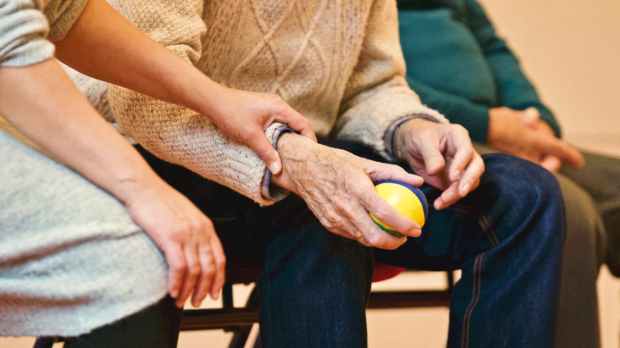
pexels-photo-339620.jpeg

There are many people who struggle with Rheumatoid Arthritis.  Here is an excerpt from the article, “10 Simple Adjustments to Relieve RA Hand Pain”, that could help you resume your daily activities that RA was keeping you from.

How an Occupational Therapist Can Help –

“According to an analysis of numerous research studies published by the Cochrane Collaboration, there’s a lot of evidence that working with an occupational therapist when you have RA can help you use your hands for everyday tasks more efficiently and with less pain. The occupational therapist’s goal is to ensure that you can participate in any activity you want while still protecting your joints and getting hand pain relief.

For starters, an occupational therapist teaches people with RA about disease self-management, Dodge says – offering instruction on joint protection techniques, how to use assistive devices, how to conserve your energy, and exercises that will help you do activities with less pain.  [They] may also explain how to use heat and cold as part of your pain management strategy.

The occupational therapist can also show you how to modify specific activities so you can still do them. For example, if you’re a woman who enjoys knitting, an occupational therapist can provide suggestions for adaptive equipment and offer techniques that allow you to enjoy your hobby more safely.”

10 Tips to Try Now

If you need hand pain relief from RA, use these suggestions from Dodge and Amini to modify activities to make them less painful:

  1. Build up handles on utensils and tools so that less force is needed to hold them while performing tasks. Pipe insulation is handy for enlarging handles.
  2. If you’re unable to lift a gallon of milk with one or both hands, buy half gallons or have someone pour half into a small pitcher.
  3. Rather than carrying bags in your hand, place straps over your forearm or shoulder. Rolling bags alleviate the need to lift and carry them.
  4. Use both hands when lifting objects, and keep your forearms close to your body.
  5. When possible, use your palms to grasp objects rather than your fingertips. Replace standard door knobs with door levers.
  6. Wear rubber gloves to enhance your grip when opening jars.
  7. Use electric appliances when possible.
  8. Use your entire body to move heavy objects rather than pushing with your hand, such as when opening a door.
  9. Use a rolling cart to move items around the house.
  10. Purchase pots and pans with two handles and slide them over surfaces instead of lifting them. Silicone sheets can be placed on delicate counter surfaces to protect them from hot pots.

**To read the entire article from Everyday Health, click here!

Encore Rehabilitation Locations offering Occupational Therapy:

Encore Rehabilitation-Athens  256-232-1221
Encore Rehabilitation-Bay Minette   251-239-5395
Encore Rehabilitation-Bessemer West    205-481-7125
Encore Rehabilitation-Cullman   256-775-3737
Encore Rehabilitation-Decatur   256-350-6331
Encore Rehabilitation-Foley   251-270-2505
Encore Rehabilitation-Haleyville   205-486-2753
Encore Rehabilitation-Hartselle   256-773-0138
Encore Rehabilitation-Hoover   205-682-7650
Encore Rehabilitation-Inverness   205-408-4123
Encore Rehabilitation-Jackson   251-246-1214
Encore Rehabilitation-Mobile I65   251-459-8402
Encore Rehabilitation-Mobile Providence   251-634-2214
Encore Rehabilitation-Saraland   251-675-3933
Encore Rehabilitation-Spanish Fort   251-625-2170
Encore Rehabilitation-Vernon   205-695-0689
Encore Rehabilitation-Winfield   205-487-0540
Ocean Springs Neurological Vestibular Rehab   228-818-1207

If rehabilitation is in your future, choose Encore!

encorerehab.com


Part 3-Chinese Medical Professionals Tour Encore Facilities-Corporate Office Visit

MLB Bound! Jonathan Gettys-Athlete of the Month for Encore Rehabilitation-Dothan

“I Feel Like a New Person!”- Finding Headache Relief after several years of pain

Physical Therapy for Arthritis Pain.

We know a lot of people suffer from Arthritis Pain and wanted to post an article that we thought would offer a few more solutions than just medicine. You can read the entire article at Everyday Health.com.

“Managing arthritis pain often means using a combination of treatments, including medications, exercise, hot and cold therapy, and any number of physical therapy options. While there’s no cure for arthritis, joint pain and other arthritis pain symptoms can often be managed successfully with a combination of therapies.”

Types of Physical Therapies Used to Treat Arthritis:

  • Physical therapy. This is a commonly recommended treatment for arthritis pain because it really helps. Physical therapy works to strengthen joints that have been weakened by damage and inflammation. Physical therapy exercises can help reduce joint pain and stiffness, as well as improve range of motion, making you more mobile.

  • Occupational therapy. This is another form of therapy that teaches patients how to manage arthritis pain, and work around it to achieve a higher level of mobility and comfort. An occupational therapist can show you how to best protect your joints from strain and damage that can lead to more joint pain. There are certain activities and positions, for instance, that are known to worsen arthritis pain, and in occupational therapy, you’ll learn what those are and how to avoid them while engaging in your usual everyday activities.

  • TENS therapy. Transcutaneous electrical nerve stimulation, or TENS, is a physical therapy method that uses small pulses of electricity to target areas of arthritis pain. Electrodes are placed on the skin covering the painful joint, and low levels of electricity are passed into the joint, temporarily relieving pain. The procedure can be performed by a physical therapist, other medical professionals, or even using TENS equipment at home.

  • Diathermy. This form of heat therapy uses ultrasound, radio or microwaves, or electrical currents to heat the tissue inside painful joints. The heat kills damaged cells that cause joint pain, easing your arthritis symptoms.

  • Massage. A massage therapist can help you to manage arthritis pain by massaging, kneading, and rubbing muscles and joints to boost blood circulation to the painful areas. (Poor blood circulation can contribute to joint pain.


Physical Therapy FAQ’s Answered

Can I choose what physical therapist I go to?

Absolutely! The decision of where you receive treatment is yours. If you have a specific therapist or practice you would like to go to, you should let your doctor or insurance company know this. Not all physical therapists or practices are the same and the choice of your provider is yours. Sometimes your physician will recommend a specific therapist or practice to you; sometimes your insurance company will require you to go to specific therapists or practices. You always have the right to ask for a specific provider. If we are not “in network” with your specific insurance company, many have out of network options that still provide coverage.

What should I expect during my physical therapy treatments?

Your first visit will include the initial evaluation and then a treatment. You will be instructed on therapeutic exercises, learn how to manage and care for your symptoms, receive manual therapy if necessary, and may be treated with some type of therapeutic modalities. (As well as given a specific home program, ice, ultrasound, electrical stimulation, traction, etc.)

What type of treatment will I receive?

Treatment is based on the initial evaluation findings along with ongoing reassessment and evaluation. Treatment may consist of a variety of hands-on joint and soft tissue treatment techniques, exercise techniques and pain reducing modalities. Treatments are designed to increase motion and strength, reduce pain, and most importantly, restore function. Patients are typically involved in an active exercise program at home and are educated in ways to speed recovery and prevent recurrence of the problem.

What should I wear?

It is best to wear clothing and shoes that are appropriate for exercise. The clothing should either expose the area (i.e. wear shorts if you are being seen for a knee problem) or be loose fitting to easily expose the area that is being treated. You may be asked to put on a gown depending on where your pain or problem is located.

How many treatments will I need?

Our average number of treatments is 6, but this can vary depending on the extent and type of injury that is being treated.

What is Physical Therapy? Is it like Massage Therapy or Chiropractic Care?

In reference to massage therapy, a PT can and will often administer massage-like techniques called soft tissue mobilization, but massage therapists cannot administer PT. The PT you receive therefore may include soft tissue mobilization but will include much more education, exercise and the use of other modalities.

Chiropractic care differs quite a bit in the sense that a Chiropractor relies heavily on performing joint manipulations. Chiropractors typically will see a patient for much longer than a physical therapist for continued joint manipulations or “adjustments” whereas a physical therapist will rehab the injury or painful area and then instruct the patient in a Home Exercise Program for continued care. A physical therapist with specialized training can effectively perform many of the physical adjustments that a Chiropractor utilizes.

How can Physical Therapy help back pain?

Physical Therapy helps control back pain by reducing pain, controlling swelling and through therapeutic exercises. Patient education such as home exercises and lifting techniques also play a large role is assisting the patient in controlling low back pain.

I just had orthopedic surgery; will physical therapy help me heal faster?

Of Course! Physical Therapy can help reduce swelling, increase active and passive range of motion and increase strength and endurance after orthopedic surgery. Most importantly, attending physical therapy increases the functioning of the involved muscles, bones and other soft tissues much more quickly and effectively than just “staying at home” after surgery.

How do I know that physical therapy can help me?

Physical therapy can help anyone who is suffering from musculoskeletal injuries, recovering from surgeries or other difficulties such as balance/walking problems, or neurological problems such as stroke and acquired brain injuries. Even people recovering from non-orthopedic surgeries (internal problems, cancer) can benefit from PT by regaining strength and endurance. The realm of physical therapy is huge and encompasses the whole body and its functioning. To learn how PT can specifically help your condition, make an appointment with any of our locations for a Free Assessment.

Do I need a referral to come to physical therapy?

In the state of Iowa, a referral from a physician is not required to receive a physical therapy evaluation or treatment. Some exceptions do occur. Medicare always requires a referral to obtain physical therapy services. This referral may come from a physician, a physician assistant, a nurse practitioner, a dentist or a podiatrist. In addition, some insurance companies require a referral to provide insurance coverage. You should call your insurance company to determine whether or not you are required to have a referral for coverage.

What does a physical therapist do?

Physical therapists are experts trained in the evaluation and treatment of musculoskeletal dysfunction. They are trained specifically to improve movement and function, relieve pain, and expand movement potential. Physical therapy is often the treatment of choice in situations where pain impairs function, in recovering from an injury or surgery, and in recovering from a disease process or illness. Physical therapists also teach adaptive and physical coping skills in dealing with impaired function from a disease, injury or illness.

Will my insurance cover physical therapy?

Most insurance companies do cover physical therapy services. The amount and type of coverage varies. It is always best to check with your insurance company regarding specific coverage guidelines. The staff at each location will also verify your specific coverage guidelines at your first visit. If you do not wish to utilize your insurance, you may choose our private pay plan. We accept checks, VISA and MasterCard.

As a patient, what can I do to assure the best possible outcome?

First, recognize that you play the most important role in your own recovery. We encourage patients to act as full partners with their therapist in the treatment process. Comply with your in-clinic therapy schedule; follow through on your home exercise programs; and communicate often and completely with your therapist regarding any problems or concerns you may experience. Physical therapy is an active process that requires your full commitment and interaction with your therapist. Ask questions and be receptive to suggestions regarding exercise, lifestyle changes and adjustments or modifications of your daily activities.

Why should I go to physical therapy, can’t I get better on my own?

1. Physical therapists are trained to identify the movement dysfunction and compensation changes related to your diagnosis.
2. We rehabilitate an injury with the correct movement patterns in place of faulty habits.
3. We educate you about what your injury does to your body and how to correct it
4. We teach you how to prevent further injuries


Source: 

21 Century Rehab. (2014, March 18). Faq’s – what is physical therapy?                                                                                       Retrieved from http://21stcenturyrehab.com/faq/.

What is Encore about?


Encore Rehabilitation, Inc. is one of America’s most diversified rehabilitation providers. It began with two University of South Alabama classmates in the physical therapy program who visualized a rehabilitation company that would provide exceptional physical therapy services and expand their roles as healthcare providers to a national level.

Under the partnership of Paul G. Henderson, PT and Paige B. Plash, PT, Encore Rehab was founded in 1981 and delivers the best rehabilitation services to thousands of patients daily in locations throughout Alabama and Mississippi. Encore Rehab is an employee-focused company with a tremendous team of dedicated and experienced employees who understand the many environments in which a therapist can provide treatment. Through the company’s specialized divisions, Encore Rehab provides rehabilitation services of unsurpassed quality that help patients return to a healthier lifestyle.

  • Encore Rehab focuses on providing services in outpatient clinics, but also offers contract services for healthcare facilities, nursing facilities, schools, businesses, and many other settings.

OPERATIONS INCLUDE

“Overtraining and Injury in Youth Athletics”

By Marc Bernier, MPT CSCS

 The environment of youth athletics has undergone a major transformation over the past several years, most notably in the manner in which kids train for their respective sports.  Unfortunately, the changes that have occurred are not always necessarily for the better, as the injury rates in youth athletics are increasing, as are the severity of injuries.

One potential cause for these increasing injury rates that has been identified by medical professionals is overtraining.  There are many factors that can play into overtraining; however, there are 2 components that are particularly concerning:

  1. Specialization” in a single sport during the early childhood years.
  2. Failure to provide adequate recovery from the physical stress of the sport season.

In all actuality, these two factors are actually closely intertwined.  In today’s competitive climate of youth athletics, many kids are pushed towards dedicating themselves exclusively to one sport at a young age, with the thought being that the more training they get in that specific sport, the more they will excel (this thought actually goes against the recommendations of the top sports performance enhancement specialists who promote the idea of youth athletes being encouraged to compete in multiple sports until their freshman or sophomore year in high school, at which time specialization is more appropriate).  As a result, sports such as soccer become a year long endeavor, in which kids are playing the same sport for 10-11 months of the year (it may take slightly different forms, such as outdoor, indoor, etc).  Unfortunately, this is a faulty approach for two reasons:

1. By participating in the same sport throughout the year, the same repetitive physical stresses are placed on the relatively fragile growth plates and soft tissue structures (muscles, tendons, ligaments), resulting in overuse injuries.

2. Participation in a single sport can limit the overall athletic development of kids.  All sports have unique skills and movements that require the development and utilization of different muscle groups, and in vastly different ways.  This is especially true for the core and trunk muscles; participation in “upper extremity” sports such as baseball, tennis and basketball will train the core in a much different manner than “lower extremity” sports such as soccer.  It has been theorized that playing in multiple sports may actually increase kids’ overall athleticism and make them “better” athletes.

Simply put, we do not provide our kids enough time to rest, nor allow their joints enough time to recover from the physical stresses their bodies endure during a season (not to mention the fact that kids today typically train harder and more frequently than current adults did in their childhood).  Recovery time is absolutely essential for athletic growth; without it, the structures of the body are continually broken down, inhibiting strength and endurance potential, and ultimately athletic potential.

In an ideal scenario, children should have a two week period after the season is completed of minimal activity.  After that has passed, participation in a different sport is acceptable, as that sport will not have the same physical stresses, and will be less traumatic to the joints of kids.  If a child does not participate in another sport, some form of cross training can be performed to maintain baseline fitness levels.  Some recommended activities would include: cardio workouts on stationary bikes, stairsteppers or elliptical machines; swimming; pick up basketball; or simple jogging.

Kids should be encouraged to take a break from sports, and having a free weekend every once in a while is a good thing!

  • **Marc Bernier is the Clinical Director of Sports Medicine and Rehabilitation for Encore Rehab at the Inverness Clinic and Spain Park High School.  Marc has served as an international sports medicine consultant specializing in the field of rehabilitation and conditioning for European based professional soccer clubs, and is a national lecturer on the management of youth sports injuries.  He can be contacted for any questions at mbernier@encorerehab.com