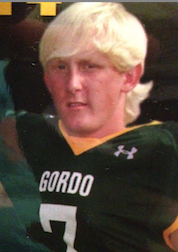
“Witt Black is a senior at East Limestone High School and a 3 sport varsity starter in football, basketball, and baseball. His class rank is 4/179 with a GPA of 4.36. He is a member of the First National Bank Student Advisory Board, Boys State Delegate, Wendy’s Heisman, Bryant-Jordan Nominee, Limestone County Spirit Award Representative, Senior Beta Club, Science Club, Spanish Club, Support Our Soldiers, FFA, and First Presbyterian Youth Group. Witt will be attending the University of Alabama in the fall, majoring in athletic training.”
Author: Encore Rehabilitation, Inc.
It’s Athletic Trainer Tip Tuesday!
This tip is from Eric Oehms, ATC.
“One tip that I tell my athletes when needing to elevate a lower extremity during sleep to decrease swelling. Instead of using pillows that get matted down or end up on the floor, elevate the mattress at the foot of the bed. My suggestion is to use a dresser drawer and place it between the mattress and box spring at the foot of the bed. Your leg will stay elevated the entire night.”
Personal Reviews for Encore Rehab
Amanda Victoria Lusk-Stange– “I have never enjoyed physical therapy, until I received my care at this establishment. They are friendly, and care about you as a person.”
Amy Harris Montgomery – “Can’t imagine going anywhere other than Encore!!! Thank you for making everyone all feel at ease and taking you time to work with each and everyone!!”
Ruth Vanzandt– Joanna Martin, the Physical Therapist at Encore Rehab, got me to Boston in 2013 when 3 doctors said I would not be able to run due to injured hamstring. Exercises, e-stim, massage were all part of the treatment plan and it worked. I continue to do the PRI exercises she taught me & am returning to Boston in 2014. She is excellent and I will always be grateful for what she has done for me!
Peggy Brooks Saint– Am so very much enjoying my Therapy. Thank you Joanna Martin for your help, understanding & patience!
Lacy Gunter Martin– “Finally starting my physical therapy! Thought it would be a very unpleasant experience but it’s not.. I Love Encore, they have the best staff ever:) So happy I chose this place & so glad it’s only 5min away from me, lol Feeling Motivated :)”
Toni DeVaney– “Awesome group, when I should’ve gone to OT and stayed in an in-house rehabilitation, they accepted me as a patient and got me further than my doctor even imagined possible. Thank you.”
Benny Garrison– “These people are great. They do good work and they act like they care. I been to several places for rehab, but this place beats them all. They always ask how you doing like they care. Thanks to all of you.”
Angel F Signs Eipp– “They listen, treat you with respect and only Work towards your recovery. Thanks for all you have done for me.”
Dianna Varnes– “Kind and dedicated staff, they work hard to get you back to your optimal level.”
Karen Perkins Daniel– They worked wonders for me. And Stacey Martin is the best!!!
Jacob Chaffin– “Best staff I have ever worked with. Did a great job, and was willing to help me everyday.”
Deborah Sweda– “Wonderful people and excellent care. You can’t do any better!”
Charlene Taylor– “Professional and caring staff. Does their best to help you stay on the road to recovery.”
Lorraine Frazier– “The BEST and only place to go for therapy!!”
Kayla Hardy– Wouldn’t choose another place to do therapy at! The staff was awesome and really nice. Tracy was awesome!!!
Shannon Gillespie Grace– “Marc Bernier and the staff at Encore are great to work with!”
Stacey Adamson Schaeffer– “Great place to take therapy and everyone is so nice!”
Kimberly Smith Franks– “Wonderful and caring staff!”
Jason Zajac – “The best patient care in town!”
Family, Friends, & Fitness
Written by:
Adam Powell, DPT and Steve Milliron PT, ATC
Encore Sports Medicine – Hoover, AL
“There are three important factors that help shape your life. Family, friends, and fitness have an enormous impact on your well-being. These facets can provide encouragement, confidence, and self-esteem. Your most joyous occasions are made exceptional when you are healthy and surrounded by loved ones. These pillars shape us mentally, physically, and emotionally. Your family, friends, and fitness are integral pieces to your health.
We acquire habits and beliefs from our parents, siblings, and close friends. You are much more likely to perform daily exercise if you surround yourself with individuals that share the same goals. Recreational activities are vital to your mental and physical health. They provide an escape and release from the stress and monotony of your everyday life.
Everyone agrees that the most difficult aspect of exercise is getting started. You have to maintain the motivation to make it a habit. In these instances, it is helpful to draw from the support of your companions. You have the opportunity to positively influence the health of your loved ones. We all should provide support to our loved ones that are experiencing difficulty in becoming physically fit.
A regular daily exercise routine will change your life. It will provide you a sense of accomplishment and will result in improved self-worth. Exercise gives us an opportunity to achieve goals and track progress. It is truly amazing how the human body improves itself through physical training. Exercise will have a dramatically positive impact on a sedentary individual.
Your body becomes stronger, more flexible, and more tolerant by increasing your physical demands. Everyday tasks will be accomplished with greater ease and efficiency when you are physically fit. Both the young and the elderly will benefit from an exercise regimen. It is important that you choose a form of physical activity that is both rewarding and fun. You will not continue to participate in an exercise routine that you consider “very hard” or a “chore.”
Easy everyday activities are beneficial to your health. Simply walking, whether in a group or alone, is an excellent form of exercise that can be performed indoors or outdoors. Whether it is a quick walk around the block, or a long walk in the mall, walking is an effective tool that will improve your general well-being. Walking with a group of neighbors, church members, significant others, etc. serves as a time for bonding and communication. Walking alone provides a time for reflection and relaxation.
You may find that formal exercise classes are best suited to meet your needs. Yoga, Pilates, Zumba, Tai Chi, Crossfit, step aerobics, and cycling groups have all become quite popular. The social component to this form of exercise is what many find intriguing. They enjoy this type of activity because they find that the utilization of an instructor improves their form and technique. Group exercise is an excellent strategy to ensure your enthusiasm and adherence to a new routine.
Exercise can be quite intimidating to beginners. You may be more comfortable receiving experienced direction from a qualified personal trainer or coach. This is a way to achieve your goals if you desire one on one guidance and supervision. Video workouts such as P90X, Insanity, etc. are great tools if you want the structure of a formal class but the freedom to perform your routine at any time or location.
Is summary, there are multiple forms of physical activity that will positively influence your life. You must find an exercise routine that you enjoy. You will positively impact the health of your friends and family by encouraging them to get active and stay active.
If you have any questions regarding starting your new exercise routine, please call (205) 682-7650 and talk with Steve Milliron, PT/ATC, Tim Sirmon, DPT, or Adam Powell, DPT. They see patients daily at Encore Sports Medicine on 2801 John Hawkins Parkway on Hwy 150 in Hoover, AL.
Adam Powell and Steve Milliron helped put this article together. Steve is a physical therapist and athletic trainer in the Hoover area over the last 20 years. Adam is a recent graduate from UAB and licensed physical therapist for Encore Sports Medicine. He is married and lives near Hoover. ”
*It is important to note that one should consult with their physician prior to starting a new exercise routine.
7 Things Your Yoga Teacher Wants to Tell You
“I’ve taught yoga for over 10 years to students around the world and I’ve come up with a few things that every yoga teacher wants you to know. Don’t worry, I’m not here to yell or judge! But even if you’re hitting the mat a few times a week and holding every pose perfectly, you may not be getting the most from your yoga practice. Now, it’s easy to rattle off a long list of yoga no-no’s, but there are also crucial lessons your teacher is probably dying to share with you. Here are my big seven. Take notes and enjoy the ride!
You don’t need to practice yoga every day
It’s easy to fall so deeply in love with yoga that you want to practice non-stop. I hear you—but between travel, work, and family, you can end up depleting your body and mind of energy if you’re not careful. Instead, respect your body and remember that you’re often just as powerful taking time off as you are pushing yourself to the max. Find your balance.
There is no such thing as a typical yoga body
If you were to ask someone what a yogi looks like they’d probably say long, lean, flexible, and strong. Pop culture has definitely influenced that stereotype, but as a teacher who travels the world meeting yogis of every age, gender and race, I can tell you clearly—there is no perfect yoga body. Some of the most amazing yoga I’ve ever seen has come from bodies that were outside that stereotype. You can be curvy, slight, young, or old—yoga is for everyone.
A calming, restorative practice is just as powerful as a strong flow class
In this day and age, we go and we go hard. We rock jobs, run families, keep up on style trends and hit our workouts like a boss. There’s so much go-go-go-go that often the perfect remedy isn’t a wicked hard yoga class but one that will balance you out by slowing you down. Taking the time to breath, stretch, relax and meditate is crucial to giving us the mental strength to carry on at a high pace. So remember that these restorative style classes are a great compliment to your power/flow classes and that you don’t always need 90 minutes of sweat to feel restored. Sometimes all it takes is 20 minutes of focus, peace and quiet.
Enjoy being a beginner
I’m a total overachiever who gets frustrated easily when I can’t master a challenge. But yoga taught me that the journey is even greater than the result. Sure, being a beginner can be a bumpy, ego-bruising time. But it’s also a time when you’re excited, ambitious, and eager to soak everything in. Enjoy this journey, because it’s only a matter of time before you figure it out, master it, and long for something new that exhilarates you the same way.
You don’t need to be flexible to be good at yoga
If I had a nickel for every time I heard someone say, “I’m not flexible enough to do yoga,” I’d be able to afford a closet full of designer shoes. It’s like saying you’re too dirty to take a bath! The whole purpose of yoga is to help you with your flexibility. Give it time—yoga is here to help you out, not embarrass or demean you. And in the meantime, try these stretches to improve your flexibility.
Difficult poses aren’t necessarily better
Yoga has officially entered the age of Instagram, where people post mind-blowing pictures of incredibly challenging poses daily (and I certainly participate… that’s me in the picture above!). They may be inspiring or frustrating depending on your skill level, but here’s the thing: Harder doesn’t always mean better! One of the most common blunders is being over ambitious, pushing towards a pose beyond your current ability and then ending up hurt. Next thing you know you’re too injured to practice for weeks all because of one silly ego slip. Remember, the goal of yoga is to feel better and find balance. So if a simple standing pose and hip opener fills you up more than a foot-behind-the-head, do what works for you! That is your perfect form of yoga.
Yoga isn’t about how you look, it’s about you feel
This one is crucial! Forget the hard poses or the fancy-patterned leggings with matching bra. All of these things are fun, but at the end of the day all that matters is how you feel. Did the practice improve your mood? Calm your mind? Improve your energy? Awesome. Were you in sweatpants? Did you comb your hair? Did you set a world record of Chaturangas? Who cares! Stick to how you feel and you’ll shine no matter what.”
Taken from Women’s Health Mag: http://www.womenshealthmag.com/fitness/yoga-teacher-tips
April Celebrations
Fayette Athlete of the Month
The Fayette Athlete of the Month goes to Colin Jones, an 11th grader at Fayette County High School. He has played football for 2 years, Basketball for 1 year, and Baseball since 7th grade as 3rd baseman and pitcher. He is attending Encore rehab in Fayette, AL for an elbow sprain. Colin is the son of Jeff and Kim Bigham, and an A & B student with future plans of being a finical advisor.
5 things to help you feel better and gain self-confidence
1) GET MOVING
Research has linked any type of exercise—cardio, strength training, stretching—to greater body confidence. And it works whether or not your fitness level or weight changes, or whether your sweat sessions are mild or intense. Plus, just talking about a workout can up your self-image, says psychologist Louise Wasylkiw, Ph.D., of Mount Allison University.
2) LISTEN UP The more in touch you are with the way your body works, the less you may dwell on its appearance, says cognitive psychology researcher Vivien Ainley. In one study, women who could more accurately count their heartbeats objectified themselves less. Practices like meditation and yoga can help you tune in to you.
3) NIX FAT CHAT
“You’re so tiny; my thighs are like tree trunks.” Most women think such self-deprecation is harmless or even helpful. In reality, it’s anything but. Even being involved in third-party snarking (say, dissing a coworker’s shape) can reinforce a negative view of your own body. “Challenge, then replace, fat talk,” says psychology doctoral candidate Rachel Salk of the University of Wisconsin. Praising someone else’s strength or their healthy habits can make everyone feel more confident.
4) SPEAK the (BODY) LANGUAGE
Whenever you hunch your shoulders, cross your arms over your chest, or stare at the floor, you announce your self-consciousness, says body-language pro Lillian Glass, Ph.D. Try a fake-it-till-you-make-it experiment: Walk upright, as if a string is pulling from the top of your head. When you talk to someone, squeeze your butt muscles to straighten your spine, and stand with your feet a foot apart, toes pointing at the person you’re facing. Smile, and don’t be afraid to use your hands when you talk–this kind of openness makes you seem more secure.
5) FEEL BETTER—BY TONIGHT!
First, do an environment scan for confidence-destroying stuff. As in: old jeans that don’t fit, a laptop perennially set to friends’ too-perfect Facebook posts. If you can’t cut this stuff out entirely, avoid it before a big moment.
*If your weight is bothering you, put away the scale for now. The number’s not going to change today, so reminding yourself of it is counterproductive.
+ Leave positive messages on sticky notes around your apartment or office. (“Yeah, you are amazing!” “You’re going to kick butt!”) Strategically place them so they’re the last things you see before stepping out the door.
**Article from Women’s Health Magazine: http://www.womenshealthmag.com/life/gain-confidence?cm_mmc=Twitter-_-womenshealth-_-content-life-_-boostselfesteem
Answers to Common Questions about Total Knee Replacement
Article found via http://www.healthline.com.
“1. When is the right time to undergo a knee replacement?
There’s no precise formula for determining when you should have a knee replacement. But if you’re having trouble getting up to answer the phone or walk to your car, you may be a candidate. A thorough examination by an orthopedic surgeon should yield a recommendation. It might also be beneficial to receive a second opinion.
2. Is there a way to avoid surgery?
For some, lifestyle modifications, physical therapy, medication, or alternative treatment methods such as acupuncture and prolotherapy (which involves injecting fluid to strengthen connective tissue) can help manage knee problems. Also, you may want to speak to your surgeon about other procedures that are commonly recommended before resorting to knee replacement surgery, including steroid or hyaluronic acid injections and arthroscopic surgery that addresses the damaged cartilage.However, delaying or declining a necessary knee replacement could result in a less favorable outcome. Ask yourself: Have I tried everything? Is my knee holding me back from doing the things I enjoy?
3. What will occur during surgery and how long will the knee replacement operation take?
The surgeon will make an incision on the top of your knee in order to expose the damaged area of your joint. The standard incision size can be as long as 10 inches, but a minimally invasive procedure can result in incisions as short as 4 inches. During the operation, the surgeon moves your kneecap aside and cuts away damaged bone and cartilage, which are then replaced with new metal and plastic components. The components combine to form a synthetic (but biologically compatible) joint that mimics the movement of your natural knee. Most knee replacement procedures take 1.5 to two hours to complete.
4. What pieces are used in a knee replacement and how are they kept in place?
Implants are comprised of metal and medical-grade plastic. To seal these components to your bone, two methods are used: bone cement, which typically takes about 15 minutes to set; and a cement-less approach that uses components with a porous coating that grows into tissue or attaches to bone. In some cases, a surgeon may use both techniques in the same surgery.
5. Should I be concerned about anesthesia during surgery?
Any surgery with anesthesia has risks. However, complication rates and mortality for general anesthesia are extremely low. An anesthesia team will determine whether general anesthesia or spinal, epidural, or regional nerve block anesthesia is best.
6. How much pain will I experience after surgery?
Although you will experience some pain after surgery, it should diminish quickly—within four or five days max. Your doctor will most likely prescribe medication to help you manage the pain, which will be administered through intravenously (IV) immediately after surgery. After you are released from the hospital, you will switch to painkillers taken in a pill or tablet form. After you have recovered from surgery, you should experience significantly less pain in your knee but there’s no way to predict exact results—some patients have knee pain for a full year after the surgery. Your willingness to engage in physical therapy and make lifestyle modifications can have a significant impact on your post-surgery level of pain and adjustment to the implant.
7. What should I expect immediately following surgery?
You will wake up with a bandage over your knee and, in most cases, a drain to remove fluid from the joint. It is likely that you will wake up with your knee elevated and cradled in a continuous passive motion (CPM) machine that gently extends and flexes your leg while you are lying down. A doctor might also insert a catheter so you don’t have to get out of bed to get to a toilet. In addition, you may wear a compression bandage or sock around your leg to improve blood circulation and reduce the odds of a clot. Your doctor will administer antibiotics intravenously and you may receive anticoagulants (blood thinners) to reduce the odds of a clot. Many patients experience an upset stomach during the immediate post-surgery period—this is normal, and your doctor or nurse can help provid medication to ease stomach pain.
8. What can I expect during recovery and rehabilitation from knee replacement?
Most patients are up and walking within a day or two—with the aid of a walker or crutches. A physical therapist will help you bend and straighten your knee a few hours after your surgery. After you return home, therapy will continue regularly for weeks and you will be asked to engage in specific exercises designed to improve the functionality of the knee. If your condition is more severe, or if you don’t have the needed support at home, the doctor may recommend you first stay at rehabilitation or nursing facility, though this is rare. During the weeks after surgery, your doctor will wean you from pain medication.
9. What do I need to do to prepare my home for recovery?
If you live in a multiple story house, prepare a bed and space on the ground floor so that you can avoid the stairs when you first return. Make sure the house is free of obstructions and hazards including power cords, area rugs, clutter, and furniture. Focus specially on pathways, hallways, and other places where you are likely to have to walk through. It’s wise to make sure that handrails are secure and a grab bar is available in the tub or shower you plan to use. You may want to add a bath/shower seat.
10. Will I require any special equipment?
Your doctor will likely recommend that you use a CPM machine at home, while lying on a flat surface or bed. You may be sent home from the hospital with this device, but if you aren’t, your doctor or therapist will arrange that one be delivered to you. A CPM machine helps to increase your knee motion during the first few weeks after surgery, and is usually prescribed to slow the development of scar tissue and to help you achieve the maximum range of motion from your implanted knee. It is crucial to use the device as prescribed by your doctor or PT.
11. What activities will I be able to engage in?
You should be able to resume normal daily activities—such as walking and bathing—within several days. Low impact exercise should also be doable after your rehabilitation period, typically six to 12 weeks. Consult with your physical therapist about introducing new activities during this rehabilitation period. You should avoid running, jumping, bicycling up and down hills and other high impact activities.
12. How long will the artificial knee joint last and will I ever require a revision (a second knee replacement)?
Studies show that upwards of 85 percent of patients still have a functioning artificial joint 20 years after receiving it. However, wear and tear on the joint can adversely affect its performance and lifespan. Younger patients are more likely to have the joint wear out and require a revision during their lifetime. Consult with a doctor about what’s right for you.”
Source: Greengard, S. (2012, April 30). Answers to common questions about total knee replacement. Retrieved from http://www.healthline.com/health/total-knee-replacement-surgery/common-questions
(2013, March ). Before and after rheumatoid arthritis [Web Photo]. Retrieved from http://www.coretherapy.com/health_news/articles_total_knee_replacement.html
Physical Therapy Benefits For Back Pain
After an episode of low back pain has lasted between two and six weeks, or if there are frequent recurrences of low back pain, it is reasonable to consider back pain exercises and physical therapy for back treatment. (Some spine specialists consider back exercise and physical therapy sooner, particularly if the pain is severe.) In general, the goals of back pain exercises and physical therapy are to decrease back pain, increase function, and provide education on a maintenance program to prevent further recurrences.
Passive Physical Therapy – Modalities
There are many different forms of physical therapy. Acutely, the therapist may focus on decreasing pain with passive physical therapy (modalities). These are considered passive therapies because they are done to the patient. Examples of modalities include:
- Heat/ice packs
- TENS units
- Iontophoresis
- Ultrasound
Active Physical Therapy – Back Pain Exercises
In addition to passive therapies, active physical therapy (exercise) is also necessary to rehabilitate the spine. Generally, a patient’s back exercise program should encompass a combination of the following:
- Stretching for back pain exercise
- Strengthening for back pain exercise
- Low-impact aerobic conditioning
Even patients with a very busy schedule should be able to maintain a moderate back pain exercise regimen that encompasses stretching, strengthening, and aerobic conditioning. These exercises suffice as physical therapy for back pain relief.
- Stretching for back pain exercises. Almost every individual who has suffered from low back pain should stretch their hamstring muscles once or twice daily. Simple hamstring stretching does not take much time, although it can be difficult to remember, especially if there is little or no pain. Therefore, hamstring stretching exercises are best done at the same time every day so it becomes part of a person’s daily routine.
- Strengthening for back pain exercise. To strengthen the back muscles, 15-20 minutes of dynamic lumbar stabilization or other prescribed exercises should be done every other day.
- Low-impact aerobic conditioning. Low impact aerobics (such as walking, bicycling or swimming) should be done for 30-40 minutes three times weekly, on alternate days from the strengthening exercises.
Source: Ullrich, P. F. (1999, 9 8). Physical therapy benefits for back pain. Retrieved from http://www.spine-health.com/treatment/physical-therapy/physical-therapy-benefits-back-pain