Uncategorized

Pull a Muscle From Working Out? Here’s What to Do.

We’ve all experienced strains, cramps, soreness, and general tightness, but it doesn’t help that these all seem to cause varying degrees of similar pain. Here’s how to tell if it’s really a pulled muscle and what you can do about it.

Sharp pain in general is a pretty fair indicator of something nasty, but it’s also very complex. You’d probably be busy worrying about whether you can or should continue working out, either a bit later or in the days after. So, it’s important to determine that you do have a pulled muscle and not some other type of pain, like our good friend delayed-onset muscle soreness (DOMS). It’s a very simple but common mistake. Luckily, there are a couple of things to look out for.

Is It Really A Pulled Muscle?

When you pull a muscle, it usually happens suddenly, and you’ll know something’s gone horribly wrong in that instant. Because a pulled muscle can be easily confused with other types of injuries like sprains or hernias, a major differentiator, according to Paul Ingraham, science writer at PainScience.com, is that a muscle strain makes just one muscle (or muscle group) feel weak and the muscle contraction painful.

Basically, you’d feel more pain during the lengthening (eccentric) portion of the movement and during resistance tests, says Justin Kobbe Solace, a board certified massage therapist and pain management specialist at Hybrid Health. In more severe cases, there’ll be signs of inflammation, like swelling, redness, and warmth on the skin, and possible bruising. At that point, don’t try to play it cool; get some medical help.

How to Prevent Future Muscle Strains

You’ve probably heard the advice to stretch and generally keep yourself “flexible”, and you won’t strain your muscles. However, a review of the research into the topic shows that regular stretching doesn’t help keep you from pulling a muscle (or preventing injuries in general). So, what does work? A good warm-up, but keep in mind an effective warm-up doesn’t necessarily include static stretching.

Instead, focus on moving your muscles and joints through a full range of motion with “dynamic stretching”, and prepare for your workout by doing less intense versions of your actual exercise. For example, if you’re warming up for squats, try bodyweight squats and work your way up to your real “working set”. If you’re working out in cold weather, put in a little extra time to warm up. Here are a few other things to keep in mind:

  • Know when you’re ready to go again: Going back to your regular workouts should be based on the return of your strength and range of motion, rather than by a set recovery period. Of course, this will vary depending on the severity of the strain, but the key is to keep things pain-free. When you do get back to it, slowly ramp up the intensity week-by-week according to how your injury feels.
  • Minimize intense activity when you’re really tired: You are much more prone to any sort of injury when you’re tired or fatigued, so don’t try to push through workouts, especially if your form, alertness, and technique start to fall off.
  • Start slow: If you’re starting a new program, exercise, or sport, it’s important to ease yourself into it so you can learn to recognize when you should push or back off.

The good news is that our bodies are amazingly resilient, and we can make them stronger. Of course, it’ll take effort. In the case of rehabilitation from a serious injury, professional supervision by a physical therapist, trainer, or doctor is necessary to make sure you’re doing your exercises and stretches correctly to strengthen and keep an injured muscle healthy.

Stretching Does More Harm Than Good

Your first instinct might be to stretch a pulled muscle, but think about it for a second: if a pulled muscle is a result of overstretching, then stretching it further to its full range of motion won’t help. Instead, your safest bet is to simply avoid anything that would agitate the injured muscle and give it as many days as it needs to calm down.

The universally recommended initial treatment for pulled muscles is R.I.C.E., which stands for rest, ice, compression, and elevation. No surprise there, as it seems to be the framework for many other soft-tissue injuries as well. Interestingly, though, the authors of this paper in the Journal of the American Academy of Orthopaedic Surgeons and this one in the Journal of Athletic Trainingmention that the efficacy of I.C.E. in R.I.C.E. for muscle strains in particular haven’t been fully studied. Still, “their employment is generally recommended.”

That’s to say that icing, compression, and elevation probably don’t treat the actual strain, but icing and compression can help numb the pain at least.

If you grit your teeth and exercise through the pain too soon, you might end up making the injury worse, which could eventually lead to re-injury or chronic injury, says Solace. If it’s a minor strain, do what you can as far as gently moving your muscle through its range of motion after a couple of days of rest. Stop if or when it’s painful. Solace adds that this way, you encourage blood flow to aid in the healing process.

Article by Stephanie Lee, Illustration by Fruzsina Kuhari. Article found at http://vitals.lifehacker.com/what-to-do-when-you-pull-a-muscle-from-working-out-1759172514. This article is a suggestion by Encore Rehab not specified medical advice. 

Long Beach Patient of the Month, Mike McCoy.

Mike McCoy.jpg

Congratulations to the Long Beach Patient of the Month, Mike McCoy! Mike is a fire fighter for Gulf Port and lives in Pass Christian, Mississippi. He has been coming to our Long Beach Clinic for 9 Weeks to have Physical Therapy treatment after his knee and shoulder surgeries.

“Encore is preparing me to get back to full duty as quickly as possible. Long Beach Encore has great group of fun and dedicated ladies that truly care about what they do.” 

Keep up the good work, Mike! Thank you for serving the community!

Kinesio-Tape. Does it really work?

“The answer depends on whom you ask. Obviously plenty of elite athletes believe in it and claim that the tape, which replicates the thickness and elasticity of skin, provides support to muscles and joints without limiting range of motion. According to William Schobert, MD, the surgeon who treated the Olympic beach volleyball champions, Ms. Walsh Jennings says, “I absolutely believe in Kinesio tape. It has helped me with function, stability, blood flow, and peace of mind.”

“It is a very comfortable, directionally flexible tape used for musculoskeletal support in the athletic training setting,” he said. It is used for soft-tissue support as well as joint support. Its application isn’t a panacea but can be a boost to athletes with injuries in a competitive environment.”

Among the proposed beneficial effects of the tape are the following:

  • To provide a positional stimulus through the skin
  • To align fascial tissues
  • To create more space by lifting fascia and soft tissue above the area of pain/inflammation
  • To provide sensory stimulation to assist or limit motion
  • To assist in the removal of edema by directing exudates toward a lymph duct.

Anecdotally, athletes and trainers say they have seen these outcomes in at least some individuals. “I’ve had hit-and-miss results,” said Aaron Brock, ATC, director of sports medicine for USA Volleyball, which encompasses both men’s and women’s teams. “Some people absolutely love it. They’re seeing great results.

“But I don’t say, ‘man, every time I use this, it has great results,’” he continued. “Sometimes, from a therapeutic perspective, we’re doing so many different things that we don’t know what is effective and what isn’t.”

The literature does not provide much conclusive support for the efficacy of the tape, and few well-controlled studies with high-quality evidence have been performed. A randomized, double-blinded clinical trial was done in 2008 to evaluate the effect of tape use on shoulder pain. Patients with rotator cuff tendinitis or impingement received either a tape application or a sham. The tape group did show immediate improvement in pain-free shoulder abduction that was statistically significant (P = 0.005), but by day 6 both groups had significantly improved in all outcome variables, exceeding the criteria for success.

The authors noted that the patient group was young, with an average age of 20, and that older patients might have different results. Because of the initial positive finding, this study has sometimes been cited in the popular press as supporting the use of the tape, but the authors concluded, “Utilization of Kinesio taping for decreasing pain intensity or disability for younger patients with suspected shoulder tendonitis/impingement is not supported.”

Other reliable studies find little evidence to support using the tape, although some small investigations reported some positive results. A recent meta-analysis found that, overall, “the efficacy of Kinesio tape in pain relief was trivial given there were no clinically important results.” Small beneficial results on range of motion were found in one study, and “trivial” results in two other studies across numerous joint measurements were found. The analysis cited a likely beneficial effect for proprioception regarding grip force sense error, but no positive outcome for ankle proprioception.

The analysis concluded that little quality evidence supported the use of Kinesio tape over other types of elastic taping in the management of sports injuries and called for further research to confirm findings of possible positive effects.

Some studies may point to the need for further research. For example, one study found that taping on baseball players with shoulder impingement resulted in positive changes in scapular motion and muscle performance.

None of the studies reported negative effects, which may be why trainers like Mr. Brock of USA Volleyball use the tape on players who report benefits with it.

“Primarily, I like it for some postural cuing around the scapularis,” he said. “It provides some proprioceptive cuing for the scapular stabilizers to improve activation in the scapular muscles, thereby putting the athlete in a better postural position. Bottom line, I like to use it for muscle education or proprioception. I’ll also use it if I feel I can get some activation if for whatever reason a muscle isn’t turning on so well.”

A question of direction
Mr. Brock said he would like to see research that tests whether the direction in which the tape is applied determines whether a muscle is activated or inhibited. Under the theory of directional effect, the tape would be applied distal to proximal for inhibition and from proximal to distal for activation. For quadriceps inhibition, for example, the tape would be pulled from the patella toward the hip. The rationale is that the applied tape would continue to pull directionally with elastic tension.

“I have a hard time thinking that changing the direction completely changes the effect,” Mr. Brock said. For me, that’s a little bit of a stretch.”

He also said he would like to see more research into the effect of taping on edema and swelling, noting the tape could be useful in a physical therapy setting where the patient is not constantly seen. The tape can stay adhered for as long as 5 days and can endure water.

He recommends that anyone interested in using the tape receive instruction. He does not recommend self-application by athletes or patients. Ms. Walsh Jennings said, “Proper application is paramount to its effectiveness.”

“You can experiment with it, but I think it’s important to hear how the people who made the tape recommend using it,” Mr. Brock said. “Depending on what you are trying to do, you’ll put the tape on differently. With the basic guidelines that instructors give you, there’s a lot of leeway for experimentation.”

He added that for volleyball players and overhand athletes, he often turns to elasticized shirts such as those made by IntelliSkin, which operate similarly to Kinesio tape.

“The shirts have a little extra pull in the scapular region,” he said. “I’ll wear one sometimes if I’m getting into that forward-head, rounded shoulder, kyphotic type of position. Surgeons might even want to try it, as well as people who sit at a computer all day. I think it helps posturing. I’ve gone in that direction often for the scapularis. All the men volleyball players have them, and some wear them during matches.”

As for the tape, Mr. Brock will continue to use it, if for no other reason than for the “peace of mind” Ms. Walsh Jennings cited. “There is a psychological component,” he said. “If nothing else, you get a little extra proprioceptive feedback, and maybe your central nervous system and peripheral nervous system are communicating a little better.”

Bottom Line

  • Kinesio tape is a cloth tape with the thickness and elasticity of the epidermis.
  • Among its purported benefits are lifting of the skin and fascia, support of muscles and joints, and enhanced proprioception.
  • Although one randomized, double-blinded clinical trial found that the tape provided relief from shoulder pain immediately after application, the effect did not last over time.
  • Little high-quality evidence indicates the efficacy of the tape, and more scientifically valid studies are needed to make a conclusive determination for its claims.”


*This article was written by Terry Stanton, senior science writer for AAOS Now, and retrieved from: http://www.aaos.org/AAOSNow/2012/Nov/cover/cover1/?ssopc=1

Exercises to help heal Plantar Fasciitis

“With the start of the new year, fitness resolutions are on everyone’s mind. Couch potatoes and exercise enthusiasts have started new physical activities and routines, runners have upped their mileage and weekend warriors are working hard to advance quickly in their chosen sport or activity-all trying to achieve the goal of leading a healthier lifestyle.

Advancing too quickly in physical activity can lead to an increase in heel pain-commonly known as Plantar Fasciitis. Faulty foot mechanics or improper shoes can also contribute to this condition. Other possible causes include: obesity, age, family tendency, and disease (arthritis and diabetes).

The Plantar Fascia is a shock absorbing tissue that expands when you walk, run, or exercise. Continuous tension on the fascia can cause irritation or inflammation. The pain associated with Plantar Fasciitis is generally located on the bottom of the heel. The first steps out of bed in the morning are often the most painful.
Irritation of the Plantar Fascia is treated with rest, ice, stretching and strengthening, correction of faulty footwear, and proper foot mechanics. Several stretches/strengthening exercises that have helped our clients get “back on their feet” are: The Plantar Fascia Stretch-standing with the ball of foot on stair, reach for the bottom step with heel until a stretch is felt through the arch of the foot. Hold for 30 seconds. Repeat 3 times, 3 times per day.
Single Leg Toe Curling-With foot resting on a towel, slowly bunch towel up as you curl toes. Repeat 3-5 times, 2 times per day.
Lacrosse Ball Massage-while sitting in a chair, roll lacrosse ball under your foot to massage the painful area. Perform for 1 minute, 3 times per day.

Increasing activity levels can be done safely and strategically to avoid overuse injuries. Always check for proper footwear, consider cross training (alternate between running, walking, biking, and swimming) on your exercise days, rest, and diet all aid in injury prevention and rehabilitation. So get out there and get your HEALTHY FEET MOVING!”

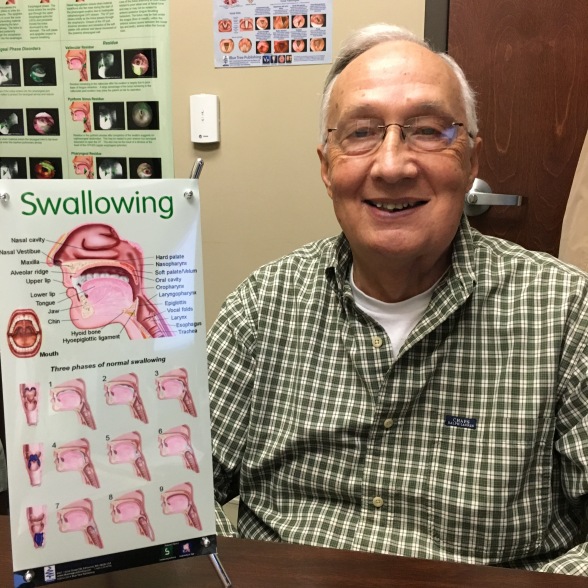
From Feeding Tube to Eating by Mouth: Mr. Lee’s Amazing Success Story

Mr. Lee.jpeg

Speech Therapy at Ocean Springs Neuroscience Center for Dysphagia Treatment

Therapist: Stephanie Stensland MS, CCC-SLP

From Feeding Tube to Eating by Mouth

Mr. Lee’s Success Story:

After jaw reconstruction in July of 2015, Mr. Lee experienced a paralyzed vocal fold and an immobile epiglottis, causing him to aspirate and need a PEG feeding tube for 100% of his nutrition. He was no longer able to eat or drink anything by mouth. He started outpatient therapy October 1, 2015, at the Neuroscience Center to regain his swallow. Mr. Lee went in for another swallow study soon after beginning outpatient therapy and although his epiglottis had begun to partially move, he was still at high risk for aspiration. He was given home swallowing exercises that he did several times a day and began small trials of water using the Frazier Free Water Protocol. As his swallow reflex became faster and he began to demonstrate better hyolaryngeal excursion, we advanced his intake to purees such as pudding with strict swallowing strategies.

Mr. Lee utilized a multi-step strategy to reduce his risk of aspiration which involved using 1) a left head turn to close off the paralyzed vocal fold, 2) a breath hold to help adduct his working vocal fold, 3) a very small bite of a pureed consistency, 4) use a quick and effortful swallow followed by an immediate cough and 5) another swallow and cough. It was a lot of steps, but it allowed him to eat something by mouth. Over the next several weeks Mr. Lee regained strength and his swallow function through continuous exercises, use of neuromuscular electrical stimulation, manual therapy and therapeutic trials of purees and soft solids. Mr. Lee eventually began eating soft whole food and thin liquids with fewer swallowing strategies as he gained strength and function. Around mid-November, we eliminated swallowing strategies and allowed soft solids and thin liquids at home with use of aspiration precautions. Towards the end of November, he was able to meet nearly all nutritional needs by mouth. Once he was able to demonstrate a nutritive swallow without reports of pharyngeal residue, we began addressing his trismus (incomplete jaw opening) with the use of an OraStretch device.

His hours of home exercises and therapy paid off when he returned to Ochsner on January 18, 2016 to have his PEG tube removed! We are proud to report that Mr. Lee is now discharged from speech therapy and is enjoying meals with his family and friends at home and in restaurants.

Mr. Lee’s perspective:

What was eye opening to you about your experience with head and neck cancer and swallowing disorders?

“I was surprised at how long it took to get it all back. I thought I would be swallowing normally a month after my surgery in July of 2015 and that was not the case.”

What do you think helped you the most throughout your journey from being NPO to eating again?

“A combination of sound instruction and recommendations from great doctors, home health therapy, outpatient therapy and family encouragement.”

What would you consider your turning point?

“When I was able to eat Thanksgiving food with my family…in fact I ate three quarters of a pecan pie the week of Thanksgiving. Also, when I took my first bite of a steak. It was great!”

Alabama Elite Preview Invitations

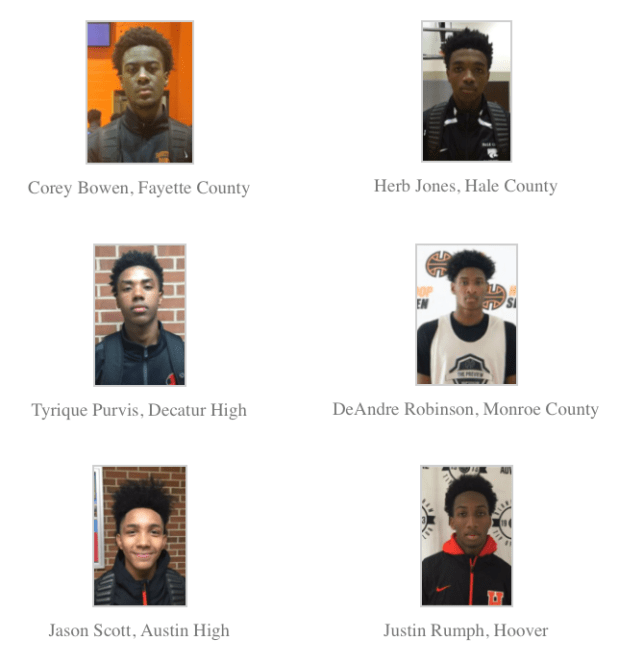
Congratulations to all of the athletes that received Alabama Elite Preview Invitations these past couple of weeks. The “AEP” will begin on March 5, 2016. It is a preview of 80 of the best high school basketball (2017, 2018, 2019) players in Alabama.

Here are the athletes who were invited that are affiliated with Encore Rehabilitation (through our Sports Medicine program in their school).

Screen Shot 2016-01-28 at 2.20.13 PMScreen Shot 2016-01-28 at 2.20.22 PMScreen Shot 2016-01-28 at 2.20.32 PMScreen Shot 2016-01-28 at 2.20.41 PM


You can find out more at the website: http://hoopseen.com/index.php/2013-03-19-19-24-39/elite-preview

Leakesville SportsFit Member of the Month, Kimberly Green.

Kimberly Green'.jpg

We would like to congratulate Kimberly Green on being chosen as the Leakesville SportsFit Member of the Month! Kimberly lives in Leakesville and has been a member at SportsFit since last February. Her loyalty and dedication to exercising has been so amazing to watch! Her exercise motivation is to live a healthy, full life and meet great people along the way. When asked why she chose SportsFit as her gym she said,

“I wanted to live healthy and be all I can be. From the first visit to the gym, I have enjoyed Jamie McLeod and Kim Pierce beyond words. Both have such an impact on me as a person. I have had nothing but a wonderful experience!”

We are so proud of you and all you’ve accomplished, Kimberly!


How Occupational Therapy Can Help Relieve Rheumatoid Arthritis

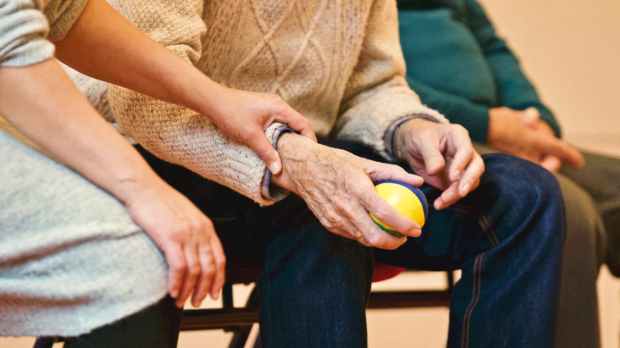
pexels-photo-339620.jpeg

There are many people who struggle with Rheumatoid Arthritis.  Here is an excerpt from the article, “10 Simple Adjustments to Relieve RA Hand Pain”, that could help you resume your daily activities that RA was keeping you from.

How an Occupational Therapist Can Help –

“According to an analysis of numerous research studies published by the Cochrane Collaboration, there’s a lot of evidence that working with an occupational therapist when you have RA can help you use your hands for everyday tasks more efficiently and with less pain. The occupational therapist’s goal is to ensure that you can participate in any activity you want while still protecting your joints and getting hand pain relief.

For starters, an occupational therapist teaches people with RA about disease self-management, Dodge says – offering instruction on joint protection techniques, how to use assistive devices, how to conserve your energy, and exercises that will help you do activities with less pain.  [They] may also explain how to use heat and cold as part of your pain management strategy.

The occupational therapist can also show you how to modify specific activities so you can still do them. For example, if you’re a woman who enjoys knitting, an occupational therapist can provide suggestions for adaptive equipment and offer techniques that allow you to enjoy your hobby more safely.”

10 Tips to Try Now

If you need hand pain relief from RA, use these suggestions from Dodge and Amini to modify activities to make them less painful:

  1. Build up handles on utensils and tools so that less force is needed to hold them while performing tasks. Pipe insulation is handy for enlarging handles.
  2. If you’re unable to lift a gallon of milk with one or both hands, buy half gallons or have someone pour half into a small pitcher.
  3. Rather than carrying bags in your hand, place straps over your forearm or shoulder. Rolling bags alleviate the need to lift and carry them.
  4. Use both hands when lifting objects, and keep your forearms close to your body.
  5. When possible, use your palms to grasp objects rather than your fingertips. Replace standard door knobs with door levers.
  6. Wear rubber gloves to enhance your grip when opening jars.
  7. Use electric appliances when possible.
  8. Use your entire body to move heavy objects rather than pushing with your hand, such as when opening a door.
  9. Use a rolling cart to move items around the house.
  10. Purchase pots and pans with two handles and slide them over surfaces instead of lifting them. Silicone sheets can be placed on delicate counter surfaces to protect them from hot pots.

**To read the entire article from Everyday Health, click here!

Encore Rehabilitation Locations offering Occupational Therapy:

Encore Rehabilitation-Athens  256-232-1221
Encore Rehabilitation-Bay Minette   251-239-5395
Encore Rehabilitation-Bessemer West    205-481-7125
Encore Rehabilitation-Cullman   256-775-3737
Encore Rehabilitation-Decatur   256-350-6331
Encore Rehabilitation-Foley   251-270-2505
Encore Rehabilitation-Haleyville   205-486-2753
Encore Rehabilitation-Hartselle   256-773-0138
Encore Rehabilitation-Hoover   205-682-7650
Encore Rehabilitation-Inverness   205-408-4123
Encore Rehabilitation-Jackson   251-246-1214
Encore Rehabilitation-Mobile I65   251-459-8402
Encore Rehabilitation-Mobile Providence   251-634-2214
Encore Rehabilitation-Saraland   251-675-3933
Encore Rehabilitation-Spanish Fort   251-625-2170
Encore Rehabilitation-Vernon   205-695-0689
Encore Rehabilitation-Winfield   205-487-0540
Ocean Springs Neurological Vestibular Rehab   228-818-1207

If rehabilitation is in your future, choose Encore!

encorerehab.com


Part 3-Chinese Medical Professionals Tour Encore Facilities-Corporate Office Visit

MLB Bound! Jonathan Gettys-Athlete of the Month for Encore Rehabilitation-Dothan

“I Feel Like a New Person!”- Finding Headache Relief after several years of pain