Physical Therapy

Dry Needling: What is it? How does it work?

DryNeedlingCullman

Encore Rehabilitation is proud to introduce Dry Needling to the many rehab services we provide. All of our Dry Needling Practitioners are Licensed Therapists and have received thorough training and certification in this innovative procedure.

What is dry needling?

Dry needling is a skilled intervention that uses a thin monofilament needle to penetrate the skin to stimulate underlying myofascial trigger points, muscular and connect tissues for the management of neuromusculoskeletal pain and movement impairments.


How does dry needling work?

When a needle tip passes through the skin and hits a trigger point, a local twitch response in the muscle is often noted by both the clinician and client. Mechanical stimulation of the muscle produces this twitch response which is then followed by a dramatic reduction in muscle tension resulting in reduced pain and increased function. Dry Needling also lead to the release of endogenonous opioids and initiates healing.


Is dry needling painful?

Mild discomfort is normal response that is often short lived. Patients may experience a deep ache or referred pain which is a positive indication that the procedure is being performed correctly. Most pole do to feel the insertion of the needle.


What conditions can be treated?

  • Neck pain
  • Repetitive stress injuries
  • Tendinitis/tendinopathy
  • Adhesive capsulitis (Frozen shoulder)
  • Carpal tunnel syndrome
  • Knee osteoarthritis
  • Plantar fascitis
  • Cervicogenic headaches
  • TMJ dysfunction
  • Low back pain
  • Sacroliliac joint dysfunction
  • Sciatic nerve pain
  • Gluteal tendionopathy
  • Hip osteoarthritis
  • Tarsal tunnel syndrome
  • Shin splints
  • Hip bursitis


Indications for prescribing dry needling

Dry needling is most often incorporated into a treatment plan when myofascial trigger points and neuromusculoskeletal pain are present which may lead to impairments in body structure, pain, and functional limitations. Dry needling will not replace the hands-on approach or standard of care but will be an adjunct to a comprehensive plan of care. Dry needling is simply another tool to use for the purpose of reducing pain and improving function.


How many sessions of dry needling are needed?

Most patients will receive 2-3 treatments with several days in between. In most cases, patients, patients will not receive more than five treatments.


Dry Needling is covered under most insurances.


Is dry needling a safe procedure?

With proper training and knowledge of anatomy, dry needling is very safe. Encore Rehabilitation’s Dry Needling Practitioners are Licensed Therapists with thorough training and certification from The Dry Needling Institute.


How do patients feel following the dry needling procedure?

Post needling soreness is a common, normal response. Soreness may be felt at the needling site and in the surrounding areas. Fatigue, nausea, and light-headedness are a few adverse side effects that are present in 1-2% of patients. Minor bruising occurs in approximately 20% of patients but is considered normal and will resolve.


To see if Dry Needling may be right for you, please contact Encore Rehabilitation today!

Encore Rehabilitation is conveniently located throughout Alabama and Mississippi. Visit our website to view our current locations. 


Celebrating National Physical Therapy Month!

Encore Rehabilitation- Paige Plash, PT and Paul Henderson, PT

Encore Rehabilitation, Inc. was founded by two Physical Therapists, Paige Plash and Paul Henderson. Encore Rehabilitation is the largest privately owned provider of rehabilitation services in the southeast.

October is National Physical Therapy Month and at Encore Rehabilitation, we look forward to celebrating by sharing our great company with you!

Over thirty-five years ago, two students met in physical therapy school at the University of South Alabama. Paul Henderson, PT, and Paige Plash, PT, not only became physical therapists but also great friends. They shared a vision of a rehabilitation company that would provide a variety of rehabilitation and wellness services to individuals and communities.

Today, Encore Rehabilitation, Inc. embodies the essence of their vision. Encore is a patient-oriented company with a tremendous team of dedicated and experienced employees. Mr. Henderson and Mr. Plash continue to provide leadership and vision for our company.

Look for more information about our company and our services throughout the month of October!

At Encore Rehabilitation, we LOVE to see you move!


Encore Rehabilitation Foley -Patient of the Month Janice Daniel

Janice Daniel Sept2017Revised

We would like to recognize our Encore Rehabilitation of Foley Patient of the Month, Janice Daniel. Janice is from Silverhill and has been receiving physical therapy for five weeks. She came to Encore to regain use of her shoulder following a torn rotator cuff repair. Her progress is going very well.  In 2010, Encore Rehabilitation helped Janice after her knee surgery.  After her knee rehab, Janice was able to return to gardening and doing all the things she enjoys.  Janice says, “Like with my knee, I want to be the best I can be. Encore is enabling me to fulfill my goal!” Keep up the good work, Janice!

At Encore Rehabilitation, we LOVE to see you move!!


Fayette Encore Patient of the Month, Sherman Lee.

Screen Shot 2016-11-29 at 2.28.44 PM.png

We would like to recognize our Fayette Encore Patient of the Month, Sherman Lee. Sherman is a native of Fayette, AL and has been coming to our clinic to receive physical therapy after his total knee replacement. He has been receiving therapy treatment for 2 months now and has been improving greatly! Keep up the good work Mr. Lee!

“I have been to Encore before at the Winfield location. This is a great bunch of professionals and I love the way they treat their patients. I want to stay with Encore.”

-Mr. Lee.

“The Link Between Nutrition and Pain Is too Strong to Ignore” via APTA.

By Joe Tatta, PT, DPT, via APTA

Here’s a situation I bet you see all too often in your practice: a patient or client comes to you to overcome pain and increase mobility, and you see almost immediately that working on the mechanics of motion won’t be enough—they could really benefit from some lifestyle changes as well. Frequently, one of those changes involves thinking more carefully about the food they’re putting into their bodies.

Despite Hippocrates’ oft-quoted “Let food be thy medicine,” most physicians receive only a few hours of instruction about nutrition and coaching to help patients change their eating habits. Yet studies like this one from the National Institutes of Health show nutritional education becomes an incredibly useful tool to improve overall health outcomes for patients and specifically reduce inflammation.

As PTs, we are presented with a real opportunity here. Research shows that PTs can play an active role in lifestyle-related interventions such as nutrition. Providing information on nutrition will put you ahead of the curve with your peers while improving your patients’ results.

Early in my practice, I saw how obesity often contributed to my patients’ pain. Once I began providing information on some simple diet and lifestyle strategies with my patients, many lost weight, felt better, and dramatically reduced their pain. Nutrition became the missing link to help my patients manage and relieve pain.

Over time, I’ve found that nutritional screening and informational strategies can make a difference in 5 conditions associated with pain that we often see in our practices:

  1. Inflammation. Copious inflammatory foods, including vegetable oils, populate the Western diet. Most observational and interventional studies show a traditional Mediterranean diet, rich in healthy fatty acids, fruits, vegetables and fiber, provides anti-inflammatory benefits. Among specific conditions, studies show a Mediterranean diet rich in polyunsaturated fatty acids and antioxidants provide anti-inflammatory effects that benefit individuals with rheumatoid arthritis. Epidemiologic and clinical evidence likewise shows an optimal diet can reduce inflammation that, among other things, contributes to metabolic syndrome.
  2. Obesity. As we all know, a vicious cycle ensues as obesity contributes to numerous chronic pain conditions, and the pain in turn can lead to sedentary behavior that increases obesity. Studies prove what I’ve seen countless times in my own practice: weight loss must become a crucial aspect of overall pain rehabilitation.
  3. Osteoarthritis (OA). Studies have shown a relationship between pain and food intake among overweight and obese patients with OA. Fortunately, obesity is the most modifiable risk factor for knee OA. Of course, pain management is crucial to reducing OA symptoms. But even that may have a nutrition connection: one systematic review found scientific evidence to support some specific nutritional interventions–including omega 3 fatty acids–to relieve symptoms among patients with OA. Studies also show various nutrient deficiencies, including vitamins C and D as well as selenium, contribute to OA.
  4. Autoimmune disease. NIH estimates that 23.5 million Americans have an autoimmune disease (compare that with cancer, which affects 13 million Americans). Over 80 autoimmune disorders exist, including Crohn’s disease, rheumatoid arthritis, multiple sclerosis, and type 1 diabetes. Of course, genetic predisposition, environmental factors (including infections), and gut dysbiosis play major roles in autoimmune disease development. But increasingly, researchers believe adverse dietary changes over the past 50 years–including gluten intolerances, altered gut bacteria, and vitamin D deficiencies–also contribute to that increased rate of autoimmune diseases. Chief among those changes is our prevalent high-sugar, high-salt, processed-food heavy diet that paves the pathway for autoimmune diseases. Nutrient-poor diets only exacerbate that problem: evidence shows vitamin D, vitamin A, selenium, zinc, omega-3 fatty acids, probiotics, and flavanol deficiencies contribute to autoimmune diseases.
  5. Prediabetes and type 2 diabetes. Type 2 diabetes affects 29.1 million Americans (that’s over 9% of the population) and paves the way for serious complications such as heart disease, blindness, kidney failure, and lower-extremity amputations. Diabetic neuropathic pain, a common diabetes complication and the most common form of neuropathic pain, affects over 90% of people with diabetes. Studies show increased musculoskeletal pain in patients with type 2 diabetes adversely impacts body mass index, quality of life, physical function, and physical activity abilities. The link between diabetes and nutrition is a fundamental one that should never be set aside.

Working with patients suffering these and other conditions, I’m often impressed how optimal nutrition becomes the needle-mover to alleviate pain and help people heal. So how can a PT incorporate these considerations into practice? Here are a few simple tactics you can use right now:

  1. Ask nutrition-related questions during your initial consultation. Simple things like “do you take a multivitamin” or “about how many vegetable servings do you eat a week” can help lead to gradual dietary tweaks that yield impressive results.
  2. Have your patients keep a 24-hour food diary. Beyond establishing adherence and accountability, asking patients to write down everything they eat for 24 hours provides insight to their daily eating habits. Once you have that insight, you can help them gradually improve those habits.
  3. Offer some simple information. Rather than impose a major dietary overhaul, ask patients to do things that don’t seem so overwhelming; for example, to increase their water intake, or eliminate processed foods and sugar.
  4. Create simple, attainable goals. Begin by allowing your patients to experience success in some way. You might ask a patient to lose 5 pounds over 3 weeks, or provide information about incorporating more omega-3 fats into their diet combined with their exercise program. These goals are doable, and they can provide your patient with the confidence to take on more challenging targets.
  5. Offer your patients other ways to access information on better nutrition. Providing your patients with collateral sources of information—a helpful blog post, or an engaging book on nutrition—helps to reinforce the idea that the benefits of what they’re doing are well-established, and that they’re not alone in their journey toward healthier living. During a subsequent visit, ask patients if they got anything out of what you shared. The more reliable, readable information they receive, the better the chances that they’ll begin to become genuinely interested in the topic themselves, and for the long run. Over time, I’ve even had a few patients recommend books and blogs to me. Refer patients to nutrition and dietary professionals when their needs exceed the professional scope and your personal scope of practice.

If you’ve incorporated nutritional screening and information into your practice, what did you find was the most challenging aspect? Did you see results when patients made those changes? Share your thoughts below.

Joe Tatta, PT, DPT, is a board-certified nutrition specialist and functional medicine practitioner who specializes in treating lifestyle-related musculoskeletal, metabolic, and autoimmune health issues. He is the creator of the Healing Pain Online Summit and The Healing Pain Podcast, and is the author of Heal Your Pain Now: A revolutionary program to reset your brain and body for a pain-free life by Da Capo Press. Learn more by visiting www.drjoetatta.com/apta.

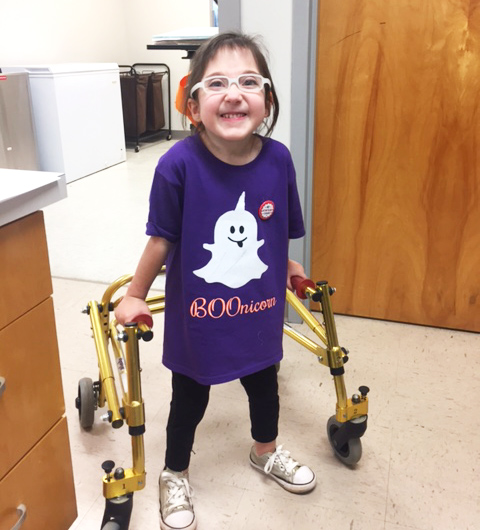
Pediatric Physical Therapy: Specialized Services and Treatments for Children Under 18.

Screen Shot 2016-11-17 at 10.39.16 AM.png

“Doctors often recommend Pediatric Physical Therapy for children and teens who have been injured or who have movement problems from an illness, disease, or disability. Physical therapists work to decrease pain and help the child return to their daily activities. They also teach children exercises designed to help them regain strength and range of motion, and also show them and families how to prevent future injuries.” (Kids Health,  June 2014).

Doctors will often recommend PT for children with:

    • Cerebral Palsy
    • Spinal Cord Injuries
    • Traumatic Brain Injuries
    • Spina Bifida
    • Brachial Plexopathy
    • Pediatric Cancer
    • Socialization Skills
    • Autism Spectrum Disorder
    • Developmental Delay
    • Down Syndrome
    • Feeding Problems
    • Fetal Alcohol Syndrome
    • Gait Abnormalities
    • Hydrocephalus Muscular Dystrophy
    • Pediatric Medical Syndromes
    • Pediatric Neurologic Disorders
    • Premature Birth
    • Juvenile Rheumatoid Arthritis
    • Seizure Disorders
    • Sensory Processing Difficulty
    • Torticollis/Plagiocephaly
    • Vision/Hearing Deficits
    • Sports Injuries

Advanced Specialization Training

  • Astronaut Training Protocol
  • Beckman Oral Motor Program
  • Contemporary Neurodevelopmental Treatment
  • Sequential-Oral-Sensory Approach to Feeding Program
  • Comprehensive Program in Sensory Integration including Administration of Sensory Integration & Praxis Test (SIPT)
  • VitalStim

What Pediatric Physical Therapists Do

At our two Pediatric Therapy Clinics located in Ocean Springs and Pascagoula MS, our therapists use a variety of treatments to help build strength, improve movement, and strengthen skills needed to complete daily activities.

Physical Therapy

  • Gross Motor Development/ Conditioning Activities
  • Neuromuscular Retraining Aquatic Therapy
  • Movement Skills/ Function
  • Balance/ Gait Training
  • Coordination Skills
  • Standardized Testing of Motor Abilities
  • Assistance with Positioning & Mobility Equipment
  • Orthotic Recommendations
  • Power Wheelchair Assessment & Training

Speech-Language Therapy

  • Language Therapy
  • Articulation Therapy
  • Dysphagia Therapy
  • Oral Motor Therapy
  • Assistive Technology
  • Fluency and Voice Therapy

Occupational Therapy

  • Handwriting & Fine Motor Skill Training
  • Assistance with Activities of Daily Living
  • Sensory Integration Therapy
  • Aquatic Therapy
  • Custom Splinting for Neurologic Conditions
  • Cognitive Retraining
  • Constraint Casting & Treatment
  • Neuromuscular Retraining
  • Training with Adaptive Equipment
  • Standardized Testing of Motor Abilities

Two of our Locations that offer all of the specialized Pediatric Therapy Treatments and Services are located below:

Ocean Springs Pediatric Rehab

#2 Doctor’s Drive  Ocean Springs, MS 39564

Phone: (228) 818-1211  •  Fax: (228) 818-1213

Pascagoula Medical Park

3101 Denny Ave, Suite 120,  Pascagoula, MS 39568

Phone: (228) 471-1520  •  Fax: (228) 471-1525

Encore Rehabilitation of Cullman

1701 Main Ave SW  Cullman, AL 35055
Phone: (256) 775-3737

5 Tips to Avoid Chronic Pain

1. Know Pain, Know Gain. There is a growing body of evidence suggesting that understanding how our pain systems work is an excellent strategy in managing it. The great news is that you don’t need to know a lot! Simply knowing the basics of how our brain and nerves work, and their role in pain, can help reduce your chance for developing chronic symptoms. Learn more.

2. Keep moving. Gradually and steadily. Living an active, healthy lifestyle not only improves our general well-being and health, but can also reduce our chances of developing chronic pain. Our body was built to move, and we need to understand that not all aches or soreness is cause for concern. Learn more.

3. Spend time with a good PT. If you experience an injury, or develop the onset of pain, seeing a physical therapist (PT) early on can help address and manage your symptoms. PTs are movement experts who can diagnose and treat injuries and help you identify strategies to better manage your pain. The earlier you seek care, the better the chances you have for not developing chronic symptoms. And there’s no reason to wait: you can see a physical therapist without a physician’s referral in all 50 states and the District of Columbia. Learn more.

4. Don’t focus on an image. While most of us want a diagnostic image (ie, x-ray, MRI) to tell us “why we hurt,” images actually give us little information about what’s causing pain. A study performed on individuals 60 years or older, who had no symptoms of low back pain, found that more than 90% had a degenerated or bulging disc, 36% had a herniated disc, and 21% had spinal stenosis. What shows up on an image may or may not be related to your symptoms. Once imaging has cleared you of a serious condition, your physical therapist will help guide you back to the life you want to live!

5. Addressing depression and anxiety helps. Your chances of developing chronic pain may be higher if you also are experiencing depression and anxiety. A recent study in the Journal of Pain showed that depression, as well as some of our thoughts about pain prior to total knee replacement, was related to long-term pain following the procedure. Make sure that you talk to your medical provider about your mental health throughout your treatment; it can help make your journey go much more smoothly following an injury or surgery.

The c launched a national campaign to raise awareness about the risks of opioids and the safe alternative of physical therapy for long-term pain management. Learn more at our #ChoosePT page.

Authored by Joseph Brence, PT, DPT, FAAOMPT, COMT, DAC

*Complete Article can be found here.