Wellness

A very Merry Christmas Celebration at Adult Neuro Center

IMG_5280

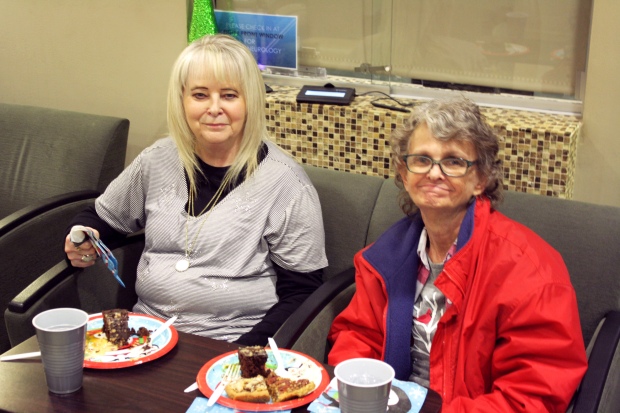
The Adult Neuroscience Center (Ocean Springs, Mississippi) held its Annual Support Group Christmas Party on Friday, December 15th for members of the four support groups offered at our clinic.  These groups include the Parkinson’s Disease Support Group, the Aphasia & Communication Support Group, the Movement Disorder Exercise Group, and the Stroke Support Group.  Good times and laughter were shared by all who attended!

For further information regarding when/where these groups meet, please call our Ocean Springs Office at (228)-818-1207.

IMG_5259

IMG_5225img_5236.jpgIMG_5254 RevisedIMG_5261img_5237.jpg

Ocean Springs Neurological Vestibular Rehabilitation
3603 Bienville Boulevard, Suite 200
Ocean Springs, MS 39564
228-818-1207
Find Ocean Springs Neurological Vestibular Rehabilitation on Facebook by clicking here

encorerehab.com

“Every day and every patient is different.” – Josh Lenox, PT, Encore Rehabilitation – Hartselle

Josh Lenox PT Hartselle Photo
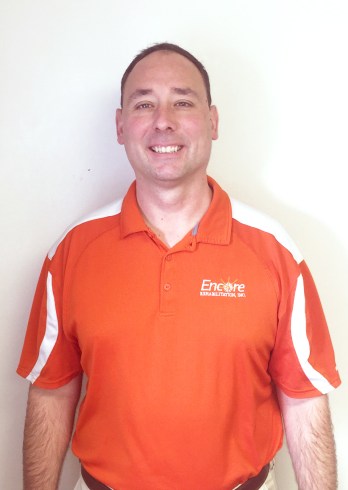
“Every day and every patient is different. No two injuries are exactly the same. It is rewarding to come up with different approaches for each patient, ” says Josh Lenox, PT. Josh is the Clinic Director for Encore Rehabilitation – Hartselle and Encore Rehabilitation – Brewer High School.
Josh has a degree in Physical Therapy from the University of South Alabama and has been the Director at Hartselle since 2007. He has specialty certification in Dry Needling, FCEs (Functional Capacity Evaluations), and Impairment Ratings.
Josh started working for Encore 23 years ago as an aide at Summerford Nursing Home. At the time, he was a  high school student at Falkville High School.
Thank you, Josh, for all of your hard work and dedication!

“Encore is very friendly and professional” – Shannon Ferguson

Shannon Ferguson Photo Hartselle RevisedShoulder Replacement? Encore Rehabilitation of Hartselle can help! Just ask Shannon Ferguson. “I’ve had physical therapy with Encore Rehabilitation in the past from previous surgeries,” Shannon says. A recent total left shoulder replacement brought him back to Encore again. Shannon gives Encore his recommendation – “The staff at Encore are very friendly and professional.”

Thank you, Shannon for choosing Encore Rehabilitation as part of your wellness journey!

Celebrating National Physical Therapy Month with Ranae Arrington

RubyRanaeArrington RussellvilleRevised

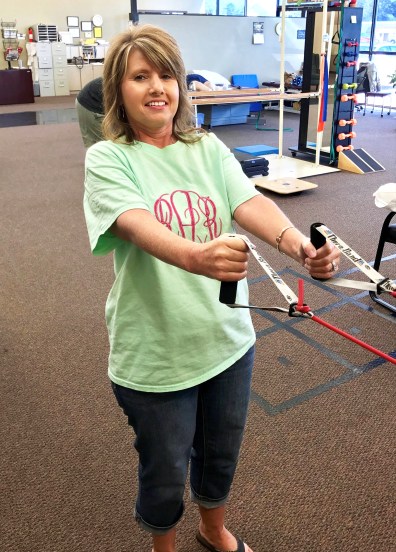
After receiving an injury to her right elbow, Ranae Arrington needed physical therapy. Her injury lead to swelling in the hand and problems with her shoulder. Why did she choose Encore Rehabilitation – Russellville for her therapy? “Word of mouth,” states Ranae. “I was told Encore was really good and cared about their patients.”
We thank you, Ranae, for choosing Encore as your rehabilitation provider! Happy National Physical Therapy Month!

Encore Rehabilitation Foley -Patient of the Month Janice Daniel

Janice Daniel Sept2017Revised

We would like to recognize our Encore Rehabilitation of Foley Patient of the Month, Janice Daniel. Janice is from Silverhill and has been receiving physical therapy for five weeks. She came to Encore to regain use of her shoulder following a torn rotator cuff repair. Her progress is going very well.  In 2010, Encore Rehabilitation helped Janice after her knee surgery.  After her knee rehab, Janice was able to return to gardening and doing all the things she enjoys.  Janice says, “Like with my knee, I want to be the best I can be. Encore is enabling me to fulfill my goal!” Keep up the good work, Janice!

At Encore Rehabilitation, we LOVE to see you move!!


3 lists of Superfoods for your heart, skin and overall health.

Superfoods for your Heart: 

“Salmon, oatmeal, blueberries, dark chocolate, citrus fruit, soy, tomatoes, nuts, legumes, extra-vergin olive oil, red wine, green tea, broccoli, spinach, cale, coffee, and flax seed, avocado, and pomegranate.”

Superfoods for you Skin: 

i, Olive Oil, , and .”

Superfoods for you Overall Health: 

Beta-carotene and other carotenoids: apricots, asparagus, beets, broccoli, cantaloupe, carrots, corn, green peppers, kale, mangoes, turnip and collard greens, nectarines, peaches, pink grapefruit, pumpkin, squash, spinach, sweet potato, tangerines, tomatoes, and watermelon

Vitamin C: berries, broccoli, Brussels sprouts, cantaloupe, cauliflower, grapefruit, honeydew, kale, kiwi, mango, nectarine, orange, papaya, snow peas, sweet potato, strawberries, tomatoes, and red, green, or yellow peppers

Vitamin E: broccoli, carrots, chard, mustard and turnip greens, mangoes, nuts, papaya, pumpkin, red peppers, spinach, and sunflower seeds

These foods are also rich in antioxidants:

  • Prunes
  • Apples
  • Raisins
  • Plums
  • Red grapes
  • Alfalfa sprouts
  • Onions
  • Eggplant
  • Beans

Other antioxidants that can help keep you healthy include:

Zinc: oysters, red meat, poultry, beans, nuts, seafood, whole grains, fortified cereals, and dairy products. Also, Selenium: Brazil nuts, tuna, beef, poultry, fortified breads, and other grain products.”


Sources: 

http://www.webmd.com/food-recipes/antioxidants-your-immune-system-super-foods-optimal-health, Health & Wellness @ActivelyFlT, and http://www.health.com/health/gallery/0,,20720182_1,00.html.


“10 Timeless Fitness Laws” by Pam Foxx

“In the not-so-distant past, your food grew on a farm. Meals were home-cooked (on an actual fire, in an actual stove). The outdoors was your gym. Watches? They tracked time, not activity. Blue light, texting neck, and the masses getting supersized by McDonald’s were issues for a future generation.

Yet somewhere along the way, conventional wisdom got muddled with modern mechanisms. And the results weren’t pretty. We became much more sedentary and got fatter. And slower. And weaker (seriously). At the table, our food began to look less and less like it ever came from the ground.

“Western society is the most overfed but malnourished, sick society due to the imbalance of physical activity and real nourishment, says Stacy Sims, MSc, Ph.D., co-founder of Osmo Nutrition. “The body is designed to move all the time and use food that supports health, not quick hits of ‘feel good’ sugar and fat.”

So how do we go back? By homing in on the fundamentals and returning to the principles that have stood the test of time. Here, 10 laws of fitness your grandfather would approve of.


#1: Perfect the Pushup

When Charles Atlas promised the men of America that he’d transform them from weaklings into masses of muscle, the fitness industry was forever changed. But “Dynamic Tension”—for all its faults—also had its strengths. It was a program based on the basics: bodyweight. As the legend goes, Atlas studied lions, noticing that animals had no exercise equipment. They had no gyms. Instead, they pitted one muscle against another. And dropping down and giving 10—or 20 or 50—should still have its place in your routine. “With proper form, your pushups and pull-ups are still the best exercises you can do. They engage your core with a functional push-pull action,” says Sims.


#2: Do It Right—or Stop Doing It

Focus on form. If your technique is all wrong, you might be doing more harm than good. Why? Misalignment means the biomechanics of movement are out of whack.  The result: increased stress in different joints and potential muscle imbalances—the perfect setup for overuse, chronic pain, and injury, Sims says.

But mastering the “how to” isn’t all about taking preventative measures. “The other aspect of proper form is that you end up using the smaller, stabilizing muscles giving you core stability for daily movement,” Sims explains. And if you’re engaging your muscles all day—with good posture (yes, you really should pull your shoulders back), or by perfecting a pushup—you’re building core strength without realizing it. Slouched over, resting on your elbows, back twisted? It should be no surprise that you make grandpa noises when getting up from your chair.


#3: Drink, Baby, Drink

Athletes have been around far longer than Gatorade and the new class of beverages strewn across supermarket shelves (ones that promise to replenish, hydrate, and boost performance). And when a run was no more than a run, athletes didn’t swear by high-concentration sugary liquids.

When a workout isn’t long enough or intense enough to result in severe fatigue, plain old water works, says Matt Fitzgerald, sports nutritionist, and author of thebook Diet Cults. “In fact, it’s not necessary to drink anything in most workouts lasting less than an hour,” he adds. That’s not to say that drink scientists aren’t onto something: “You need a small amount of sodium to actually pull water into the body,” says Sims. That’s why low-concentration approaches (Nuun, SOS, and Sims’ OSMO) have become popular.


#4: Eat a Quality Breakfast

Rising with the sun means more hours to move and more hours to eat well. “One of the overlooked benefits of eating breakfast is that it provides an early and additional opportunity to make progress toward meeting daily quotas for high-quality food types such as vegetables and fruit,” says Fitzgerald.

It’s not hard to start knocking out nutritional requirements before your day begins either—one serving of vegetables or fresh berries added to whole-grain cereal—can make all the difference, says Fitzgerald.

Just remember composition, says Sims. A croissant and a coffee won’t cut it: “You wake up with high levels of cortisol (the belly fat hormone), and adding sugar and caffeine will perpetuate cortisol’s actions,” she says.


#5: Repeat After Us (One More Time): I Will Eat Real Food

You won’t find the recipe for a healthy diet on the back of a package. Change the way a food naturally exists, and you change the way your body absorbs it. “There is a disconnect between the marketing claims of pre-packaged food and real food made from scratch. And food can’t just be reduced to single compounds,” says says Allen Lim, Ph.D., founder of Skratch Labs.

To that extent, Fitzgerald has spent time analyzing world-class endurance athletes—a group as fit and healthy as any population on earth—finding a simple trend: “what I call ‘agnostic healthy eating,’” he says. What that means: eating inculturally normal ways, but not avoiding food groups entirely; filling meals with vegetables, fruit, nuts and seeds, fish and high-quality meat, whole grains, and dairy; and only sparingly eating low-quality refined grains, processed meat, and sweets. “If this formula is good enough for athletes who place tremendous demands on their bodies, it’s good enough for us,” he says.


#6: Feel Your Way to Faster

The most sophisticated and reliable fitness monitoring device that exists—or will ever exist—isn’t a device at all: it’s your brain, says Fitzgerald. “If your body needs rest, your brain will communicate that to your conscious awareness in the form of feelings of fatigue and low motivation,” he explains. The symptom: a greater perceived effort: “If the body is fatigued or if its performance capacity is compromised, the brain will have to work harder to get the same level of output, and the greater the effort the exerciser will perceive.”

On the other hand? If your body is responding well to your training and is ready for more hard work, your brain will let you know that too in no uncertain terms, Fitzgerald says.


#7: Lighten Up and Have Some Fun

“The more you enjoy your training, the more you’ll put into it,” says Fitzgerald. “And the more you put into it, the more you’ll get out of it.” The research agrees: Your best efforts will likely come when you’re having the most fun, a 2012 study by Alan St. Clair Gibson of the University of Worcester found. Find something you like and the addiction will come naturally: “Research indicates that the association of ‘fun’ with things you do perpetuates stress release, making you want to go back for more,” says Sims.


#8: Recover. No, Really: RECOVER.

One of the problems with the evolution of cross-training is that you can go hard every day. The problem: That’s not what your body needs. The key is finding an easy-hard cycle you can give into, says Michael Joyner, M.D., and physiologist and anesthesiologist at the Mayo Clinic. “People have forgotten to make the hard days harder and the easy days easier.” Think in terms of “active rest”—a 3- or 4-mile run for a distance runner, calisthenics, jumping rope, or classic conditioning drills, Joyner says. “That’s really important.”


#9: It’s Not All About the Bike, the Shoes, or the Compression Underwear

Aerodynamics, biomechanics, breathability—they’re words that get a lot of ink (on labels, in magazines, and in the scripts of gear salespeople across the world). And yeah, tech has its perks. Breathable fabrics make long and hot hikes more bearable. But will your gear always make the difference?

A recent University of North Carolina-Chapel Hill study found only 14 percent of runners who laced up in lightweight kicks reported injury in a year’s time; almost half of runners in traditional sneakers did. So plus one for minimalism? Not so fast. The same University of North Carolina research revealed that people who chose traditional shoes landed differently from those who donned the minimalist shoes (on their heel or mid-foot versus on their forefoot).

The point: Everyone is different. And gear that works is subjective. “Good gear makes things more enjoyable, and most importantly prevents injury,” says Sims. So don’t skimp on no-brainers: proper bike fit, shoes, and protective items—but don’t become slaves to them.


#10: Never Stop Moving

Take this in the most expansive and philosophical way: Build movement into all aspects of your life—work, home, play—and throughout your life. You name the disease and exercise is the cure. “It’s proven to reduce the likelihood of weight gain, diabetes, heart disease, stroke, liver disease, cancer, Alzheimer’s, osteoporosis,sexual dysfunction, and a host of infectious diseases,” says Fitzgerald. Work out, and not only will you be healthier, but happier, more confident, and (bonus!) smarter, Fitzgerald adds.”


Source: http://www.outsideonline.com/fitness/bodywork/the-fit-list/10-Timeless-Fitness-Laws.html


“10 easy tips for eating healthy while on the road or on vacation this summer.” by AL.com

Laura Newton, an assistant professor in the Department of Nutrition Sciences at The University of Alabama at Birmingham (UAB), offers these 10 suggestions:

Plan ahead: “Choose foods to take in the car, eat before arriving at the airport and consider the options available upon arrival at the destination,” Newton said in a UAB news release this week.

Keep it on ice: Put a cooler in the car and pack it with such healthy treats as fruit, yogurt, water, cut-up vegetables and sandwiches on whole-grain bread.

Eat this, not that: Make the best food choices you can when you’re on the road. At convenience stores, go for yogurt, fresh fruit, fruit cups or nuts (which are good in moderation.) At burger joints, the most simply prepared items are the healthiest choices, according to Newton. She suggests a plain hamburger with lettuce and tomatoes or a grilled chicken sandwich with lettuce and tomatoes. You can also hold the mayo and dressing and choose kid-size portions.

Don’t eat out all the time: If possible, rent a hotel room or vacation home with a refrigerator and stock it with good food. “It can be easier to eat healthful meals when cooking yourself,” Newton said.

Moderation, moderation: Try not to miss meals, because this can cause you to overeat at the next meal. “Pack a cooler for the beach and take water, fruit, maybe some nuts and string cheese,” Newton said. “This type of mini-meal is easily portable and can help tide people over until they can have a regular meal.”

Go ahead, be good to yourself: Don’t feel you have to completely give up favorite vacation foods. “You should definitely indulge, but in moderation, maybe one small treat a day or one splurge day during the week,” Newton said. “Ask for a small portion of the regional favorite or order from the appetizer menu.”

Start restaurant meals with salad or veggies: “This will help fill you up so you don’t eat more of a higher-calorie item,” Newton said. “Ask for extra vegetables or substitute another vegetable in place of a starch.”

Search the web: Look online for restaurants in the area you’re visiting. Review the menus in advance and decide what to eat before you go.

Drink lots of water: People often mistake dehydration for hunger, according to Newton.

Stay active! “This doesn’t need to be strenuous exercise, such as running or lifting weights, but do go sightseeing on foot or take a hike, swim in the pool or at the beach,” Newton said.”

Source: http://blog.al.com/spotnews/2014/05/post_1150.html


7 Things Your Yoga Teacher Wants to Tell You


“I’ve taught yoga for over 10 years to students around the world and I’ve come up with a few things that every yoga teacher wants you to know. Don’t worry, I’m not here to yell or judge! But even if you’re hitting the mat a few times a week and holding every pose perfectly, you may not be getting the most from your yoga practice. Now, it’s easy to rattle off a long list of yoga no-no’s, but there are also crucial lessons your teacher is probably dying to share with you. Here are my big seven. Take notes and enjoy the ride!

You don’t need to practice yoga every day
It’s easy to fall so deeply in love with yoga that you want to practice non-stop. I hear you—but between travel, work, and family, you can end up depleting your body and mind of energy if you’re not careful. Instead, respect your body and remember that you’re often just as powerful taking time off as you are pushing yourself to the max. Find your balance.

There is no such thing as a typical yoga body
If you were to ask someone what a yogi looks like they’d probably say long, lean, flexible, and strong. Pop culture has definitely influenced that stereotype, but as a teacher who travels the world meeting yogis of every age, gender and race, I can tell you clearly—there is no perfect yoga body. Some of the most amazing yoga I’ve ever seen has come from bodies that were outside that stereotype. You can be curvy, slight, young, or old—yoga is for everyone.

A calming, restorative practice is just as powerful as a strong flow class
In this day and age, we go and we go hard. We rock jobs, run families, keep up on style trends and hit our workouts like a boss. There’s so much go-go-go-go that often the perfect remedy isn’t a wicked hard yoga class but one that will balance you out by slowing you down. Taking the time to breath, stretch, relax and meditate is crucial to giving us the mental strength to carry on at a high pace. So remember that these restorative style classes are a great compliment to your power/flow classes and that you don’t always need 90 minutes of sweat to feel restored. Sometimes all it takes is 20 minutes of focus, peace and quiet.

Enjoy being a beginner
I’m a total overachiever who gets frustrated easily when I can’t master a challenge. But yoga taught me that the journey is even greater than the result. Sure, being a beginner can be a bumpy, ego-bruising time. But it’s also a time when you’re excited, ambitious, and eager to soak everything in. Enjoy this journey, because it’s only a matter of time before you figure it out, master it, and long for something new that exhilarates you the same way.

You don’t need to be flexible to be good at yoga
If I had a nickel for every time I heard someone say, “I’m not flexible enough to do yoga,” I’d be able to afford a closet full of designer shoes. It’s like saying you’re too dirty to take a bath! The whole purpose of yoga is to help you with your flexibility. Give it time—yoga is here to help you out, not embarrass or demean you. And in the meantime, try these stretches to improve your flexibility.

Difficult poses aren’t necessarily better
Yoga has officially entered the age of Instagram, where people post mind-blowing pictures of incredibly challenging poses daily (and I certainly participate… that’s me in the picture above!). They may be inspiring or frustrating depending on your skill level, but here’s the thing: Harder doesn’t always mean better! One of the most common blunders is being over ambitious, pushing towards a pose beyond your current ability and then ending up hurt. Next thing you know you’re too injured to practice for weeks all because of one silly ego slip. Remember, the goal of yoga is to feel better and find balance. So if a simple standing pose and hip opener fills you up more than a foot-behind-the-head, do what works for you! That is your perfect form of yoga.

Yoga isn’t about how you look, it’s about you feel
This one is crucial! Forget the hard poses or the fancy-patterned leggings with matching bra. All of these things are fun, but at the end of the day all that matters is how you feel. Did the practice improve your mood? Calm your mind? Improve your energy? Awesome. Were you in sweatpants? Did you comb your hair? Did you set a world record of Chaturangas? Who cares! Stick to how you feel and you’ll shine no matter what.”

Taken from Women’s Health Mag: http://www.womenshealthmag.com/fitness/yoga-teacher-tips

5 things to help you feel better and gain self-confidence

1) GET MOVING
Research has linked any type of exercise—cardio, strength training, stretching—to greater body confidence. And it works whether or not your fitness level or weight changes, or whether your sweat sessions are mild or intense. Plus, just talking about a workout can up your self-image, says psychologist Louise Wasylkiw, Ph.D., of Mount Allison University.

2) LISTEN UP                                                                                                                            The more in touch you are with the way your body works, the less you may dwell on its appearance, says cognitive psychology researcher Vivien Ainley. In one study, women who could more accurately count their heartbeats objectified themselves less. Practices like meditation and yoga can help you tune in to you.

3) NIX FAT CHAT
“You’re so tiny; my thighs are like tree trunks.” Most women think such self-deprecation is harmless or even helpful. In reality, it’s anything but. Even being involved in third-party snarking (say, dissing a coworker’s shape) can reinforce a negative view of your own body. “Challenge, then replace, fat talk,” says psychology doctoral candidate Rachel Salk of the University of Wisconsin. Praising someone else’s strength or their healthy habits can make everyone feel more confident.

4) SPEAK the (BODY) LANGUAGE
Whenever you hunch your shoulders, cross your arms over your chest, or stare at the floor, you announce your self-consciousness, says body-language pro Lillian Glass, Ph.D. Try a fake-it-till-you-make-it experiment: Walk upright, as if a string is pulling from the top of your head. When you talk to someone, squeeze your butt muscles to straighten your spine, and stand with your feet a foot apart, toes pointing at the person you’re facing. Smile, and don’t be afraid to use your hands when you talk–this kind of openness makes you seem more secure.

5) FEEL BETTER—BY TONIGHT!
First, do an environment scan for confidence-destroying stuff. As in: old jeans that don’t fit, a laptop perennially set to friends’ too-perfect Facebook posts. If you can’t cut this stuff out entirely, avoid it before a big moment.

*If your weight is bothering you, put away the scale for now. The number’s not going to change today, so reminding yourself of it is counterproductive.

+ Leave positive messages on sticky notes around your apartment or office. (“Yeah, you are amazing!” “You’re going to kick butt!”) Strategically place them so they’re the last things you see before stepping out the door.


**Article from Women’s Health Magazine: http://www.womenshealthmag.com/life/gain-confidence?cm_mmc=Twitter-_-womenshealth-_-content-life-_-boostselfesteem